September Arctic travel: northern lights, autumn color, and quiet seas
The light shift: from midnight sun to aurora borealis nights
By early September, the Arctic has slipped out of the long glow of the midnight sun and into something far more theatrical. This is the precise time of year when twilight deepens over the Arctic Circle, and the first northern lights begin to thread across the sky above Greenland, Iceland, Svalbard, and northern Norway. For travelers planning an intimate escape, this early autumn window in the far north offers a rare balance of darkness, color, and still generous daylight hours for September Arctic adventures.
In Tromsø, a classic northern gateway at 69.6496° N, you can expect around 12 to 13 hours of usable light in September, which means long days for excursions and proper nights for aurora viewing. Average temperatures hover near 7 °C (about 45 °F) according to the Norwegian Meteorological Institute (based on recent climate normals), so with the right layers you can stay outside for extended periods and watch the aurora borealis unfurl over sea ice fringes and mountain silhouettes. This is often the best time for a first Arctic trip, because the season still feels like late summer by day while the sky behaves like early winter by night.
Guides and scientists agree that the best time to see the northern lights in the Arctic stretches from roughly September to April, with peak visibility around the equinoxes when geomagnetic activity tends to spike, as noted by NOAA’s Space Weather Prediction Center. That makes the September month a strategic time to visit, when the high latitude skies are active but the deep cold of winter has not yet arrived. If you are weighing when is the best time of year to plan an Arctic cruise, consider that September and October departures often give you both midnight sun afterglow on the horizon and full aurora displays overhead on clear nights.
On a clear night off East Greenland, you might stand on deck as the ship threads between slabs of ice and watch the aurora borealis ignite in curtains of green and violet. These early season light shows feel different from those in mid winter, because the horizon still holds a faint band of color and the sea ice has not yet locked the fjords. For photographers, this combination of September northern lights, open water, and autumn tundra means you can frame aurora above detailed foregrounds instead of featureless darkness, capturing both sky and landscape in a single long exposure.
Alt text suggestion: Aurora borealis over a September Arctic fjord with drifting sea ice and faint twilight on the horizon.
Tundra in autumn northern light: a short, golden season
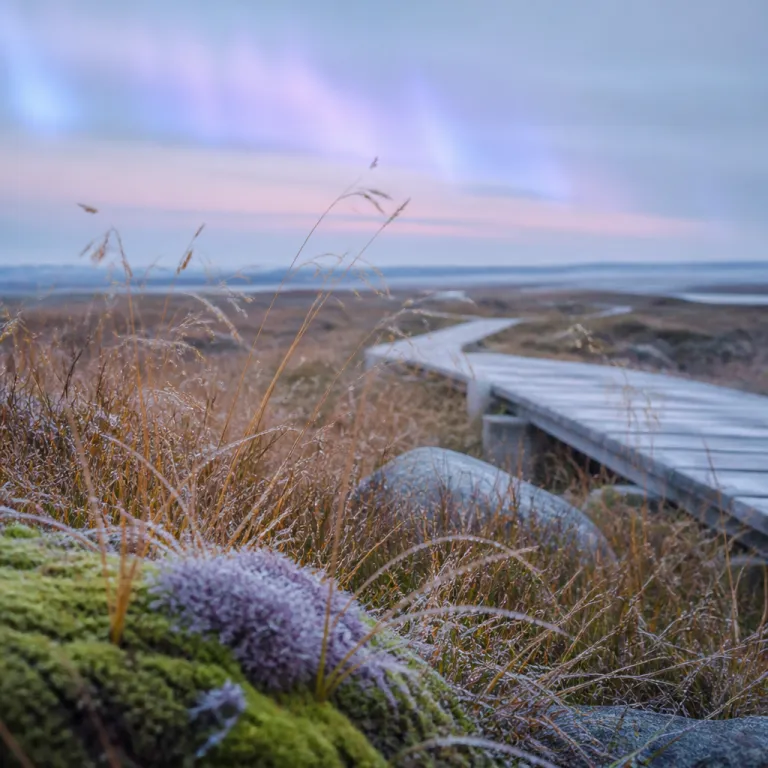
While many travelers still associate the Arctic with endless white, September tells a more nuanced story on land. The tundra enters its brief autumn northern phase, when mosses, lichens, and dwarf willows flare into gold, rust, and crimson before the first snow returns. This is the shoulder season moment that serious photographers quietly target, because July’s greens simply cannot match the depth of this color palette or the low, angled light that defines early fall in the high latitudes.
Walk ashore in a national park in East Greenland or northern Iceland and you will feel the ground underfoot shift from summer softness to a crisp, almost brittle texture as plants prepare for winter. The low northern sun slants across the landscape, turning every patch of tundra into a study in contrast, while distant sea ice glows pale blue. Visitors who reach Arctic regions at this time of year often comment that the land feels more intimate, because the season’s colors pull your gaze down to details rather than out to endless horizons.
In Iceland, a road journey that might feel busy in peak summer becomes quieter in September and October, especially once you leave the south coast and head into the interior or the Westfjords. If you are planning an elegant circuit, use a curated 10 day Ring Road itinerary as a framework, then adjust your time to visit to favor the north and east where autumn northern hues linger longer. As you travel, you can still enjoy relatively mild days, yet the evenings are dark enough for northern lights, which means the best time for photography often stretches from late afternoon into late night.
For travelers balancing budget and experience, this shoulder season can also be the best time to experience Iceland on a budget without missing its polar magic, because accommodation and car rental rates often ease once the high summer season ends. The tundra’s autumn colors pair beautifully with the first dustings of snow on higher peaks, creating a layered scene that feels both polar and seasonal. When the aurora borealis arcs above this landscape, the mix of glowing tundra, early snow, and dancing sky becomes something far richer than a simple winter postcard.
Alt text suggestion: September Arctic tundra in red and gold autumn colors beneath a low sun and snow-dusted peaks.
Quieter ships, richer wildlife: why September is the insider’s season
By the time September arrives, many large ships have already left the Arctic for warmer itineraries, and that changes the feel of every landing. Zodiac operations become more relaxed, with fewer vessels clustered in the same bay and more time on shore to watch wildlife without the sense of a schedule pressing in. For travelers who value space and silence, this early autumn period is often the best season to book an expedition, especially on smaller ships that carry fewer than 200 guests.
Wildlife is in transition now, which makes each day feel like a snapshot of ecological change rather than a static scene. Migratory birds gather in restless flocks before heading south, whales continue feeding in rich polar waters, and polar bears begin to orient back toward the forming sea ice edge. You may see a single polar bear patrolling a shoreline in East Greenland, or multiple polar bears scattered along the pack ice on an Arctic cruise that skirts the north coast of Svalbard with operators such as Quark Expeditions, Hurtigruten, or Poseidon Expeditions.
For travelers eyeing the Northwest Passage or even a voyage toward the geographic North Pole, September often offers the best balance between navigable sea ice and stable weather, as reflected in seasonal ice charts from the U.S. National Snow and Ice Data Center. Operators know that this time of year can be harder to market than high summer, so they frequently price these departures below peak and add cabin upgrade incentives. The same logic that makes early season Antarctica departures attractive for value, with some companies advertising savings of around thirty percent on October sailings, applies here in the north as well.
From a comfort perspective, September days are still long enough to feel generous, yet the nights are finally dark enough for consistent northern lights viewing. You can spend the day watching Arctic wildlife from a zodiac, then step onto deck after dinner to see the aurora borealis ripple above the Arctic Circle with almost no light pollution. For many travelers, that combination of quieter ships, active wildlife, and reliable aurora makes this the best time to visit Arctic regions before winter tightens its grip.
Alt text suggestion: Small expedition ship in September Arctic waters with zodiac and distant ice floes under a darkening sky.
Planning your Arctic September journey: practical timing and packing
Designing a September itinerary in the Arctic starts with choosing your latitude and your style of travel. Some visitors will gravitate toward land based stays in Tromsø, Iceland, or East Greenland, while others will prefer the rhythm of an Arctic cruise that moves between fjords and islands. Either way, the interplay of northern lights, autumn tundra color, and lingering summer light will shape your days and nights more than any marketing brochure.
Think of September as a hinge between summer and winter, when you can still hike comfortably yet need to respect the first hints of polar cold. The most reliable packing strategy is to wear layers for variable weather, combining a moisture wicking base, an insulating mid layer, and a windproof outer shell. Add a warm hat, gloves, and insulated boots, and you will be ready for long evenings under the northern lights without cutting your aurora sessions short.
For quick reference, a simple September Arctic packing checklist might include:
- Moisture wicking thermal base layers (top and bottom)
- Fleece or wool mid layer and insulated jacket
- Windproof, waterproof shell with hood
- Warm hat, scarf or buff, and insulated gloves or mittens
- Waterproof, insulated boots with good grip and thick socks
Transport logistics are straightforward in this season, with regular flights linking northern hubs and expedition ships still operating along key coasts. You can travel by air into Tromsø or Reykjavík, then connect to smaller aircraft or ships that push deeper into the Arctic Circle, or you can board a vessel that traces the edge of sea ice toward Greenland or the Canadian High Arctic. Methods range from guided tours to more independent exploration, but in every case eco friendly choices are becoming easier to make as operators modernize fleets and reduce polar impact.
Before you go, book accommodations and key excursions in advance, because while there are fewer tourists, capacity in remote regions remains limited. Check aurora forecasts regularly once you arrive, using local meteorological services or shipboard briefings, because clear nights can appear between unsettled days and you want to be ready when the sky performs. When you align your time to visit with this shoulder season, the reward is a journey where the aurora borealis, autumn northern tundra, and lingering light of summer all share the same horizon.
FAQ
When is the best time to see the northern lights in the Arctic?
When is the best time to see the Northern Lights in the Arctic? September to April, with peak visibility around equinoxes according to space weather agencies such as NOAA’s Space Weather Prediction Center. For travelers who want milder conditions, the September and October window often feels like the best time of year, because you can combine northern lights viewing with comfortable daytime excursions.
What wildlife can be seen in the Arctic in September?
What wildlife can be seen in the Arctic in September? Arctic foxes, caribou, seals, walrus, and whales, along with large seabird colonies preparing to migrate. In some regions you may also encounter polar bears near the sea ice edge, especially on Arctic cruise itineraries that venture toward Svalbard, East Greenland, or the Canadian High Arctic.
How should I dress for Arctic travel in September?
How should I dress for Arctic travel in September? Wear layers to accommodate variable temperatures. A base layer, warm mid layer, and windproof outer shell, combined with hat, gloves, and insulated footwear, will keep you comfortable during both daytime hikes and long evenings under the aurora borealis.
Is September a good time to visit Arctic regions for couples?
September is an excellent time to visit Arctic destinations for couples who value quieter ships, dramatic light, and autumn color. The season offers a rare blend of tundra in full autumn northern hues, active wildlife, and regular northern lights displays without the deep cold of mid winter. It is also often the best season for value, as many operators price September departures below peak summer rates and add extra inclusions to attract travelers.
Which Arctic destinations work best for a first September trip?
For a first September trip, Iceland, Tromsø in northern Norway, and East Greenland are strong choices. Iceland combines accessible road travel with reliable aurora and varied landscapes, Tromsø offers urban comforts within the Arctic Circle, and East Greenland delivers a more remote polar experience with ice filled fjords and vivid tundra. Each region showcases the core appeal of this time of year, when the midnight sun fades, the tundra turns gold, and the northern lights return.