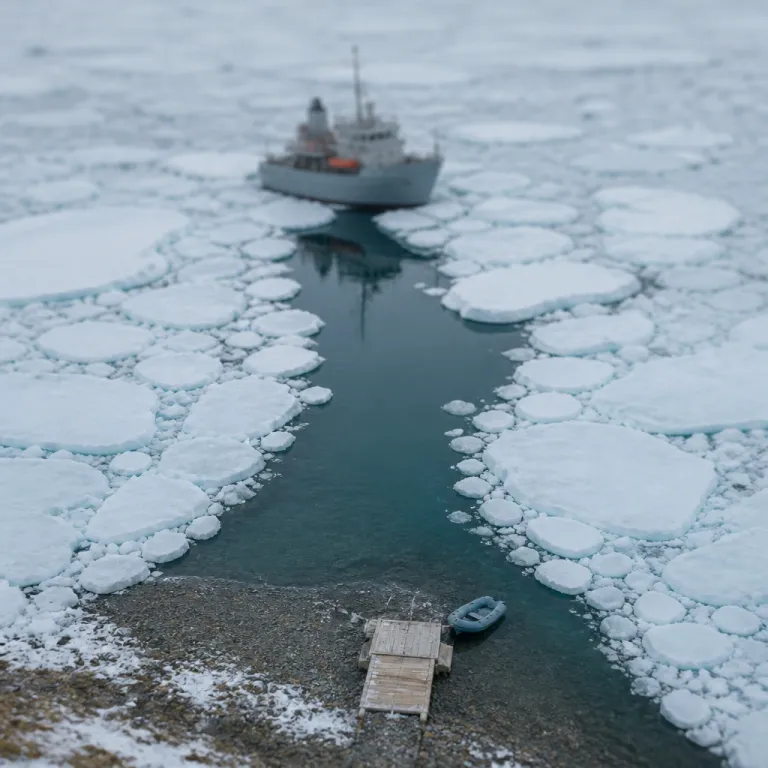
Why the Weddell Sea rewrites the Antarctic expedition rulebook
The Weddell Sea is not another variation on the classic Antarctic Peninsula loop. This vast embayment of the Southern Ocean, first charted by explorer James Weddell, is where a Weddell Sea expedition cruise through Antarctic pack ice and remote wildlife habitat becomes a genuine test of patience and polar curiosity. For a solo traveler used to structured Antarctica cruises, this is the voyage where the sea and the ice, not the brochure, will dictate your days.
Here the average sea ice extent reaches around 2.8 million square kilometres, with annual ice thickness close to 1.5 metres1, so even modern polar ships feel small. Dense pack ice can close leads and block channels for hours, which means a Weddell Sea voyage focused on sea ice and wildlife might spend long stretches edging along narrow openings that vanish without warning. You learn quickly that in this part of Antarctica, the most memorable wildlife encounters often happen when the expedition team pauses to reassess the route rather than when a landing is guaranteed.
For many repeat guests, the draw is simple yet profound. The Weddell Sea offers tabular icebergs the size of city blocks, emperor penguins poised on sea ice floes, and Adélie penguins clustered on remote island ridges that standard sea cruises along the Antarctic Peninsula never reach. A dedicated Weddell Sea itinerary is less about ticking off penguins and more about understanding how sea, ice, and wildlife shape each other in real time.
On board, the narrative is anchored in science as much as scenery. Researchers use sea ice models, remote sensing, and oceanographic instruments to interpret the shifting pack ice, and some ships invite them to share live data with guests. The context is always climate focused, because understanding sea ice behavior is crucial for climate studies and for anyone considering future Antarctica cruises.
Guides often frame the region’s importance in global circulation in plain language. They remind guests that the Weddell Sea plays a key role in global ocean circulation and climate, and that increasing sea ice variability is already reshaping traditional expedition routes. For a solo explorer, that means accepting that your carefully chosen duration in days is only a suggestion when the sea decides otherwise.
The ice variable: when pack ice becomes your real itinerary
Most first time visitors to Antarctica sail the peninsula, where captains can predict landing options with reasonable confidence. In the Weddell Sea, by contrast, the pack ice is the lead character and every sea cruise is a negotiation with shifting floes and pressure ridges. A serious Weddell Sea expedition is built around that uncertainty, not in spite of it.
Each morning, the expedition team gathers around satellite imagery and sea ice charts, assessing leads, wind direction, and the latest remote sensing data. Because compacted pack ice can rapidly hinder ship passage, a planned visit to an island rookery or a transit of the Antarctic Sound might be abandoned within minutes. Guests see this process in real time, which turns the bridge into a classroom for anyone curious about how polar navigation actually works.
On some departures, the ship will nose into consolidated ice and shut down the engines. You step off the gangway onto solid sea ice, with emperor penguins or Adélie penguins sometimes appearing as distant silhouettes against the horizon. Other days, the same Weddell Sea program might be forced to retreat, with the captain choosing open water along the edge of the pack ice instead.
Photographers tend to thrive in this environment. If you are considering a dedicated polar photography expedition, compare standard Antarctica cruises with a specialist voyage, because a Weddell Sea itinerary rewards those willing to wait for the right light over the right landing; this is where a focused polar photography expedition can justify its premium. Long pauses beside sculpted icebergs, or slow transits through brash ice fields, often yield stronger images than a rushed zodiac schedule. The unpredictability of the sea and the ice becomes a creative asset rather than an operational flaw.
For solo travelers, this means recalibrating expectations. You are not buying a fixed menu of landings but a flexible framework where the sea, the ice, and the wildlife decide the sequence. If you can accept that, a Weddell Sea expedition cruise offers a level of immersion that the more scripted peninsula circuits rarely match.
Shackleton, Endurance, and the quiet weight of history in the Weddell
Every serious Weddell Sea expedition carries a ghost on board. This is the part of Antarctica where Sir Ernest Shackleton’s ship Endurance was trapped and crushed, and where the story of survival across the pack ice still shapes how guides talk about risk and reward. A Weddell Sea cruise is never just about penguins and photography; it is also about understanding why humans once feared this sea.
On deck, you might stand in calm conditions, watching the ship thread between floes, while a guide reads from Shackleton’s account of the ice closing around his hull. The contrast between modern polar ships with advanced navigation tools and the wooden Endurance is stark, yet the same forces still apply. As one briefing often reminds guests, dense pack ice can still halt progress without warning, and that simple fact underpins every routing decision in the Weddell Sea.
Lectures go beyond heroic age storytelling. You hear how James Weddell pushed further south than any sailor of his time, and how later research expeditions used icebreaker ships, sea ice models, and oceanographic instruments to study this embayment of the Southern Ocean. The Weddell Sea is a large embayment of the Southern Ocean, discovered in 1823, and that geographical reality explains why sea ice here behaves differently from the more familiar waters off the Antarctic Peninsula.
Modern operators also address the environmental cost of reaching such remote ice. Guests are increasingly aware that the International Maritime Organization is tightening rules on black carbon and polar ship emissions, and that future regulations will shape which ships can operate here; if you care about this, read carefully about polar ship emissions rules before booking. The best expeditions explain how they work with research institutions, government agencies, and environmental organizations to reduce impact while still enabling meaningful field research.
For a solo explorer, this historical and regulatory framing matters. It turns a Weddell Sea voyage into part of a longer story about exploration, science, and climate responsibility. You are not just passing through a remote sea; you are stepping briefly into two centuries of human attempts to understand, survive, and now protect this corner of Antarctica.
Choosing the right polar ship and cabin for the Weddell
Not every Antarctic cruise ship belongs in the Weddell Sea. Only ice strengthened vessels with high Polar Class ratings, powerful engines, and experienced expedition teams can safely work along the edge of the pack ice for extended days. When you evaluate a Weddell Sea itinerary that spends serious time in the pack, the ship’s capabilities matter as much as the route map.
Names like Le Commandant Charcot from Ponant and Sylvia Earle from Aurora Expeditions come up frequently in this conversation. Commandant Charcot is a hybrid electric polar exploration vessel with advanced icebreaking capacity, designed specifically for high latitude sea cruises where thick ice is the norm rather than the exception. Sylvia Earle, while not an icebreaker, is an ice strengthened expedition ship with a strong focus on science, citizen research, and a highly qualified expedition team.
Cabin choice also shapes your experience. A balcony stateroom or a higher category suite lets you watch the sea and the ice in private silence, which matters on a Weddell Sea voyage where wildlife often appears without warning along the pack ice edge. Standard stateroom options can be excellent value for a solo person willing to share, especially when operators offer an air credit or promotions that help you save air costs from South America.
Pricing is usually quoted in USD per person, with brochures often listing a starting price per person for a specific duration in days. Look beyond the headline USD person figure and ask what is included, from charter flights between Ushuaia, Argentina and the ship to insulated gear and zodiac excursions. Some sea cruises bundle an air credit into the fare, while others separate it, which can make one itinerary appear cheaper in USD at first glance.
Embarkation almost always happens in Ushuaia, the southernmost city of South America and the main gateway for Antarctica cruises. You will spend at least two days crossing the Drake Passage before reaching the Antarctic Sound or the eastern side of the Antarctic Peninsula, where the ship turns toward the Weddell Sea. For a solo explorer, that transit is part of the appeal, a gradual transition from temperate sea to the hard geometry of Antarctic ice.
Wildlife payoff: emperor penguins, sea ice silence, and who this voyage suits
The wildlife promise of a Weddell Sea expedition is subtle but powerful. This is one of the few regions of Antarctica where you might see emperor penguins on sea ice rather than at a crowded colony, and where Adélie penguins still dominate some island rookeries. A Weddell Sea cruise focused on pack ice and wildlife is built around that possibility, not a guarantee.
To reach emperor penguins, several conditions must align. The pack ice needs to be stable enough for the ship to approach safely, yet fractured enough to allow a path through, and the wildlife itself must be present near the ice edge rather than deep inland. Expedition teams use satellite monitoring and field reports to judge when a detour into the pack ice might yield a sighting of an emperor penguin or even small groups of emperor penguins resting beside leads.
Beyond penguins, the Weddell Sea offers a different quality of wildlife watching. Seals haul out on floes in undisturbed silence, and petrels trace long arcs above the sea, while the ship drifts with engines at low power to minimize disturbance. For many guests, the most memorable wildlife moment on a Weddell Sea journey is not a close up photograph but the sound of nothing, broken only by distant penguins and the crack of shifting ice.
This is why the Weddell tends to attract repeat polar travelers. They have already sailed more conventional Antarctica cruises along the Antarctic Peninsula and now want an itinerary where the sea, the ice, and the wildlife write the script. If you are drawn to that mindset, you may also appreciate reflective pieces on polar soundscapes, such as teaching children what glaciers sound like, which capture the emotional side of time spent among ice.
For a solo explorer, the Weddell Sea is less about social programming and more about shared observation. You will spend long hours on deck, often in silence, watching the sea and the ice shift while the expedition team scans for wildlife and reads the horizon. If that sounds like your idea of luxury, then the Weddell, with all its uncertainty, may be the most honest form of Antarctic expedition you can book.
FAQ
What is the Weddell Sea and why does it matter for travelers?
The Weddell Sea is a large embayment of the Southern Ocean on the eastern side of the Antarctic Peninsula, discovered by James Weddell. It matters for travelers because its extensive sea ice, tabular icebergs, and remote wildlife colonies create a very different experience from standard peninsula cruises. The region also plays a key role in global ocean circulation and climate, which shapes both navigation and the educational content on board.
How does pack ice affect a Weddell Sea expedition itinerary?
Pack ice in the Weddell can block channels, close leads, or shift rapidly, forcing ships to change course or abandon planned landings. Dense pack ice can hinder or prevent ship passage, so captains and expedition leaders rely on satellite imagery, sea ice models, and real time observations to adjust routes. Travelers should expect a flexible schedule where the sea and the ice, rather than a fixed timetable, determine daily activities.
Which ships are best suited to Weddell Sea cruises?
The best ships for the Weddell Sea are ice strengthened vessels with high Polar Class ratings, powerful engines, and experienced expedition teams. Examples include Le Commandant Charcot, which has advanced icebreaking capabilities, and Sylvia Earle, which combines strong ice performance with a science focused program. Many mainstream Antarctica cruises avoid the Weddell because their ships are optimized for the more predictable waters of the Antarctic Peninsula.
Can I see emperor penguins on a Weddell Sea voyage?
Some Weddell Sea itineraries offer a realistic chance of seeing emperor penguins on sea ice, but sightings are never guaranteed. Success depends on pack ice conditions, the location of the birds relative to the ice edge, and the ship’s ability to approach safely. Travelers should choose operators that are transparent about these variables and treat any emperor penguin encounter as a privilege rather than a promise.
Where do Weddell Sea expeditions usually start and how long do they last?
Most Weddell Sea expeditions start in Ushuaia, at the southern tip of South America, with ships crossing the Drake Passage before turning toward the eastern side of Antarctica. Typical voyages range from around ten to fourteen days in duration, allowing time for the crossing, several days in the Weddell region, and weather or ice related contingencies. Longer itineraries may combine the Weddell Sea with parts of the Antarctic Peninsula for added flexibility.
1 Representative values based on published climatological sea ice studies for the Weddell Sea (for example, satellite-derived averages of winter sea ice extent and thickness); actual conditions vary by season and year.