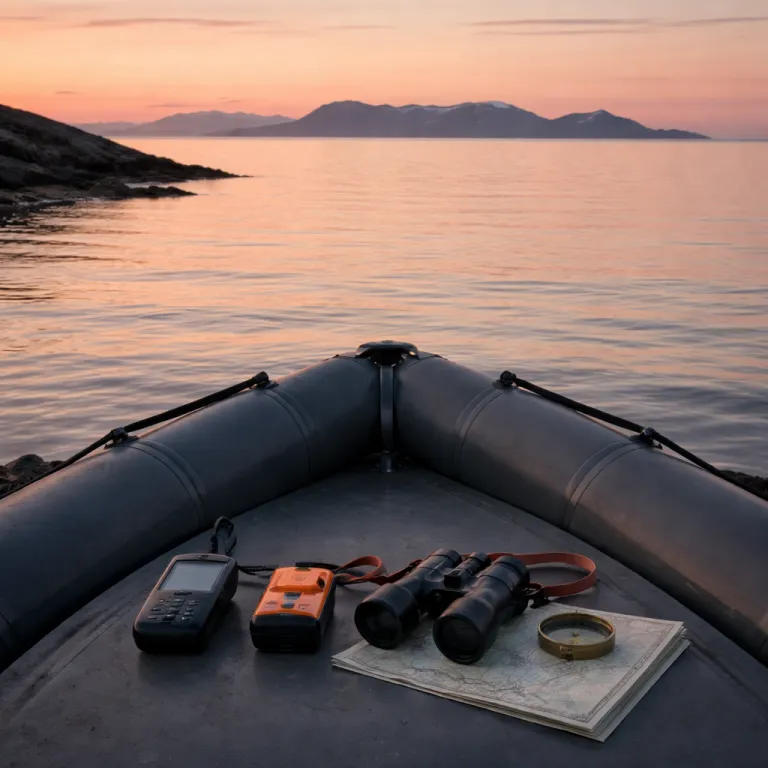
Why a Svalbard expedition cruise beyond Longyearbyen changes the story
A Svalbard expedition cruise beyond Longyearbyen starts where most itineraries stop. This is the point where the settlement’s coffee shops fall behind the stern and the Arctic finally feels like a place shaped by ice rather than people. For a solo explorer, that shift from town to tundra is the real departure gate.
Once your small ship clears Isfjorden, the landscape widens and the scale of Svalbard becomes obvious. The average summer temperature hovers around 5 °C, yet the sea still carries slabs of ice and the air holds that dry polar clarity that makes distances deceptive. According to the Norwegian Meteorological Institute’s 1991–2020 climate normals for Svalbard Airport, Longyearbyen, July averages around 6 °C, with the broader summer season centred close to that 5 °C mark. You realise quickly that every day out here is dictated less by calendar promises and more by the behaviour of pack ice and wind.
Most brochures frame any Svalbard cruise as a wildlife checklist, but the reality offshore from Longyearbyen is subtler. The archipelago holds an estimated 3 000 polar bears, yet no responsible expedition team will ever guarantee a polar bear sighting. This figure comes from population assessments by the Norwegian Polar Institute, which monitors the Barents Sea subpopulation as part of its long-term research programme; a 2015 survey, for example, placed the Barents Sea population in that range. What you can expect instead is a sequence of fjords, glaciers and abandoned outposts that tell you why people came here, why most left and why the polar environment is now the main character.
On a well run Arctic voyage that pushes beyond Longyearbyen, every person on board feels the rhythm of the ice. One day might mean glassy seas and a gentle zodiac ride beneath a calving glacier, while the next brings low cloud, drifting pack ice and a quiet change of course. This is where the concept of limited availability stops being a marketing line and becomes a description of how few safe landings actually exist.
Operators now work within tighter regulations that cap most serious expeditions at around 200 passengers. That cap has pushed the best experiences onto genuinely small ship departures, where a compact expedition team can move quickly when a polar bear appears on a floe or a walrus haulout opens up. For the independent traveller, that shift has made it easier to choose a vessel where the focus is on time ashore rather than the size of the lounge area.
Hinlopen Strait, Nordaustlandet and the reality of landings
North and east of Longyearbyen, the map starts to show names like Hinlopen Strait and Nordaustlandet. On a Svalbard expedition that ventures into these waters, these are not abstract labels but weather dependent objectives that your expedition team weighs against sea state and ice charts. You may sail all night to reach the ice edge here, only to find the pack ice locked tight against the coast.
When conditions align, Hinlopen Strait can feel like a corridor between worlds, with steep bird cliffs on one side and drifting ice on the other. Zodiac cruises here often bring you close to bearded seals hauled out on floes, while the cliffs above hold tens of thousands of seabirds that turn the air into a living cloud. Shore landings on Nordaustlandet itself are rarer, because the combination of ice, swell and polar bear activity limits safe access.
This is where expectations need to be tuned to the realities of Arctic expeditions. A landing marked on your day by day plan is always provisional, and the best guides will say so clearly during the evening briefing. You might spend one day tracing the edge of the pack ice instead of stepping ashore, because the safest choice is to keep the small ship mobile and the zodiacs ready.
Ships like Greg Mortimer and Sylvia Earle, both designed as modern polar vessels, are built for exactly this kind of flexible navigation. Their observation decks sit high enough to scan for wildlife yet remain close to the waterline for quick zodiac launches. Inside, a calm lounge area and a quiet room or suite with a flat screen for charts and briefings make the waiting periods feel purposeful rather than idle.
For a solo person, this is also where the social architecture of the ship matters. Twin cabins pair travellers who submit a book request for shared accommodation, while some departures hold a handful of private suites that are often sold out months in advance. If you want one of those, you usually need to send a request quote early, because limited availability on polar routes is not a sales tactic but a function of safety rules and ice windows.
Pyramiden, Barentsburg and the industrial ghosts of Svalbard
Not every Svalbard expedition cruise beyond Longyearbyen heads deep into the pack ice; some itineraries arc south and west to fold in the human story. Pyramiden and Barentsburg sit on opposite sides of that narrative, one largely abandoned and the other still inhabited, yet both show how coal once defined this Arctic archipelago. Visiting them by small ship gives you a measured way to read that history without romanticising it.
Pyramiden, reached by zodiac or occasionally by a charter flight in winter, feels like a Soviet time capsule left on pause. You walk past empty swimming pools and faded murals while your expedition team quietly manages polar bear safety on the fringes of town. The silence here is different from the silence near the north pole pack ice, because it carries the echo of loud human ambition that simply ran out of reasons to stay.
Barentsburg, by contrast, is still a working Russian settlement with a school, a hotel and a functioning harbour. On some Svalbard cruise itineraries, passengers step ashore for a guided walk that moves from Lenin statues to modern satellite dishes in a few hundred metres. It is a reminder that Svalbard is not a polar theme park but a place where politics, mining rights and tourism intersect in real time.
These visits also highlight what Svalbard does not offer, despite the brochures. You will not find rows of polished resort suites or a spa with a sun deck lined in cabanas, because the infrastructure here serves workers and researchers first. Your own room on board, whether a compact twin or a more generous suite, remains your primary base, with a flat screen cycling through navigation data rather than entertainment channels.
For independent travellers, that contrast between ship comfort and shore starkness is part of the appeal. You might spend the day walking cracked asphalt in Pyramiden, then return to a lounge area where the bar serves something warming while the expedition team debriefs the visit. It is not luxury in the conventional sense, but it is a kind of Arctic hospitality that respects both the place and the person experiencing it.
Ice edge timing, wildlife reality and the myth of guaranteed polar bears
The most important decision for any Svalbard expedition cruise beyond Longyearbyen is not the brochure route but the timing. Ice edge sailing beats calendar sailing every time, because the position of the pack ice dictates where wildlife feeds, hunts and rests. Shoulder season windows in late May and early Jun or again in late Aug and early Sep often deliver the richest mix of light, ice and relative solitude.
During early Jun, the sea ice is usually still present around the northern coasts, drawing seals and, by extension, polar bears to the floes. Later in Jul, the retreating ice can open longer leads that allow a small ship to push further towards the north pole, though every year writes its own pattern. Expedition leaders work with up to date satellite data rather than fixed promises, adjusting the plan each day to follow the most productive edges.
Wildlife expectations need the same nuance. Marketing often implies that every Svalbard cruise will deliver multiple polar bears at close range, yet responsible operators now emphasise distance rules and non disturbance. You might see a single polar bear as a pale dot on a distant ridge one day, then watch a walrus colony or millions of seabirds the next day, and that variety is the real measure of success.
On board, the rhythm of wildlife watching is shaped by the ship itself. Observation decks and a sheltered sun deck become informal gathering points whenever someone spots a blow or a bear, while the lounge area hosts more structured briefings and lectures. Eco friendly expedition ships, often run in partnership with research institutions, now use quieter engines and better hull designs to reduce disturbance while still reaching remote polar coasts.
For solo travellers watching their budget, the financial side of this flexibility matters. Some operators price by person in twin cabins, with clear per person rates in USD that help you save by sharing, while others offer a small number of private rooms at a premium. Either way, departures that push beyond Longyearbyen into true expeditions Svalbard style tend to sell out early, so a timely book request or a detailed request quote is more practical than romantic.
Choosing your ship: Greg Mortimer, Sylvia Earle and the rise of small polar vessels
The new generation of polar ships has changed what a Svalbard expedition cruise beyond Longyearbyen can feel like. Vessels such as Greg Mortimer and Sylvia Earle are purpose built for Arctic expeditions, with X Bow hulls that cut through swell more softly and dynamic positioning systems that reduce the need for anchors near sensitive seabeds. For a solo explorer, that translates into more stable nights and more time in the zodiacs rather than waiting for the weather to ease.
On board Greg Mortimer, cabins range from efficient twin rooms to more spacious suites, all with large windows that keep Svalbard’s shifting light in view. Public spaces include multiple observation decks, a protected sun deck and a lounge area that doubles as a lecture theatre when the expedition team gathers everyone for briefings. Flat screen displays show live charts and wildlife sighting maps, turning the ship itself into a moving classroom.
Sylvia Earle follows a similar philosophy, with a strong focus on science and conservation woven into the daily programme. Both ships operate as small ship platforms, usually carrying fewer than 200 passengers, which keeps zodiac groups tight and shore landings efficient. That scale also makes it easier to respect new rules on polar bear and walrus viewing distances without sacrificing time on the water.
Some itineraries charter flight connections, such as a flight Longyearbyen link or a charter flight from mainland Norway, to streamline the journey into the high Arctic. Others integrate nights in Longyearbyen itself, giving you time to walk the town before or after your Svalbard cruise and to feel the contrast between settlement and sea. In every case, the real luxury is the ratio between people and opportunities, not the thread count in your room.
Behind the scenes, operators coordinate with local guides, research partners and regulatory bodies to keep expeditions Svalbard compliant and environmentally credible. Eco friendly propulsion, careful waste management and strict shore protocols are now standard rather than optional extras. For travellers who care about where their USD go and what they help to save, that alignment between comfort, science and restraint is the clearest reason to book a Svalbard expedition cruise beyond Longyearbyen in the first place.
Key polar statistics for Svalbard expeditions
- The Svalbard region hosts an estimated 3 000 polar bears, according to the Norwegian Polar Institute, making it one of the most significant polar bear habitats on the planet. This estimate is based on periodic surveys of the Barents Sea population and related subpopulations, including a 2015 assessment that confirmed a stable population in that order of magnitude.
- Average summer temperatures in Svalbard sit around 5 °C, based on data from the Norwegian Meteorological Institute’s 1991–2020 climate normals for Svalbard Airport, Longyearbyen, which shape both sea ice conditions and expedition planning.
Essential questions about Svalbard expedition cruises
What wildlife can be seen on a Svalbard expedition cruise beyond Longyearbyen ?
On a typical Svalbard expedition cruise beyond Longyearbyen, travellers may encounter polar bears, walruses and a wide range of seabirds along the ice edge and coastal cliffs. Whales and seals are also frequently observed from observation decks or zodiacs, especially near productive pack ice zones. Exact sightings vary by season and route, but the region consistently offers high quality Arctic wildlife experiences.
Are there age restrictions for joining an Arctic expedition in Svalbard ?
Age restrictions for a Svalbard expedition cruise beyond Longyearbyen depend on the operator and the specific itinerary. Some companies welcome families with children above a certain age, while others set higher minimum ages for more demanding routes. It is essential for each person to check the detailed policy before they book, especially for trips involving longer zodiac rides or challenging shore landings.
What is the best time to go for a Svalbard expedition cruise beyond Longyearbyen ?
The most reliable period for a Svalbard expedition cruise beyond Longyearbyen runs from Jun to Aug, when sea ice retreats enough to allow access to remote coasts. Early season departures often offer more dramatic ice and snow, while later Jul and Aug can bring easier navigation and slightly milder conditions. Shoulder season dates at either end of this window usually balance wildlife activity, pack ice interest and fewer ships in the same fjords.
FAQ: practical planning for Svalbard expedition cruises
How should I pack for a Svalbard expedition cruise beyond Longyearbyen ?
Packing for a Svalbard expedition cruise beyond Longyearbyen means preparing for cold, changeable weather even in midsummer. Bring layered warm clothing, including a windproof outer shell, insulated mid layers and thermal base layers, along with waterproof gloves and boots. Binoculars are essential for wildlife, while a small day pack keeps camera gear dry during zodiac operations.
How far in advance should I book a Svalbard cruise ?
Because of limited availability on small ship departures and the 200 passenger cap, it is wise to book a Svalbard expedition cruise beyond Longyearbyen at least several months ahead. Prime Jun and Jul dates, especially on ships like Greg Mortimer or Sylvia Earle, are often sold out even earlier. Submitting a book request or request quote early also improves your chances of securing a preferred twin cabin or private suite.
What makes a Svalbard expedition cruise different from a regular cruise ?
A Svalbard expedition cruise beyond Longyearbyen prioritises flexible routing, wildlife encounters and shore landings over fixed schedules and entertainment. The expedition team includes polar experts who adjust plans daily based on ice, weather and wildlife, using zodiacs to access remote beaches and glaciers. Compared with a conventional cruise, you spend more time on observation decks and in briefings, and less time in staged shows or formal dining rooms.
Is a Svalbard expedition cruise suitable for solo travellers ?
Solo travellers fit naturally into the social rhythm of a Svalbard expedition cruise beyond Longyearbyen, where shared zodiac rides and wildlife watches create easy conversation. Many ships offer twin share options that match solo guests, helping to save on per person costs in USD compared with a private cabin. The combination of structured briefings and free time on deck makes it comfortable for both introverts and more social travellers.
