The arithmetic of Antarctic expedition cruise overcrowding capacity limits
Antarctic expedition cruise overcrowding starts with simple maths. More ships arrive each season, yet the number of approved landing sites in Antarctica barely changes, and almost all itineraries still orbit the same handful of bays and islands on the Antarctic Peninsula. When you plan an Antarctica travel trip today, you are entering a system where demand has outpaced the quiet capacity of the ice.
According to the International Association of Antarctica Tour Operators (IAATO), roughly ninety eight percent of voyages now focus on the Peninsula. That means most expedition cruises, whether marketed as an Antarctica cruise or a broader Antarctica expedition, are competing for the same narrow window of daylight, weather and tide at the same polar landing sites. The result is not only pressure on wildlife but also a very different passenger experience from the early era of Antarctic cruise pioneers.
Industry data shows a steep rise in passengers choosing an expedition cruise to visit Antarctica. IAATO’s 2022–23 season report notes that approximately 71% more travellers visited Antarctica compared with 2019–20, and a CNBC analysis of expedition cruising growth cites around 367,557 passengers joining expedition-style voyages in 2022, while a specialist market study projects the expedition cruise segment reaching a value of about $9.94 billion in 2026. Those numbers translate directly into more cruise ships, more expedition ships and more ship cruises converging on the same ice fringed amphitheatre, even though IAATO lists only a few hundred approved landing sites and a seasonal fleet of around eighty vessels.
International Association of Antarctica Tour Operators guidelines cap each landing at 100 passengers ashore at any one time and prohibit ships carrying more than 500 passengers from conducting landings. That framework is central to how Antarctic expedition cruise capacity is managed, because it means a large expedition ship must split its guests into multiple waves, stretching operations and compressing time on land, while smaller vessels can often land everyone in a single rotation.
For a traveller, this is where size ship decisions become strategic rather than cosmetic. A small ship with 120 to 200 passengers can usually land everyone in one rotation, which keeps the experience focused and the schedule flexible when the ice or wind shifts. A larger expedition ship may offer more restaurants and a very comfortable spa, but the trade off is often shorter landings and more time waiting on board while other guests cycle through the zodiacs.
Operators know this arithmetic and design their expedition team staffing around it. A strong expedition team can turn a one hour landing into a full immersion in penguin behaviour, ice dynamics and polar history, even when tight landing quotas force short time slots. Weak crew guides, by contrast, leave passengers feeling they have queued for a rushed photo stop rather than joined a serious Antarctica expedition.
From a business perspective, the ceiling is visible. When almost all Antarctic cruise itineraries chase the same Peninsula, adding more ships does not create more wilderness, it only slices the same landing slots into thinner pieces. The next phase of Antarctica travel growth will reward operators who move beyond the Peninsula monoculture and passengers who are willing to read the fine print on capacity, landing rules and the real size ship they are booking.
Peninsula gridlock and the new premium on alternative polar routes
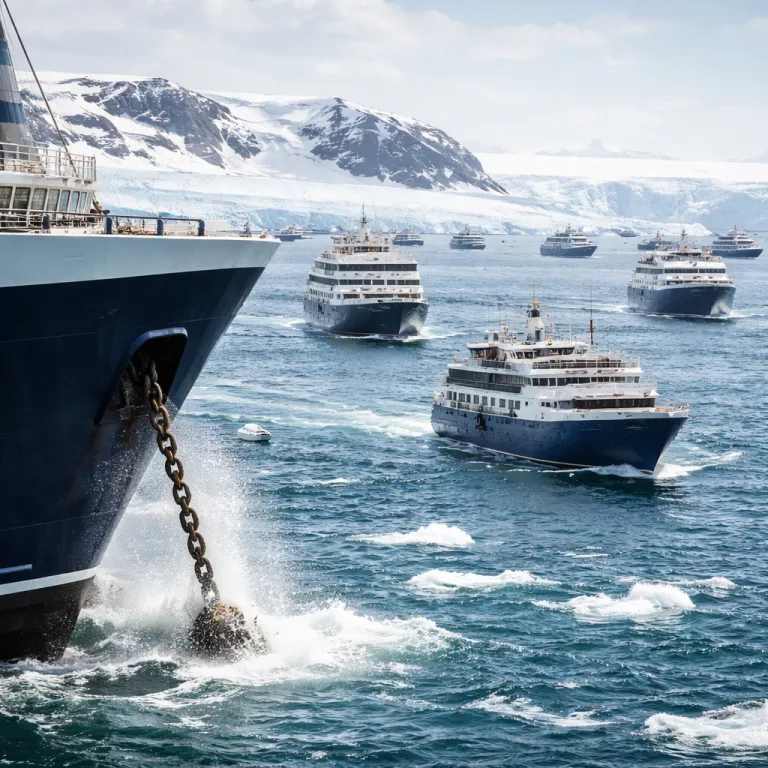
Stand on the bridge of a small ship in the Gerlache Strait and you can sometimes count three or four silhouettes on the horizon. Each ship carries its own community of passengers, its own expedition team and its own promise of a singular Antarctic experience, yet all are tracing near identical tracks along the Peninsula. This is the reality of Antarctic expedition cruise overcrowding made visible in steel and ice.
Because the Peninsula is relatively close to South America, it remains the default choice for most travellers from the USA and Europe. Shorter sailing distances mean lower fuel costs, more predictable itineraries and an easier marketing story for first time Antarctica travel guests. The downside is that when 98% of voyages concentrate here, the sense of remoteness that once defined an Antarctica cruise can feel diluted, especially in peak months.
That is why the industry is quietly revaluing the Ross Sea, East Antarctica and the sub Antarctic islands. These longer routes push beyond the current congestion by spreading ships across a wider geography, from Macquarie Island to the remote ice of the Ross Ice Shelf. For passengers, the trade is clear; more days at sea on an expedition ship, but far fewer other ships on the horizon and a deeper, slower experience of Antarctica.
Voyages to these regions often use higher ice class expedition ships, because the sea ice is thicker and the weather less forgiving. A small ship with serious ice class and a seasoned expedition team can reach emperor penguin colonies or rarely visited historic huts that no standard Antarctic cruise will attempt. The result is an experience that feels closer to exploration than to a conventional cruise, even though the same IAATO rules still govern landings and passenger numbers.
There is also a growing premium on sub Antarctic arcs that combine Antarctica with South Georgia or the Falklands. These itineraries ease Peninsula pressure by adding wildlife rich islands where landing slots are not yet as tightly contested. For travellers who want to visit Antarctica but also avoid the busiest corridors, these hybrid routes offer a more balanced trip with varied landscapes and fewer overlapping ships.
Ethically minded travellers are also rethinking the whole idea of last chance polar travel. If you are weighing whether to prioritise Antarctica or the Arctic, it is worth reading a deeper reflection on honest thinking on last chance polar travel before locking in a route. The core question is not only where the ice is changing fastest, but how your presence as one of many passengers on cruise ships interacts with fragile ecosystems and local regulations.
As capacity tightens on the Peninsula, operators that can offer credible alternatives will hold an advantage. Expect more expedition cruises that position the Ross Sea or East Antarctica as the new frontier, and more marketing that frames sub Antarctic islands as essential chapters in any serious Antarctica expedition. For travellers willing to trade a shorter flight for a longer voyage, the reward is a polar trip that feels less like queueing for a famous viewpoint and more like inhabiting a vast, still evolving wilderness.
How ships, crews and itineraries differentiate when the ice is the same
When eighty ships chase the same Peninsula, differentiation becomes an art form. The ice, the penguin colonies and the classic anchorages are shared, so the real variables are size ship, expedition team calibre, ship design and how honestly operators manage crowding and landing logistics. For a discerning traveller, this is where reading beyond the brochure matters.
Start with the hardware. A small ship such as Magellan Explorer or Ocean Explorer is built around the idea that every passenger should be able to land in a single rotation, which aligns neatly with the 100 person ashore rule and keeps the experience fluid. Larger expedition ships and mainstream cruise ships may offer more dining venues and a very comfortable spa, but they often struggle to deliver the same frequency of landings within the same IAATO framework.
Ice class is another quiet differentiator. Silver Endeavour, for example, combines a high ice class hull with a relatively low passenger count, which allows the expedition team to push deeper into pack ice when conditions allow. That does not mean every Antarctic cruise on such a vessel will reach the polar circle, but it does mean the captain has more options when other ships are forced to hold back at the ice edge.
Then there is the software; the human factor. A strong expedition team and well trained crew guides can turn a constrained landing schedule into a full, layered narrative of Antarctic history, wildlife and climate science. On a weaker expedition cruise, the same operational limits feel like dead time, with passengers waiting in lounges for their colour group to be called while the ice drifts by outside. As one veteran expedition leader noted in a recent IAATO briefing, “You cannot control the weather or the wildlife, but you can control how prepared your team is when the window opens.”
Itinerary design also reveals how seriously an operator takes these limits. Some expedition cruises build in flexible days and alternative landing sites, accepting that ice and weather will force last minute changes. Others lock into rigid timetables that look efficient on paper but leave little room to adapt when several ships converge on the same bay or when katabatic winds close a landing window.
From a pricing perspective, the market is already segmenting. At the top end, we see expedition yacht charters and ultra small ship departures marketed as the perfect ship solution for those who want maximum time ashore and minimal crowding. In the mid range, operators compete on lecture quality, gear, cabin comfort and how transparently they explain the realities of landing rotations and capacity management in their pre trip materials.
For travellers used to extending business trips into leisure, timing and booking strategy matter. Early booking windows, such as those highlighted in analyses of polar pricing windows and flash sales, can secure access to smaller ships and better cabins before capacity tightens. The key is to treat an Antarctica cruise less like a commodity and more like a carefully reviewed investment in time, money and a once in a lifetime polar experience.
What Svalbard’s rules signal for Antarctica and how to book differently
Svalbard has already shown what happens when a destination decides that capacity has been reached. Stricter passenger limits and tighter rules on where ships can land have reshaped the Arctic expedition cruise market, and many in the industry quietly expect similar pressure to shape future Antarctic regulations. For travellers, this is not a reason to panic, but a prompt to book with more intention.
If Antarctica follows Svalbard’s path, we may see formal caps on the number of ships allowed in key Peninsula zones at any one time. That would favour operators with smaller expedition ships and long standing IAATO membership, because they already design itineraries around low impact landings and careful coordination. It would also accelerate the shift toward longer, more complex Antarctica travel routes that include sub Antarctic islands or less visited sectors of Antarctica.
The luxury segment is already hedging against future constraints. Expedition yacht charters, high end fly in fly out Antarctica cruise options and ultra low capacity departures on ships like Silver Endeavour or Magellan Explorer are positioned as ways to sidestep the busiest choke points. These products cost more, but they align closely with the 100 passenger ashore rule and give expedition teams more freedom to adjust plans when other ships cluster around a single bay.
Fly cruise models, where passengers skip the Drake Passage by air and join a small ship directly on the Peninsula, also interact with capacity limits in subtle ways. They reduce sea days and concentrate the trip into a shorter, more intense window of landings and zodiac cruises. For some, that is the perfect ship based solution; for others, it compresses the experience too tightly and leaves little room for weather delays.
From a planning standpoint, the smartest move now is to read beyond glossy marketing and focus on structure. Look for clear explanations of how many passengers the ship carries, how many zodiacs are on board, and how the expedition team manages rotations at landing sites. A thoughtful review from past guests can reveal whether the trip felt like a genuine Antarctica expedition or a crowded cruise with occasional landings. One repeat guest quoted in a CLIA trends report summed it up simply: “The ship felt small enough that we were off the gangway and into zodiacs within minutes, not hours.”
It also pays to think across both poles. If your long term travel plans include the northern lights or Arctic wildlife, consider pairing an Antarctic voyage with a carefully timed Arctic trip, using resources such as this guide to planning an unforgettable journey to the northern lights in December. Spreading your polar ambitions over several years, and across both hemispheres, reduces pressure on any single region while giving you a fuller sense of the global polar system.
Ultimately, landing rules and ship capacities are not an abstract policy issue. They shape how long you stand on a beach while penguins ignore you, how many other zodiacs share the same iceberg, and whether your memories are of silence and space or of waiting in line. Booking differently now, with a clear eye on ship size, route and expedition philosophy, is the most reliable way to ensure that when you finally visit Antarctica, the ice still feels bigger than the industry built around it.
Key figures shaping the future of Antarctic expedition cruising
- Passenger numbers on expedition cruises reached approximately 367,557 in 2022, a sharp rise that concentrates demand on limited Antarctic Peninsula landing sites (source; CNBC analysis of expedition cruising growth, drawing on IAATO and industry data).
- The number of passengers joining expedition style cruises is projected to have increased by about 71% between the 2019–20 and 2022–23 seasons, intensifying pressure on landing capacity without a corresponding rise in approved locations (source; IAATO 2022–23 season report and Cruise Lines International Association market data).
- The global expedition cruise market is valued at an estimated 9.94 billion USD in 2026, signalling strong commercial incentives to add more ships even as IAATO guidelines hold firm on site specific caps (source; specialist industry audit of luxury expedition cruises).
- Approximately 98% of Antarctic voyages focus on the Peninsula region, which means most passengers, ships and expedition teams are competing for the same narrow band of anchorages and landing windows (source; International Association of Antarctica Tour Operators summaries).
- IAATO rules limit landings to 100 passengers ashore at any one time and prohibit ships carrying more than 500 passengers from conducting landings, creating a structural advantage for small ship and mid sized expedition ship operations.
- Industry associations such as CLIA and IAATO, working with operators like HX Expeditions, are using passenger data, environmental reports and industry forecasts to guide sustainable cruise practices and inform future capacity management in Antarctica.
- Quick booking checklist for travellers: confirm total passenger capacity and typical landing group size; ask how many zodiacs are carried and how many guests per boat; check whether your itinerary includes alternative landing sites or buffer days; read recent guest reviews that mention time ashore versus time waiting; and verify that your chosen Antarctica cruise operator is an active IAATO member with a clear environmental policy.