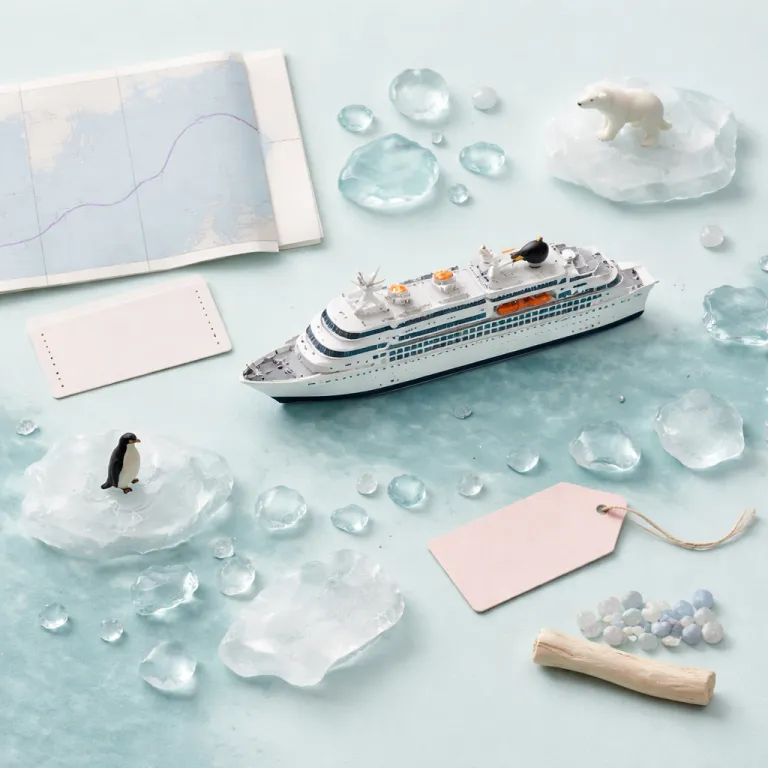
What the Viking polar cruise deal in April really buys you
Viking has positioned its April 2026 polar promotion as a limited window into long-range expedition inventory rather than a simple flash sale. The offer applies to select grand journeys and shorter expedition cruises across the Arctic, Antarctic and pole-to-pole routes, including the 87-day Nuuk–Ushuaia voyage that links both poles in a single itinerary. For business travelers turning a boardroom in Buenos Aires into a boarding gate in Ushuaia, the timing, structure and fine print of these fares matter more than brochure gloss.
The headline promise is discounted airfare on qualifying cruise bookings, with some departures marketed as including free or heavily reduced long-haul flights. In practice, the air component typically covers economy or premium economy tickets, while business class is either excluded or offered at a supplement that can erode the apparent savings. You should ask Viking Cruises to itemize the air pricing line by line, including regional connectors, checked baggage rules and any overnight layover hotels, before you pay a deposit or lock in a specific gateway.
On the cruise side, the promotion touches several itineraries that matter to polar specialists, from Nuuk to Buenos Aires via the great arcs of the North Atlantic to classic Antarctic Peninsula sailings that end in Ushuaia. The most ambitious map is the pole-to-pole journey, marketed as an 87-day expedition across 12 countries, operated on the purpose-built Viking Polaris with Zodiac landings, science facilities and onboard lectures by subject-matter experts. Here, the starting price per person is advertised at around 76,995 USD in standard balcony categories, based on Viking’s published expedition pricing reviewed in April 2024, and the April offer typically adds value through bundled credits and air incentives rather than a dramatic reduction in the base cruise fare. Always verify current pricing and inclusions directly with Viking’s booking engine, latest brochures or promotion terms, as figures can shift with demand and currency.
Viking’s own expedition materials list inclusions such as business class airfare from select gateways, shore excursion credit, shipboard credit, visa service, a beverage package and Wi‑Fi. That list describes what is included in the most fully loaded cruise-and-air bundles, but under the April campaign you will see variations where the business class element is swapped for reduced economy air or where “free airfare” is capped by strict terms and conditions. Treat every proposal as a bespoke quote and request documentation that separates cruise, air, taxes, fees and credits, then confirm how each component behaves if you change dates, switch cabins or cancel.
Cabin categories are another quiet fault line in the April 2026 expedition offer, because the most sought-after suites often sit outside the promotional grid. Entry and mid-level balcony cabins on Viking’s expedition ships usually carry the most aggressive special fares, while top suites and solo cabins may only see modest reductions or none at all. If you are aiming for a specific cabin number on a specific deck, learn to read the fine print on which categories qualify before you let a sales agent hide real availability behind generic language about “limited space” or “last cabins.”
Routes, maps and where the value actually sits
The core of the April 2026 polar offer is a set of clearly defined expedition routes, and the most strategic travelers start with the map rather than the marketing headline. On the Arctic side, Nuuk features heavily as both a symbolic and logistical anchor, with days ashore that move from Greenlandic ports to Canadian and Icelandic coasts in a chain of 12 countries. On the southern leg, Buenos Aires and Ushuaia form the air-and-sea hinge, with Buenos Aires–Ushuaia flights and transfers bundled into many cruise-and-air packages sold under the same umbrella.
For the long pole-to-pole cruise, expect 87 days at sea and ashore, with guided landings, onboard lectures and Zodiac operations forming the daily rhythm. The duration is not just a statistic; it defines how you should think about deposit timing, cash flow and the psychological weight of committing roughly a quarter of a year to one ship and one operator. When you request quote details, ask Viking to show a day-by-day map that does not hide weather-dependent segments behind vague language, and insist on a clear explanation of how many guided excursions are included versus optional add-ons.
Shorter voyages within the promotion include focused Antarctic Peninsula itineraries and Arctic segments that skim the great glacial landscapes along Greenland and Iceland. These cruises can be smarter entries into polar travel for executives who cannot spare 87 days but still want serious ice time and a structured program of learning experiences with local guides and scientific experts. Here, the April 2026 campaign often appears as reduced airfare combined with modest cruise fare adjustments, so you should compare the total trip cost against non-promotional sailings in similar seasons before assuming the deal is uniquely generous.
One practical tactic is to use historical patterns to benchmark this year’s offer. Ask your advisor to pull previous fares and deposit levels for comparable itineraries and to show how current special pricing compares once you factor in free or reduced air, onboard credits and any hidden surcharges. If a quote “hide” maneuver appears—where the agent emphasizes headline savings but downplays higher port taxes, stricter terms or nonrefundable air—slow the conversation and request every line item in writing.
Geography also shapes value in quieter ways, especially when you look at tour combinations and the cost of pre- and post-cruise stays. A Nuuk embarkation often requires complex flights and transfers that can eat into any airfare benefit, while Buenos Aires offers more competitive air markets and a richer hotel scene for pre-cruise nights. When you weigh itineraries, do not let a glossy route map distract you from the real logistics of getting to and from the ship, because those movements can add several days and thousands of euros or dollars to your total travel budget.
Deposits, terms and when to walk away from the deal
The most deadline-driven element of the April 2026 promotion is the requirement to place a deposit between the first and last days of the month. That urgency can tempt even seasoned travelers to wire funds before they fully understand how fare structures interact with cancellation rules, change fees and air ticketing deadlines. For an 87-day expedition across 12 countries, that is a risk you should not take lightly.
Before you commit, ask three non‑negotiable questions about the deposit and the broader terms and conditions. First, clarify whether your deposit is refundable, partially refundable or converted into a future cruise credit if you cancel, and how those rules differ between standard and promotional fares. Second, learn exactly how reduced or free airfare behaves if you change dates, because some discounted air offers become fully non‑changeable once ticketed, turning a flexible cruise reservation into a rigid air contract.
Third, interrogate what happens to any bundled extras such as shore excursion credits, beverage packages or Wi‑Fi if you downgrade cabins, shift to a different itinerary or move your sailing year. Some cruise-and-air bundles quietly include clawback clauses that remove value if you adjust your plans, which can make a seemingly free perk quite expensive in practice. Ask Viking Cruises to send the full terms and conditions in writing and to highlight any differences between standard and promotional bookings, then take the time to read them line by line before you authorize payment.
There are moments when the smartest move is to let the April 2026 offer pass and wait for a shoulder-season fare. If you are flexible on dates and open to slightly less popular itineraries, you may find that non-promotional cruises in early or late season offer similar or better total value once you factor in air, hotels and transfers. This is especially true if you value business class air more than onboard credits, because some later campaigns focus on air upgrades rather than headline cruise discounts.
For executives balancing work calendars with polar ambitions, the key is to align the promotion with your real constraints rather than the other way around. Use the April window to request quote options across multiple cruises, compare how many guided days ashore are included, and learn where each itinerary sits on the spectrum between hard exploration and comfortable travel. If a sales pitch seems to hide crucial details behind urgency, step back, map your priorities and remember that the ice will still be there next season, even if this particular promotion has expired.
Key figures for Viking’s pole to pole expeditions
- Cruise duration on the Nuuk to Ushuaia grand journey is 87 days, spanning roughly one quarter of a calendar year at sea and ashore.
- The itinerary visits 12 countries, combining Arctic, Atlantic and Southern Ocean regions into a single continuous voyage.
- The starting price per person for the full pole-to-pole cruise is approximately 76,995 USD in standard balcony categories, based on Viking’s published expedition pricing reviewed in April 2024; always confirm current fares directly with the line.
Essential questions about the Viking polar cruise deal
What is included in the cruise package under the promotion ?
Under the April 2026 polar offer, the core inclusions broadly mirror Viking’s standard expedition product, with variations depending on cabin category, sailing date and specific itinerary. The most complete packages pair the cruise with international air, regional transfers, guided shore excursions, onboard lectures, Wi‑Fi and a beverage program, while some promotional fares swap business class air for reduced economy airfare or limit air to select gateways. Always request a written breakdown that separates cruise, air, taxes, fees and credits so you can see exactly what is included in your chosen fare and how each element is protected.
How long is the pole to pole cruise and who should book it ?
The marquee Nuuk–Ushuaia expedition runs for 87 days, linking Arctic and Antarctic regions in a single continuous journey that crosses multiple climate zones. This duration suits travelers with extended flexibility, such as executives between roles, retirees or remote professionals who can work from a ship with reliable connectivity and are comfortable with a long-haul commitment. If your schedule cannot absorb nearly three months away, consider booking one of the shorter Arctic or Antarctic segments included in the same promotional framework instead.
When is it better to skip the April promotion and wait ?
It can be wiser to skip the April 2026 campaign if you are highly flexible on dates, cabin categories and embarkation ports. Shoulder-season sailings outside the promotion sometimes offer comparable or better total value, especially when airlines release competitive business class sales that outshine bundled reduced airfare or when alternative operators discount similar routes. If the only way to use the offer is to compromise heavily on timing, route or cabin, waiting for a later deal or a different expedition line may deliver a more satisfying polar experience.
Sample cost breakdown and decision checklist
When you receive a quote, ask for a simple line-item summary so you can compare like for like:
- Cruise fare (per person, based on cabin category and taxes)
- International air (class of service, gateways, change rules)
- Regional flights and transfers (for example, Buenos Aires–Ushuaia)
- Port charges, government fees and onboard gratuities
- Included credits (shore excursions, onboard spending, beverage package)
- Estimated extras (insurance, pre- and post-cruise hotels, independent tours)
Use this breakdown as a checklist when you speak with Viking or your travel advisor so you can verify the April 2026 polar promotion against standard fares and decide whether the deal genuinely fits your priorities.
