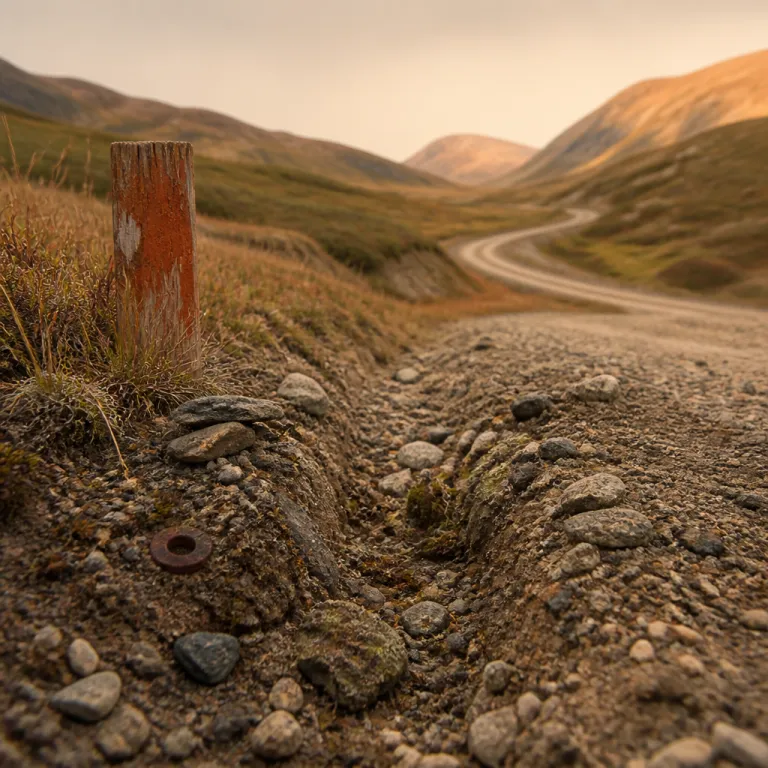
Arctic Valley Road as Anchorage’s most accessible Arctic style escape
Arctic Valley Road begins just east of Anchorage and climbs quickly into the Chugach foothills. This short access route feels surprisingly wild, yet city views remain close and reassuring in the rear mirror. For many travelers testing Arctic conditions before a full polar expedition, this high valley drive offers an ideal first taste of cold-climate travel.
The Arctic character of the landscape emerges within minutes as the paved surface gives way to well graded gravel and the spruce forest thins. You leave the coastal lowlands of Anchorage, Alaska, and enter a glacially carved valley shaped by ice, wind, and winter storms that sweep in from the broader Arctic region. Because the climb is modest by alpine standards, the route suits cautious drivers who still want a genuine backcountry atmosphere without committing to a remote expedition road.
From a practical perspective, Arctic Valley Road runs for about 7 miles, or roughly 11 kilometers, from the junction near the Glenn Highway to the upper parking lot at the Arctic Valley Ski Area, according to distance figures commonly cited by the Anchorage Ski Club and local mapping resources. Over that distance the total elevation gain is often reported as around 1,220 feet, which is approximately 372 meters, giving an average grade that feels steady but not intimidating for most vehicles. The climb above the city is popular with locals who treat it as a quick escape from urban life into a quiet Arctic-style valley with big sky views.
Route, map reading, and how Arctic Valley Road fits wider Arctic journeys
On a map of the United States, Arctic Valley Road looks like a minor spur, yet on the ground it functions as a strategic gateway to the Chugach backcountry. The route begins just off the Glenn Highway, one of Alaska’s primary road corridors, which links Anchorage to Interior Alaska and several national parks further north. For travelers planning longer Arctic trips, this short mountain road offers a low risk rehearsal for driving remote gravel routes in harsher regions.
Because the area sits outside formal national parks, you will not pass entrance gates or staffed visitor centers on Arctic Valley Road. Instead, you move through a mosaic of Joint Base Elmendorf-Richardson military land, municipal holdings, and ski area leases where live fire training and fire exercises sometimes occur away from the public road corridor. Respect all signage, stay strictly on the designated road, and remember that this is both a recreational access route and an active training landscape.
Many Arctic specialists pair a day on Arctic Valley Road with planning sessions for more ambitious voyages, such as a rare expedition cruise to Jan Mayen, the volcanic Arctic island that only a handful of ships reach each year, described in this detailed guide on a remote Arctic island voyage. Studying the map of the valley, noting how the road follows natural contours and ridgelines, helps you understand how infrastructure adapts to Arctic terrain. That same reading of slopes, average grade, and exposure becomes essential when you later evaluate unpaved roads in Greenland, Svalbard, or northern Alaska.
Seasonal character, winter access, and ski area life above Anchorage
Arctic Valley Road is technically open year round, but conditions change dramatically with the seasons. In summer the climb feels gentle, with dry gravel, easy passing places, and a relaxed approach to the ski area at the top of the valley. Once winter arrives, the same road transforms into a genuine Arctic-style test of traction, visibility, and cold weather preparedness.
Local authorities and the Anchorage Ski Club, which operates the Arctic Valley Ski Area, emphasize that the road is generally open but that conditions vary and should be checked before traveling. They also stress that four wheel drive and winter tires are recommended in winter due to snow and ice, and confirm that popular hiking routes, including the Rendezvous Peak Trail, are accessible from the road corridor when conditions allow. One longtime volunteer summed it up simply: “If the wind is howling in town, it’s twice as wild up here—check the report before you drive.”
For winter visitors, the ski area at the top of Arctic Valley Road offers a community focused alternative to larger resorts elsewhere in Alaska. The modest lift network, volunteer driven operations, and simple day lodge create a friendly atmosphere that pairs well with a wider Arctic themed holiday, perhaps including an urban festive stop such as an Arctic-style Christmas escape in Washington State described in this North Pole at the fair feature. On clear days, the ski area views stretch from the valley down to Anchorage, across to the Knik Arm, and out toward distant peaks that hint at the broader Arctic beyond.
Hiking, cycling, and human powered climbs on Arctic Valley Road
While most visitors drive Arctic Valley Road, the climb has become a quiet favorite among local cyclists and hikers. Road cycling enthusiasts treat the ascent as a training climb, using the steady average grade to build endurance for longer mountain passes elsewhere in Alaska. On a calm evening, the combination of cool Arctic air, soft light, and minimal traffic makes this valley road one of the most atmospheric rides near Anchorage.
For walkers, the road itself provides a straightforward route into the backcountry without the need for technical navigation. From the upper parking lot, signed trails lead toward Rendezvous Peak and neighboring ridges, where the views extend over the city, the Ship Creek drainage, and the wider Chugach Range. In late summer, berry picking on the slopes above the ski area becomes a cherished local ritual, connecting residents and visitors alike to the seasonal rhythms of this Arctic valley landscape.
Those planning human powered trips should study a detailed map before setting out, paying attention to the steeper gullies above the road and the proximity of military training zones where live fire activities may occur away from the public. The road east from Anchorage has limited shoulder space, so cyclists often start early to avoid traffic and use bright clothing for visibility. For travelers preparing for more remote Arctic cycling or ski traverses, a day spent ascending and descending Arctic Valley Road offers valuable practice in pacing, layering, and reading rapidly changing mountain weather.
Practical logistics: access, parking, and safety on Arctic Valley Road
Reaching Arctic Valley Road is straightforward from central Anchorage, which makes it especially appealing for time pressed Arctic travelers. From downtown you follow the Glenn Highway northeast, then turn onto the signed access road toward Arctic Valley and the ski area. Within a short drive you transition from urban neighborhoods and a riverside corridor near Ship Creek to a high valley that feels far removed from city life.
The lower section of the road is paved, but the surface soon changes to gravel, so a vehicle with reasonable clearance is advisable even in summer. In winter, local guidance is clear that a four wheel drive vehicle with winter tires or chains is strongly recommended, because the average grade and exposed corners can become treacherous when compact snow and ice build up. Drivers should carry basic emergency supplies, including warm layers, food, water, and a charged phone with key contact numbers for Anchorage based assistance in case conditions deteriorate.
At the top of the climb, a main parking lot serves the Arctic Valley Ski Area, trailheads, and informal sledding slopes. Space can be limited on peak winter weekends, when the lot can feel effectively full by late morning, so arriving early helps secure a spot close to the ski area lodge and lifts. Because this is a community operated facility rather than a large commercial resort, visitors are encouraged to check the ski area website or blog updates for current operations, snowpack information, and any temporary closures linked to military fire exercises or maintenance on the access road.
Linking Arctic Valley Road with wider Arctic and Antarctic travel plans
For many international visitors, Arctic Valley Road is not the final goal but a stepping stone toward more ambitious polar journeys. A few days in Anchorage, Alaska, with repeated trips up the valley road in different weather, can serve as a practical shakedown for clothing systems, camera gear, and vehicle habits before heading to more remote Arctic regions. The proximity to a major airport and urban services makes this area uniquely efficient for testing equipment under real winter conditions without committing to full wilderness exposure.
Travel planners often weave Arctic Valley experiences into broader itineraries that might include flights north toward the Arctic Circle, or south to join an Antarctic voyage from South America. Understanding how a modest road in Alaska responds to storms, freeze thaw cycles, and maintenance constraints helps travelers interpret similar challenges on gravel roads in Greenland, Svalbard, or Patagonia. For those considering a fly and cruise option to the Antarctic Peninsula, this detailed analysis of whether skipping the Drake Passage is worth it offers a useful comparison of comfort, cost, and environmental impact when planning complex polar routes.
From an editorial perspective, Arctic Valley Road illustrates how small scale infrastructure can unlock high value nature based tourism close to a major city. The route connects the public to a ski area, hiking trails, and quiet backcountry slopes while still coexisting with military training needs and conservation priorities. As interest in Arctic and Antarctic travel grows, this kind of carefully managed access road will play an increasingly important role in balancing recreation, safety, and the fragile character of cold climate landscapes.
Key statistics and figures for Arctic Valley Road
- The length of Arctic Valley Road is approximately 7 miles, or about 11 kilometers, from the Glenn Highway junction to the upper parking lot, making it a half day excursion rather than a full expedition drive; this distance aligns with figures shared by the Anchorage Ski Club and regional mapping tools.
- The total elevation gain on the climb between the highway and the ski area is often cited as around 1,220 feet, or roughly 372 meters, which is manageable for most vehicles and fit cyclists accustomed to moderate mountain passes.
- The highest elevation reached near the Arctic Valley Ski Area is commonly reported as approximately 2,622 feet above sea level, or about 799 meters, which is enough to deliver expansive views without exposing visitors to high altitude effects.
- Arctic Valley Road is accessible in all seasons, but local guidance stresses that travelers should check conditions before departure and consider four wheel drive in winter due to snow and ice on the steeper sections.
- The road provides primary access to a community operated ski area and multiple hiking trails, which significantly enhances local recreation and tourism opportunities for Anchorage residents and visiting Arctic travelers.
FAQ about Arctic Valley Road and Arctic style travel near Anchorage
Is Arctic Valley Road open throughout the year for visitors?
Arctic Valley Road is generally open year round, but surface conditions vary with weather, especially during winter storms and spring freeze thaw cycles. Travelers should always check recent reports from local authorities or the Arctic Valley Ski Area before setting out. Temporary closures or restrictions can occur during severe weather or when maintenance is required on the gravel sections.
Do I need a four wheel drive vehicle to drive Arctic Valley Road?
In summer, most standard vehicles with reasonable clearance can handle the climb, provided drivers proceed slowly on the gravel and watch for potholes. During winter, a four wheel drive vehicle equipped with proper winter tires or chains is strongly recommended because the average grade and exposed corners can become icy. Local drivers treat the road with respect in cold conditions, and visitors should adopt the same cautious approach.
Are there hiking trails accessible directly from Arctic Valley Road?
Yes, several hiking routes begin near the upper parking lot and along side tracks branching from Arctic Valley Road. The most popular option is the Rendezvous Peak Trail, which offers a relatively short but steep ascent to a summit with wide ranging views over Anchorage and the Chugach Mountains. In summer and early autumn, these trails also provide access to berry picking slopes and gentle ridgelines suitable for half day trips.
How does Arctic Valley Road compare with roads inside Alaska’s national parks?
Unlike roads inside major national parks such as Denali, Arctic Valley Road lies outside formal park boundaries and does not have entrance stations or shuttle systems. The drive feels more informal and community oriented, with a focus on local recreation rather than large scale tourism. For travelers, this means greater flexibility but also more personal responsibility for safety, navigation, and respect for both military training zones and fragile alpine habitats.
Can a visit to Arctic Valley Road help me prepare for Arctic or Antarctic expeditions?
Yes, a few days exploring Arctic Valley Road and the surrounding ski area can be an excellent practical rehearsal for longer polar journeys. You can test clothing layers, camera batteries, and vehicle habits in real cold weather while still remaining close to Anchorage based support. Many expedition travelers use this area as a final shakedown before heading to remote Arctic islands or embarking on Antarctic voyages from southern ports.