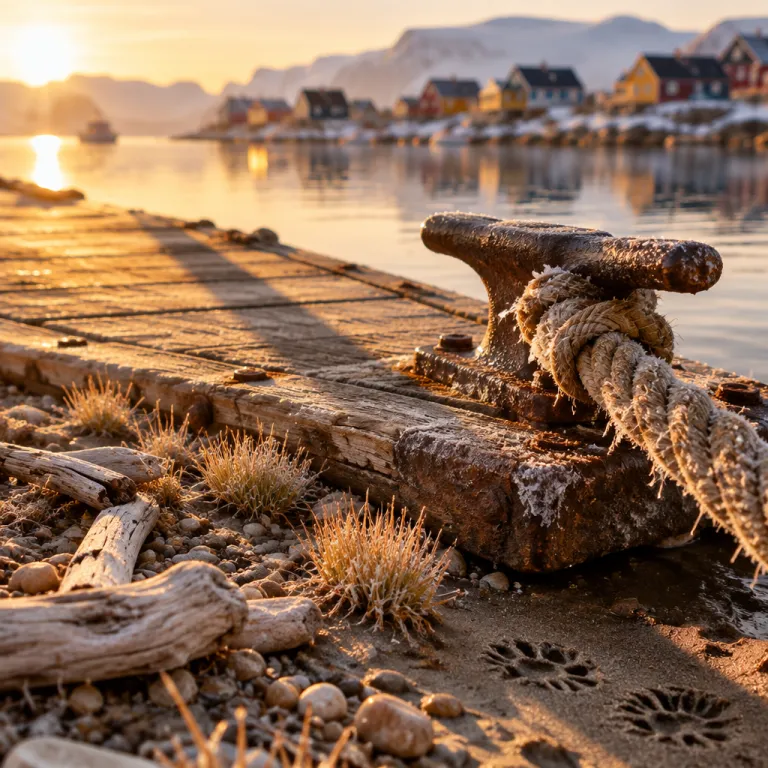
The long approach to Ittoqqortoormiit through Scoresby Sund
The Ittoqqortoormiit East Greenland remote Arctic settlement expedition begins long before the first zodiac lands. Your sense of scale shifts as the ship threads into Scoresby Sund, the immense fjord system that cuts deep into east Greenland and feels more like an inland sea than a single fjord. Cliffs rise more than a kilometre above the water, and the ice sculptures drifting past the bow look carved for a polar cathedral rather than a cruise backdrop.
Most itineraries reach Ittoqqortoormiit from northeast Greenland, entering the labyrinth of Scoresby Sound under a sky that can swing from pewter to cobalt in an hour. The approach is often silent except for the crack of sea ice against the hull and the low murmur of expedition commentary about the geology, the polar bear habitat, and the history of hunting in these waters. On a well run greenland cruise, the bridge team slows the ship so guests can stand outside and feel the temperature drop as the vessel noses closer to the ice edge.
From the outer decks you see why this is considered one of the most dramatic fjord systems on the planet. Islands appear as dark silhouettes, then resolve into steep sided massifs that guard narrow channels leading deeper into northeast Greenland National Park, even if your ship remains outside the formal national park boundary. The town of Ittoqqortoormiit greenland sits near the mouth of Scoresby Sund, and the final hours of the approach feel like a slow reveal of a settlement that has learned to live between rock, ice, and a polar sea that can close without warning.
A community of fewer than 400 at the edge of the map
Ittoqqortoormiit is not a picturesque prop on an arctic cruise route ; it is a working east Greenland town where fewer than 400 local people navigate a short summer and a long, dark winter. The settlement occupies a headland between the open Greenland Sea and the inner fjord system of Scoresby Sound, and the coloured wooden houses are more than postcard material, they are insulation against a wind that can knife straight off the sea ice. When you step ashore, the first impression is often the sound of dogs rather than people.
There are more sled dogs than residents in many parts of northeast Greenland, and Ittoqqortoormiit is no exception, with dog sledding still central to winter transport and hunting culture. Drying racks of seal and fish line some yards, a reminder that this is one of the last places where traditional polar hunting remains a daily activity rather than a staged performance for visitors. The Ittoqqortoormiit museum, small but carefully curated, explains how the town was founded to secure Danish presence in east Greenland and how families moved here from other regions, including areas closer to what is now the vast northeast Greenland National Park.
Walking between the houses, you sense how isolation shapes priorities in this remote town. There is a school, a church, a small shop, and a community hall, but no excess infrastructure, because every plank and pane of glass has arrived by ship or helicopter. For a deeper understanding of how settlements function on the fringe of park northeast territories, it is worth reading about expedition voyages into northeast Greenland before you sail, so the context of Ittoqqortoormiit scoresby landings feels less abstract and more connected to the wider region.
Life between sea ice, supply ships, and sled dogs
Daily life in Ittoqqortoormiit is choreographed around supply windows, weather, and the behaviour of sea ice rather than around cruise schedules. Cargo ships can reach this part of east Greenland only during a narrow summer period when Scoresby Sund is navigable, and the rest of the year goods arrive by helicopter from other greenland towns or from Iceland. That rhythm affects everything from food culture to building maintenance, because a missed shipment can mean months without fresh produce or spare parts.
Locals talk about the sea ice almost as a neighbour, describing how it forms, breaks, and returns, and how it dictates safe routes for hunting trips and dog sledding journeys. When the fjord system freezes, sleds replace boats, and hunters travel across the ice to reach areas where polar bears, seals, and other marine mammals move along leads and pressure ridges. Visitors sometimes struggle with the reality that polar bear hunting remains part of life here, yet for many families in Ittoqqortoormiit greenland it is both subsistence and a regulated cultural right within the broader framework of greenland national wildlife management.
The Ittoqqortoormiit museum offers a compact but powerful narrative of this relationship with the environment, displaying traditional hunting tools, sleds, and photographs of earlier generations on the sea ice. Children grow up learning to read weather and snow as carefully as textbooks, and the northern lights are not a spectacle sold in brochures but a familiar winter presence above the town. For a thoughtful reflection on how polar environments are changing and how we explain that change to the next generation, the piece on teaching children what glaciers sound like pairs well with an Ittoqqortoormiit East Greenland remote Arctic settlement expedition.
What expedition passengers actually encounter ashore
On the day your ship anchors off Ittoqqortoormiit, the landing feels different from a remote island hike or a glacier zodiac tour. You step from the inflatable onto a simple pier or directly onto the rocky shore, and the first thing you notice is the mix of working sled dogs, children on bicycles, and the smell of salt and diesel that defines many small greenland ports. This is not a curated national park visitor centre ; it is a lived in settlement where the rhythms of school, hunting, and maintenance continue whether a cruise is in town or not.
Guides usually lead small groups through the town, past the church, the shop, and the Ittoqqortoormiit museum, pausing to explain how fuel, food, and building materials arrive from Iceland or from other parts of northeast Greenland. You might be invited into the community hall for coffee and cake, where local people sell handicrafts made from seal skin, musk ox wool, and beads, and where conversations about weather, dog sledding routes, and the latest greenland cruise visits unfold with understated humour. The colourful houses, often photographed against a backdrop of ice filled Scoresby Sound, are not just aesthetic landmarks but practical responses to limited daylight and harsh winters.
Wildlife encounters in town are usually limited to ravens, sled dogs, and the occasional Arctic fox, because polar bears are not welcome visitors inside the settlement perimeter. Still, the knowledge that polar bears move along the nearby coast and across the sea ice adds a quiet tension to any walk beyond the last house. For many travellers, the most memorable experience is the warmth of the welcome in such a remote arctic town, a reminder that hospitality here is measured less in amenities and more in the willingness to share stories from a life lived at the edge of Scoresby Sund.
Choosing the right voyage and travelling with respect
Not every itinerary that sails into Scoresby Sund includes time ashore in Ittoqqortoormiit, and that choice shapes the character of your voyage. Some operators focus almost entirely on the wilderness of northeast Greenland National Park and the surrounding park northeast coastal areas, offering long days among icebergs and mountains but little contact with local communities. Others design a more balanced Ittoqqortoormiit East Greenland remote Arctic settlement expedition, combining fjord system exploration with a town visit that anchors the landscape in human experience.
When comparing voyages from Reykjavík Iceland or from other arctic gateways such as Svalbard Greenland combination routes, look closely at how operators describe cultural encounters. A thoughtful greenland cruise will frame Ittoqqortoormiit as a partner rather than a backdrop, scheduling visits in consultation with local people and limiting group sizes ashore to avoid overwhelming the town. For broader context on how expedition companies are rethinking itineraries and logistics in polar regions, the analysis of the evolving polar travel pipeline on planning an Antarctic voyage offers useful parallels for east Greenland planning.
Respectful behaviour ashore is straightforward but essential. Ask before photographing individuals, avoid wandering into private yards even if sled dogs look photogenic, and do not bring sweets or random gifts for children, which can create expectations that the community has not requested. If you want to support Ittoqqortoormiit greenland in a tangible way, buy locally made crafts, spend time in the museum, and listen more than you speak, allowing this remote arctic town to define its own narrative within the wider story of Scoresby Sound and northeast Greenland.
FAQ
How remote is Ittoqqortoormiit compared with other Arctic towns ?
Ittoqqortoormiit is one of the most isolated towns in east Greenland, reachable only by ship during a short summer window and by helicopter for the rest of the year. There are no roads connecting it to other settlements, and the surrounding region forms the southern gateway to the vast northeast Greenland National Park. That combination of limited access and proximity to extensive sea ice makes it significantly more remote than most communities visited on standard arctic cruises.
Can you see polar bears and northern lights during a visit ?
Polar bears move through the wider Scoresby Sund region, especially along the sea ice edge, but they are not commonly seen inside the town itself because residents actively deter them for safety. Expedition ships sometimes spot polar bears on ice floes or distant shorelines while navigating the fjord system, and guides maintain strict viewing distances. The northern lights are frequent in winter above Ittoqqortoormiit, though most visitors on an Ittoqqortoormiit East Greenland remote Arctic settlement expedition travel in late summer when darkness is just returning and aurora chances are increasing.
What should travellers bring for a shore visit to Ittoqqortoormiit ?
For a short landing, focus on layered clothing, a windproof outer shell, and waterproof boots suitable for wet zodiac landings. Bring a hat and gloves even in midsummer, because wind off the Greenland Sea and the nearby ice can drop temperatures quickly. A small dry bag for your camera, plus a respectful attitude toward local people and their privacy, matters more than any specialised gear.
Is dog sledding possible for visitors in Ittoqqortoormiit ?
Dog sledding is primarily a working activity for hunting and winter travel in Ittoqqortoormiit, not a mass tourism product. Some operators may arrange short sled rides with local mushers during the colder months, but these are usually limited and depend on ice conditions, daylight, and community interest. Most summer visitors will see sled dogs resting or training around town rather than taking part in sledding excursions.
How does tourism benefit and impact the community ?
Tourism brings cash income through the sale of handicrafts, museum visits, and occasional guiding or hosting work, which can supplement hunting and fishing livelihoods. At the same time, frequent large groups could strain local infrastructure and alter daily routines, so responsible operators coordinate closely with community leaders to manage visit frequency and group size. Travellers who engage thoughtfully, spend money locally, and respect boundaries help ensure that tourism remains a positive force for Ittoqqortoormiit and its residents.