The first crack: framing a glacier calving experience for families
The most powerful glacier calving experience for family polar travel with children begins long before anyone steps into a zodiac. Parents set the tone during the first quiet briefing, explaining that this is a classroom made of ice, sea and sky rather than screens and whiteboards. That framing turns every sound from the glacier into a lesson that children feel in their chest, not just read about in a book.
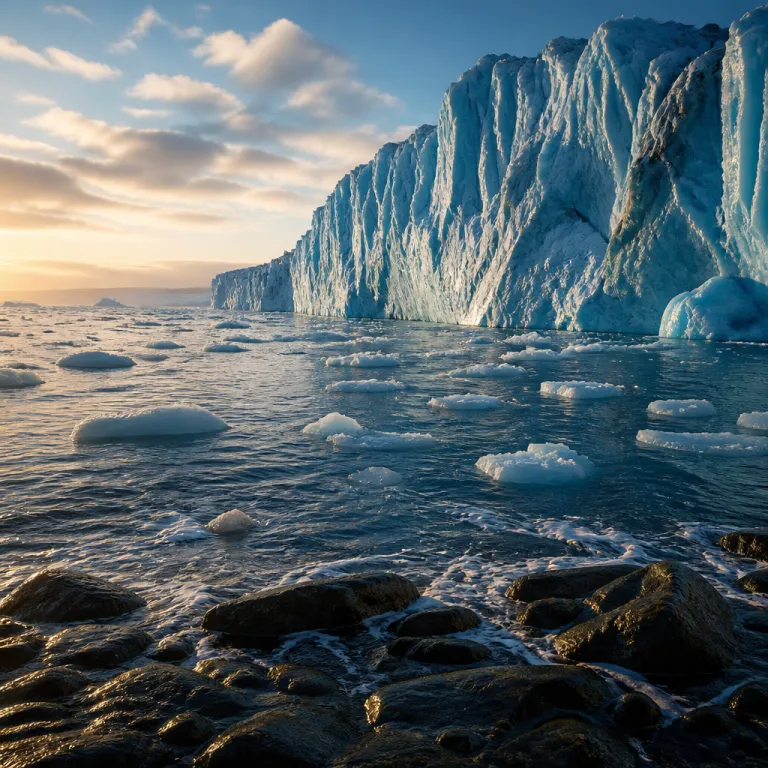
On a well run expedition ship, guides talk about how a glacier is a river of ice that flows slowly towards the sea, carrying a mass of ice that has been compressed over many years. They explain that when this moving mass of ice reaches the bay or fjord, it forms a towering ice front where calving happens and where families will spend time listening. Children quickly understand that these glaciers are long stories written in frozen water, and that they are arriving at the latest chapter.
Educators on board often work alongside scientists and use the same tools that appear in school projects, only here the classroom is a national park rather than a city park. Hydrophones and seismometers sometimes capture the hidden sounds beneath the surface water, turning the deep groans of glacier ice into audio that children can replay later during a quiet hour in the lounge. As one program summary from the U.S. National Park Service puts it with disarming clarity, “Why are glacier sounds important? They indicate environmental changes.”
Hearing the glacier: what calving sounds like from a zodiac
From a zodiac in a sheltered bay, the first sound of calving is often a sharp crack that silences even the most talkative children. A few seconds later comes the boom, a huge rolling thunder that seems to travel along the ice front and echo off every island and headland around you. Then the hiss arrives as chunk ice and spray hit the water, and the sea surface turns from mirror calm to a moving field of glacier ice.
Guides keep zodiacs at a safe distance, usually several hundred metres from the active glacier face, because a single block can hide a mass of ice beneath the water that is far larger than what children see above. Parents sometimes worry that the boat feels too close, but the real danger zone lies directly under the glacier’s overhanging bridge of ice where calving begins. Expedition leaders calculate how long glaciers have been retreating in that bay, how unstable the ice front is and how much time they can safely spend in the area before moving on.
In the south, at places like Neko Harbor in Antarctica, the soundscape is different from a national park in the north such as Ilulissat Icefjord in Greenland, yet the emotional effect on families is similar. Children feel the low frequency vibration through the inflatable floor as each new calving event sends waves of surface water towards the zodiac. Many parents later describe that hour on the water as the moment when climate change stopped being an abstract idea and became a physical sensation they shared with their children.
For families planning itineraries around rare celestial events, some Arctic voyages now combine glacier visits with eclipse routes along Greenland’s coast. When you read about a total solar eclipse expedition that threads between Greenlandic fjords, you are often looking at voyages that also linger near active glaciers where calving is common. Choosing an itinerary that includes both an eclipse track and time near a dynamic ice front can turn a couple of days at sea into a multi layered science lesson that children remember for years.
Where to go: family friendly glacier bays in the Arctic and Antarctic
Not every glacier is suitable for a glacier calving experience for family polar travel with children, and the best operators are honest about that. Some glaciers are long and low, with a shallow angle and limited calving, while others end in a sheer wall of glacier ice that drops directly into deep water. Families should look for itineraries that name specific bays and national park areas where calving is both frequent and safely observable.
In Greenland, Ilulissat Icefjord functions almost like a natural amphitheatre where families can watch huge icebergs drift from the glacier front into the open sea. Spending a couple of days here allows time for both ship based viewing and shore walks along marked trails in the World Heritage area, where children can see how chunk ice from past calving events has stranded along the coastline. Many families split their day between a quiet morning on deck and an afternoon hike, using each hour to connect what they hear on the water with what they see on land.
Farther south, Antarctic itineraries that include Neko Harbor or Margerie Glacier style experiences offer a different rhythm, with the ship often anchoring in a protected bay while zodiacs shuttle families towards the ice front. Operators focused on comfort and style now design polar voyages where a premium family can move from a calm breakfast to an active zodiac outing without logistical stress. For readers comparing options, our guide to Arctic luxury cruises exploring the polar regions in comfort and style explains how to balance cabin quality with access to serious glacier time.
In both hemispheres, national park regulations shape how close any ship or zodiac may approach a calving face, and that is a feature rather than a limitation. These rules exist because glaciers have been retreating at tens of metres per year in some regions, and the stability of the mass of ice at the terminus can change within a single season. Families who respect these distances often find that a slightly wider view helps children see the full arc of a calving event, from the first fracture line on the glacier surface to the final ripples crossing the bay.
Talking about climate change with children, one calving at a time
Parents often ask how to talk about climate change during a glacier calving experience for family polar travel with children without overwhelming them. The most effective approach starts with wonder, letting children feel the scale of a glacier and the cold of the ice before introducing the science. Once they have spent time listening to the cracks and booms, they are ready to hear why those sounds are changing.
Scientists now estimate that some Antarctic glaciers lose tens of billions of tons of ice each year, and similar trends appear in many Arctic regions. That loss of mass of ice feeds rising sea levels and changes the character of bays where families cruise, altering the pattern of surface water and the shape of the ice front over surprisingly short periods. When children see photographs from only a few years ago showing the same glacier longer and thicker, the phrase “glaciers long” stops being a poetic idea and becomes a measurable difference.
On board, educators and scientists often run short workshops where children handle small pieces of glacier ice and listen to recordings captured by hydrophones and seismometers. These sessions link directly to broader educational initiatives that use classroom lessons, field trips and audio recordings to teach glacier acoustics, with clear goals to foster environmental stewardship and preserve natural soundscapes. One program aimed at younger travellers phrases it simply for parents and children alike: “How can children learn about glacier sounds? Through educational programs and recordings.”
Families can extend this learning at home by replaying those sounds and revisiting maps of the national parks they visited, tracking how far south or north each glacier lies and how its front has shifted over time. Talking about increased glacier melting, rising sea levels and the loss of natural soundscapes becomes less abstract when children can connect each concept to a specific bay, island or park they remember. The emotional weight of that shared memory often turns the voyage into a defining parenting moment, where climate change becomes a story the family chooses to engage with rather than a distant headline.
Safety, silence and choosing the right ship for young ears
Safety around calving glaciers is not negotiable, and the best expedition leaders explain the rules in language that children respect. They describe how a single calving event can send a wave of displaced water racing across the bay, carrying chunk ice that can damage a zodiac or even a larger ship if it is too close. Children quickly grasp that staying back from the ice front is not about limiting fun but about giving the glacier space to move.
On deck, families often gather along the railings that act as a kind of bridge between the comfort of the vessel and the rawness of the polar environment. Guides encourage everyone to stand quietly for a full minute, letting the natural silence of the national park settle before the next calving boom arrives. That contrast between deep quiet and sudden sound is what makes a glacier calving experience for family polar travel with children so memorable, and it is why many parents say they remember the silence as vividly as the noise.
Choosing the right ship matters, especially for premium families who want both comfort and serious time near glaciers. Look for vessels with strong safety records, experienced polar guides and clear policies on how many hours per day are spent off the ship in zodiacs or on shore. Our detailed guide on what to expect on your first zodiac landing in Antarctica goes deeper into how operators manage distance, timing and group size so that even young children feel secure during their first approach to a calving face.
Once back on board after a day glacier outing, the conversation often shifts from adrenaline to reflection as families review what they have seen. Parents might compare notes on how many calving events occurred, how far the ship stayed from the ice front and whether the bay felt different from others visited in previous years. Over a couple of days, these repeated observations help children understand that glaciers are not static backdrops but living systems responding to a warming climate in real time.
FAQ
Why are glacier sounds important for children to hear in person ?
Hearing glacier sounds in person helps children connect physical sensations with environmental change. The cracks, booms and hisses of calving turn abstract climate data into something they can feel and remember. As one educational program states, “They indicate environmental changes.”
How close do ships and zodiacs get to a calving glacier face ?
Expedition ships and zodiacs stay at distances calculated to avoid waves and falling ice generated by calving events. Regulations in many national parks require operators to remain several hundred metres from the ice front, with extra margin when the glacier is especially unstable. This still allows clear views and strong sound while keeping families safely away from hidden masses of ice below the surface water.
What is the best age for children to join a glacier calving trip ?
Most operators recommend that children be old enough to follow safety instructions and sit quietly in a zodiac, which often means at least six to eight years old. Younger children can still enjoy ship based viewing from a protected deck, where parents control exposure to cold and noise. The key is matching the level of activity and time off the ship to each child’s attention span and comfort.
How can we prepare our family emotionally for seeing climate change up close ?
Before travelling, parents can frame the voyage as a chance to learn how glaciers work rather than a last chance to see them. Focusing on curiosity and questions helps children process what they see without feeling overwhelmed. After each day glacier outing, short conversations about what changed, what stayed the same and how people can help protect polar environments keep the tone constructive.
Can classroom learning really connect with what children hear at the glacier ?
Yes, especially when schools and expedition operators use similar tools and language. Many educational initiatives now combine classroom lessons, audio recordings and field trips so that children recognise concepts like calving and mass of ice when they finally stand in a polar bay. This continuity strengthens both their scientific understanding and their sense of responsibility towards fragile polar soundscapes.