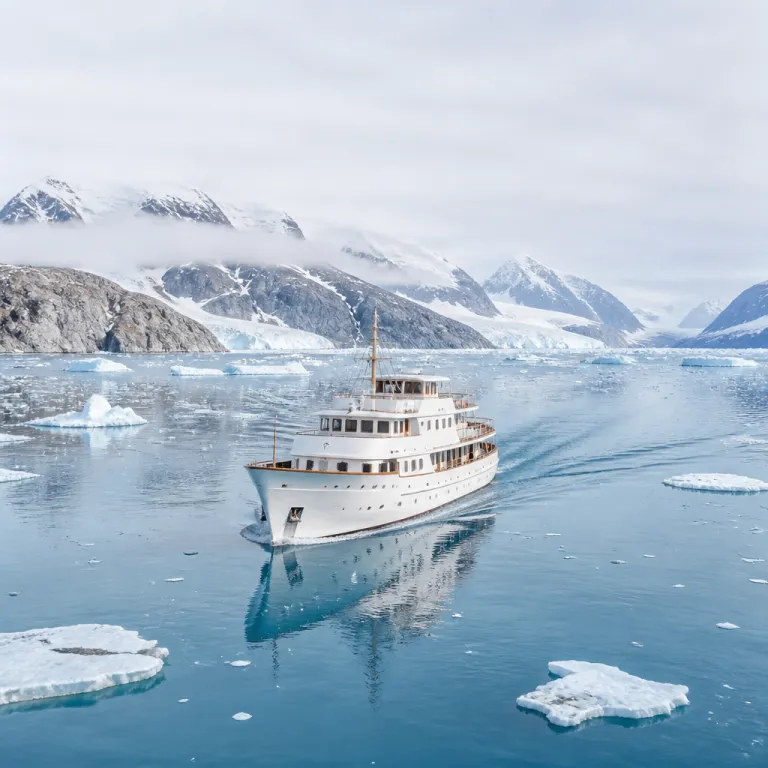
Why Northeast Greenland National Park only opens from the sea
Northeast Greenland National Park is a cartographic anomaly made real. This greenland national reserve covers roughly 375,000 square miles, the largest national protected area on the planet, yet it has no roads, no scheduled flights, and no permanent residents. The only practical way to experience this northeast greenland wilderness is by an expedition ship threading seasonal ice along the coast.
From the bridge you understand why the park is described as the world’s largest national park and also its most remote. The coastline is armored in polar ice for most of the year, and operators wait for aug and early autumn when satellite charts show fractures in the pack. That narrow access window means every Northeast Greenland National Park expedition cruise wildlife itinerary is built around conditions permitting navigation, not around a fixed calendar.
The voyage usually begins far from the park itself, in reykjavik iceland, where you board an ice strengthened ship designed for polar cruising. After a safety briefing with the expedition team, you sail out past the headlands of iceland and into the denmark strait, the cold corridor that separates iceland from greenland. That first day crossing sets the tone ; you feel the ship roll into a heavier swell, the air sharpens, and the horizon empties of other vessels.
Onboard life is structured but never rigid, because the arctic has its own agenda. Breakfast lunch and dinner day schedules flex around wildlife sightings, ice conditions, and the captain’s decisions. The Northeast Greenland National Park expedition cruise wildlife experience is less about ticking off ports and more about following leads through ice, fjord system entrances, and weather windows that open for a few hours then close again.
The denmark strait and the long approach from Reykjavík
Leaving reykjavik, you feel the shift from North Atlantic city break to serious arctic voyage within hours. The ship’s wake narrows as the water cools, and the expedition team begins daily briefings on greenland national regulations, polar bear safety, and how landings in a national park this remote actually work. This is where the Northeast Greenland National Park expedition cruise wildlife narrative starts to feel tangible rather than theoretical.
Most itineraries spend one or two days crossing the denmark strait, a stretch of water that can be glass calm or theatrically rough. During this day crossing, you settle into the rhythm of meals included in your fare, with included breakfast buffets, relaxed lunch dinner services, and a more formal dinner day ambience in the main restaurant. The galley quietly adapts menus to the sea state, serving lighter breakfast lunch options when the ship moves more than usual.
On clear nights, the northern lights sometimes curtain the sky above the ship, especially later in the aug season when darkness returns to the high latitudes. Standing on deck with a hot drink, you watch green arcs ripple over the denmark strait while the geographic endurance of the hull absorbs the swell. It is a reminder that this is not a standard cruise but an expedition where the vessel itself is a tool for reaching the largest national protected area on Earth.
Many travelers pair this route with other polar voyages, using reykjavik iceland as a hub for a wider arctic triangle that includes Svalbard and greenland. For a sense of how these itineraries connect, look at this detailed account of an immersive cruise journey from Reykjavík into Greenland and beyond. By the time the first low outline of northeast greenland appears off the bow, you have already crossed a psychological frontier as much as a geographic one.
Scoresby Sund and the shift from fjord walls to open tundra
For many itineraries, the first contact with northeast greenland is through Scoresby Sund, the world’s longest fjord system. Here the Northeast Greenland National Park expedition cruise wildlife experience begins in a cathedral of rock, with sheer walls rising more than 1,000 meters and icebergs drifting like slow sculpture. The scoresbysund largest channels feel intimate despite their scale, because the ship threads between headlands rather than skirting an open coast.
Zodiac excursions take you closer to the ice, with the expedition team reading wind, swell, and conditions permitting landings on gravel beaches. You might cruise beneath cliffs crowded with seabirds, then step ashore where musk oxen have grazed, their tracks pressed into the tundra. The contrast between the vertical drama of the fjord system and the horizontal quiet of the shore is one of the defining pleasures of this greenland national journey.
As the ship pushes north, the landscape gradually opens and the fjords widen into broader sounds. The scoresbysund largest side arms give way to lower hills, wider valleys, and a sense that the park is expanding around you, not just ahead of the bow. This is where the Northeast Greenland National Park expedition cruise wildlife focus shifts from geology to wildlife, with more frequent sightings of polar bears along the ice edge and Arctic foxes ghosting the shoreline.
Life onboard remains comfortably structured, with meals included and the reassurance of included breakfast, hearty lunch dinner options, and a convivial dinner day service that becomes a social anchor. If you are considering other high latitude voyages, the style of this sailing has more in common with an immersive small group journey through Alaska’s grand nature than with a conventional coastal cruise. The common thread is an expedition ship used as a mobile base camp, not a floating resort.
Wildlife portfolio: from polar bears to seabird cliffs
The Northeast Greenland National Park expedition cruise wildlife promise is not about constant sightings but about context when encounters happen. On some days, the ship’s bridge announces polar bears on the ice, and you watch them pace the floes, yellow white against blue grey water. On others, the drama is subtler, with walruses hauled out on remote beaches and Arctic foxes weaving between boulders.
“What wildlife can be seen?” is a question every traveler asks, and the verified answer is simple : “Polar bears, musk oxen, whales, and seabirds.” In practice, each landing feels different, because the expedition team chooses sites where wildlife and safety align, always with conditions permitting a secure zodiac transfer. Along the Blosseville Coast and within the fjord system, cliffs can be packed with kittiwakes and guillemots, their calls echoing over the water while the ship idles below.
Musk oxen are often spotted on open tundra, their dark silhouettes standing against patches of late season snow. In the water, you may see whales surfacing near the ship, especially in areas where polar ice has recently retreated and productivity spikes. The Northeast Greenland National Park expedition cruise wildlife experience is cumulative ; a day with only distant sightings still deepens your understanding of how animals use this largest national sanctuary.
Evenings bring a different kind of spectacle when the northern lights appear above northeast greenland, turning the sky into a slow moving theatre. After a day of landings, you return to the comfort of meals included in your fare, with breakfast lunch and lunch dinner services that feel almost decadent in such a remote park. It is this contrast between raw arctic conditions outside and the geographic endurance of the ship’s hospitality inside that defines the rhythm of the voyage.
Cultural traces, ship life, and how this voyage fits your polar map
Although Northeast Greenland National Park is defined by geology and wildlife, human stories still surface along the coast. The remains of Inuit winter camps, scattered tent rings, and abandoned hunting blinds remind you that this greenland national landscape once supported seasonal communities. At sites like the old Danmarkshavn weather station, rusting equipment and faded buildings add a national geographic documentary texture to the otherwise pristine shore.
Onboard, life follows a comfortable cadence shaped by the expedition rather than by entertainment schedules. You wake to an included breakfast, head out for a morning landing if conditions permitting, then return for a relaxed breakfast lunch or early lunch dinner depending on the day’s plan. Evening briefings from the expedition team recap wildlife sightings, explain the next day crossing, and place each fjord system or headland within a broader geographic narrative.
Many itineraries weave Northeast Greenland into a longer arctic arc that includes Svalbard and iceland, creating a triangle of high latitude experiences. If you are mapping a wider polar portfolio, consider pairing this voyage with an elegant seven day Alaska itinerary through the Arctic gateway to compare different expressions of northern wilderness. In both cases, the ship is your constant, but the cultures, wildlife, and ice behave in distinct ways.
Operators such as Lindblad Expeditions, working in partnership with National Geographic, use ice strengthened ships and advanced navigation to move safely through polar ice. Vessels like National Geographic Endurance are designed for geographic endurance in these waters, balancing comfort with the ability to nudge through floes and reach remote corners of the largest national park on Earth. For couples seeking a premium but quietly serious polar journey, this is not the expedition brochure fantasy ; it is the reality of traveling through a park that only water reveals.
Practical planning for a Northeast Greenland expedition cruise
Planning a Northeast Greenland National Park expedition cruise wildlife journey starts with understanding the short access window. The best time to visit is aug into early autumn, when “August to September for optimal conditions” aligns with reduced sea ice and more reliable zodiac operations. Even then, every day in the park is shaped by conditions permitting safe navigation and landings.
Expect a voyage of around twelve days, often framed as “Day 1: Depart from Iceland. Day 2-11: Explore Greenland’s fjords. Day 12: Return to Iceland.” Within that structure, the captain and expedition team adjust the route constantly, using satellite imagery and local knowledge to read polar ice and weather. Your role is to remain flexible, understanding that a missed landing can translate into an unexpected wildlife encounter from the ship’s rail.
Pack for variability rather than for a single climate, because the arctic can shift from bright calm to horizontal snow within an hour. Layered clothing, waterproof outer shells, and insulated boots are essential, whether you are stepping ashore in a fjord system or standing on deck watching polar bears along the ice edge. Remember that this is the world’s largest national park, and distances between potential landing sites are significant.
Onboard, most operators offer meals included in the fare, with included breakfast buffets, flexible breakfast lunch options, and multi course lunch dinner and dinner day services that feel quietly indulgent after hours in the cold. There are no permanent settlements inside the park, so the ship is your only base, your only restaurant, and your only warm lounge. That self contained reality is part of the appeal ; you are traveling through a greenland national wilderness where the only human footprint is the wake of your ship.
FAQ
When is the best time to visit Northeast Greenland National Park by ship ?
The optimal window for a Northeast Greenland National Park expedition cruise wildlife voyage is late summer, when sea ice retreats enough to allow safe navigation. Operators typically schedule departures in aug and early autumn, aligning with “August to September for optimal conditions.” Outside this period, polar ice and darkness make access by expedition ship extremely challenging.
What wildlife can I realistically expect to see ?
Travelers often encounter a mix of polar bears, musk oxen, whales, and dense seabird colonies during a typical itinerary. Sightings vary by day and by location, with some days focused on distant bears along the ice edge and others on close views of walruses or Arctic foxes. The Northeast Greenland National Park expedition cruise wildlife experience is cumulative, building a broad picture of how animals use this largest national sanctuary.
Are there any towns or settlements inside the park ?
There are no permanent settlements within Northeast Greenland National Park, which is one reason it remains such a pristine arctic environment. The only human presence consists of rotating research station staff and occasional expedition ship visitors. As one verified summary puts it : “Are there any settlements? No permanent settlements; it's a protected area.”
How long should I plan for a Northeast Greenland voyage ?
Most Northeast Greenland itineraries run between twelve and seventeen days, including the denmark strait crossings from and back to iceland. A common structure is one day departing from reykjavik, several days exploring the fjord system and coast of northeast greenland, then a final day crossing back. This duration allows enough time for conditions permitting landings while still respecting the constraints of polar weather and ice.
Do I need previous expedition cruise experience for this trip ?
Previous polar experience is not essential, but a realistic understanding of expedition style travel is important. You should be comfortable with flexible plans, occasional rough seas during the day crossing of the denmark strait, and the possibility that wildlife sightings cannot be guaranteed. In return, you gain access to a greenland national landscape that remains one of the least visited corners of the arctic.