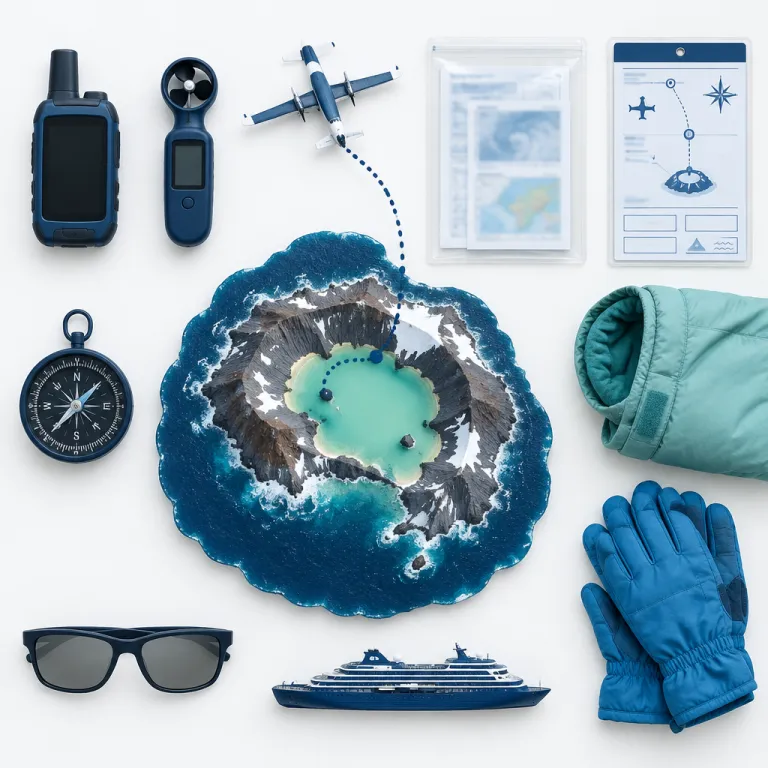
Why travellers choose flights to Deception Island for Antarctica
Planning flights to Deception Island is about more than logistics. It is a strategic way to experience Antarctica while reducing time at sea and maximising time ashore. For many travellers, this fly-Drake model transforms a distant dream into a realistic, comfortable expedition.
Instead of spending days crossing the Drake Passage by ship, you fly directly to King George Island in the South Shetlands and then board a small expedition vessel in sheltered waters. These Antarctic air transfers shorten the journey to Deception Island and the nearby islands, which is especially valuable if you have limited holiday time or are prone to seasickness. The result is more time exploring the Antarctic Peninsula and less time battling the open sea.
Deception Island itself is a rare volcanic caldera, forming a near perfect ring in the South Shetland Islands. When your ship sails into this island south of the Antarctic Peninsula, you are entering one of the most dramatic natural harbours on Earth. The combination of volcanic landscapes, whaling history and abundant wildlife makes this island Antarctica highlight uniquely suited to air cruise operations that begin with a flight to King George Island.
From Punta Arenas to the South Shetlands: how the air bridge works
Most flights that serve Deception Island and King George Island operate from Punta Arenas in southern Chile. Travellers usually spend one or two nights in this South American gateway city for briefings, gear checks and weather updates. This pause in Punta Arenas is essential, because Antarctic flying always depends on safe conditions over sea and ice.
On departure day you fly south over the Drake Passage rather than sail it, often referred to as a fly Drake or fly cruise option. The aircraft typically lands on the gravel runway at Teniente Rodolfo Marsh Martin airfield on King George Island, where an expedition ship waits in a protected bay. By replacing the roughest section of the Drake with a flight, you gain a smoother transition into the Antarctic environment and reach the islands in a matter of hours.
Once you have crossed the Bransfield Strait by ship, Deception Island and the wider South Shetlands open up as your first major objective. Operators such as Antarctica21 and Quark Expeditions coordinate these Antarctic flights with flexible sailing plans, allowing the captain to choose the best approach point depending on wind and sea state. This combination of air cruise logistics and nimble expedition ships has reshaped how many travellers now access Antarctica.
For deeper context on how changing sea ice affects these routes, see this analysis of Antarctic sea ice trends and long term recovery prospects. Understanding these shifts helps explain why reliable air corridors and sheltered island bases are increasingly important.
Navigating Port Foster and Neptune Bellows: the volcanic heart of Deception Island
Once your expedition ship reaches Deception Island, the drama of the landscape becomes immediately clear. The entrance to the flooded volcanic caldera, known as Neptune Bellows, is a narrow gap in the ring of cliffs. Captains time their approach carefully, using local knowledge of wind, swell and submerged rocks to guide the ship safely into Port Foster.
Inside Port Foster, the sea surface lies within the collapsed cone of an active volcanic island, creating one of the most sheltered bays in Antarctica. Here, your air cruise schedule often allows more time for landings at key points such as Pendulum Cove and the old whaling station sites. The contrast between steaming black sand and ice covered slopes reminds you that this is a living volcanic system, not a static frozen landscape.
Many itineraries combine Deception Island with other South Shetlands and nearby islands along the Bransfield Strait, adjusting the route according to weather and wildlife reports. When conditions allow, Zodiacs shuttle guests from the ship to landing points where fur seals, penguins and skuas share the beaches with rusting whaling infrastructure. For a broader perspective on how warming oceans and sub ice channels affect this region, consult this report on hidden channels accelerating Antarctic ice shelf melt.
History, science and Operation Tabarin: human stories on Deception Island
Flights to Deception Island do more than shorten travel time; they connect you directly with one of the richest human histories in Antarctica. The island’s black slopes and rusted tanks tell the story of a major whaling base that once processed thousands of whales in Port Foster. Walking among the remains of this whaling station, you confront both industrial ambition and its ecological cost.
During the Second World War, Deception Island and the wider South Shetlands hosted Operation Tabarin, a secret British initiative that later evolved into permanent scientific stations. Traces of this era remain in old huts and equipment, while modern research teams now focus on volcanic monitoring, wildlife studies and climate science. When you fly to this island south of the Antarctic Peninsula, your guides will often explain how Operation Tabarin helped establish a continuous human presence in the region.
Today, seasonal research bases and field camps on Deception Island and nearby islands such as King George and Nelson Island contribute to long term datasets on volcanic activity and wildlife populations. Many air cruise itineraries include visits to a station when permitted, giving travellers a first hand view of life and work in Antarctica. These encounters, combined with expert led briefings on deck and ashore, turn an air cruise via Deception Island into a journey through both natural and human history.
Wildlife encounters around Deception Island and the Antarctic Peninsula
Choosing flights to Deception Island places you quickly within key wildlife corridors of the Antarctic Peninsula. The South Shetlands and nearby islands host large colonies of chinstrap, gentoo and Adélie penguins, which thrive along the nutrient rich sea margins. Around the beaches of Deception Island, fur seals haul out in growing numbers, reclaiming former whaling grounds as protected habitat.
Because you fly Drake rather than sail it, your time at sea focuses on productive wildlife watching rather than long transits. Expedition teams use real time reports to position the ship at points where whales, seabirds and seals are most active, often along the Bransfield Strait and around island south facing slopes. Zodiac cruises in sheltered bay systems such as Port Foster reveal nesting skuas, petrels and cormorants, while the volcanic backdrop of Pendulum Cove adds a surreal dimension to every landing.
Many itineraries that start with a King George Island flight and ship transfer continue south along the Antarctic Peninsula, where glaciers, icebergs and narrow channels create ideal conditions for marine life. Here, you may encounter humpback whales bubble net feeding, orcas patrolling the ice edge and leopard seals resting on floes. For travellers who value efficient access to wildlife rich areas, the combination of air cruise logistics and flexible expedition ships offers one of the most rewarding ways to experience Antarctica.
If you are comparing polar gateways, you may also be interested in this detailed look at Pedro Bay in Alaska as a refined Arctic gateway, which highlights how carefully chosen bases can transform remote wildlife travel.
Choosing the right fly cruise itinerary and ship
When evaluating flights to Deception Island, focus first on the structure of the fly cruise itinerary. Some programmes fly into King George Island and then sail to Deception Island, while others include multiple landings across the South Shetlands and the wider Shetland Islands group. Look for routes that balance time in Port Foster, Pendulum Cove and other key landing points with opportunities to continue south along the Antarctic Peninsula.
The choice of expedition ship matters as much as the flight itself, because smaller vessels can navigate narrow channels and respond quickly to wildlife sightings. Modern ships operating air cruise programmes usually carry fewer than 200 guests, which allows for more frequent landings and shorter Zodiac rotation times. When comparing options, ask how many passengers each ship carries, how many guides are on the expedition équipe and how flexible the daily schedule can be in response to weather and sea ice.
Another factor is how operators manage weather related delays, which are an inherent part of any plan involving Antarctic flights to Deception Island or King George Island. Reputable companies build buffer days into their itineraries and maintain strong communication between Punta Arenas, the island airstrip and the ship at anchor. This integrated approach across air, sea and shore operations ensures that your time in Antarctica remains focused on meaningful experiences rather than logistical stress.
Safety, weather windows and what to expect when you fly south
Every traveller considering flights to Deception Island should understand how safety and weather windows shape the journey. Antarctic aviation operates under strict protocols, with flights authorised only when visibility, wind and runway conditions meet conservative thresholds. This means that flexibility is not a luxury but a core part of any responsible expedition plan.
When you fly south from Punta Arenas toward the South Shetlands, pilots and expedition leaders coordinate closely with meteorological teams monitoring the Drake Passage, Bransfield Strait and local island weather. If conditions at King George Island or Deception Island fall below safe limits, flights may be delayed until a suitable window opens. Travellers should be prepared for these adjustments and choose operators who communicate clearly about contingency plans and accommodation during any extended wait.
Once you are on the ship, the same safety first mindset governs decisions about entering Neptune Bellows, landing at Pendulum Cove or approaching wildlife rich beaches where fur seals and penguins gather. Captains and guides continually assess sea state, wind and ice, adjusting the route among the South Shetlands and nearby islands to keep operations within safe margins. By embracing this adaptive approach, you gain a deeper appreciation of how fragile and dynamic Antarctica is, and why carefully managed air access to Deception Island is such a valuable tool for experiencing it responsibly.
Key figures about Deception Island air cruise travel
- The International Association of Antarctica Tour Operators (IAATO) reports that more than 70 000 travellers visited Antarctica in the 2019–2020 season, with a steadily growing share choosing air cruise and fly Drake options instead of traditional sea only routes (IAATO Visitor Statistics, 2019–2020 season report).
- Typical flights from Punta Arenas to King George Island cover roughly 1 200 kilometres over the Drake Passage in about two hours of airborne time, compared with two full days at sea each way for a conventional ship crossing (operator schedules and published flight plans, 2023–2024).
- Deception Island’s flooded caldera, Port Foster, measures about 9 kilometres by 6 kilometres, providing one of the largest natural harbours in the South Shetlands for expedition ships operating in often challenging Southern Ocean conditions (British Antarctic Survey mapping data).
- Scientific surveys indicate that fur seal populations in the South Shetlands have rebounded dramatically since commercial whaling and sealing ended, with some breeding sites now holding tens of thousands of animals during peak season (long term monitoring programmes by international research teams).
- Volcanic eruptions on Deception Island in the late twentieth century forced the evacuation and closure of several research stations, and the island remains one of the most closely monitored volcanic systems in Antarctica for aviation and expedition safety (geophysical observatory reports and national Antarctic programme updates).
FAQ about flights to Deception Island and Antarctic air cruises
Are flights to Deception Island always guaranteed to operate on schedule ?
No Antarctic flight is ever guaranteed, because operations depend on strict weather and runway safety criteria. Delays of several hours or even a day can occur when conditions at King George Island or nearby islands fall below safe limits. Travellers should choose operators who build buffer days into itineraries and provide clear contingency plans.
What is the main advantage of choosing a fly Drake or air cruise itinerary ?
The primary advantage is that you avoid the roughest section of the Drake Passage by flying over it, which saves about four days of sailing time. This allows more time for landings around Deception Island, the South Shetlands and the Antarctic Peninsula. It also reduces the risk of severe seasickness for travellers sensitive to heavy swell.
Can I land inside the caldera at Port Foster and visit Pendulum Cove ?
Most expeditions that include flights to Deception Island aim to enter Neptune Bellows and anchor inside Port Foster, then run Zodiac operations to landing sites such as Pendulum Cove. Whether landings occur on a given day depends on wind, swell and volcanic safety assessments. Your expedition leader will adjust the plan to keep operations within safe limits.
How many days should I plan for an Antarctic trip that includes Deception Island ?
For a balanced experience, plan at least eight to ten days from Punta Arenas, including buffer time for weather related delays. This usually provides four to six full days exploring the South Shetlands, Deception Island and the Antarctic Peninsula. Shorter trips are possible but leave less margin for flexible routing and extended wildlife encounters.
Is an air cruise to Deception Island suitable for travellers with limited mobility ?
Some ships operating air cruise itineraries offer accessible cabins and assistance, but landings typically involve Zodiac transfers and walking on uneven, icy terrain. Travellers with limited mobility should discuss their specific needs with operators before booking flights to Deception Island. In many cases, scenic cruising by ship and limited shore visits can still provide a rewarding Antarctic experience.