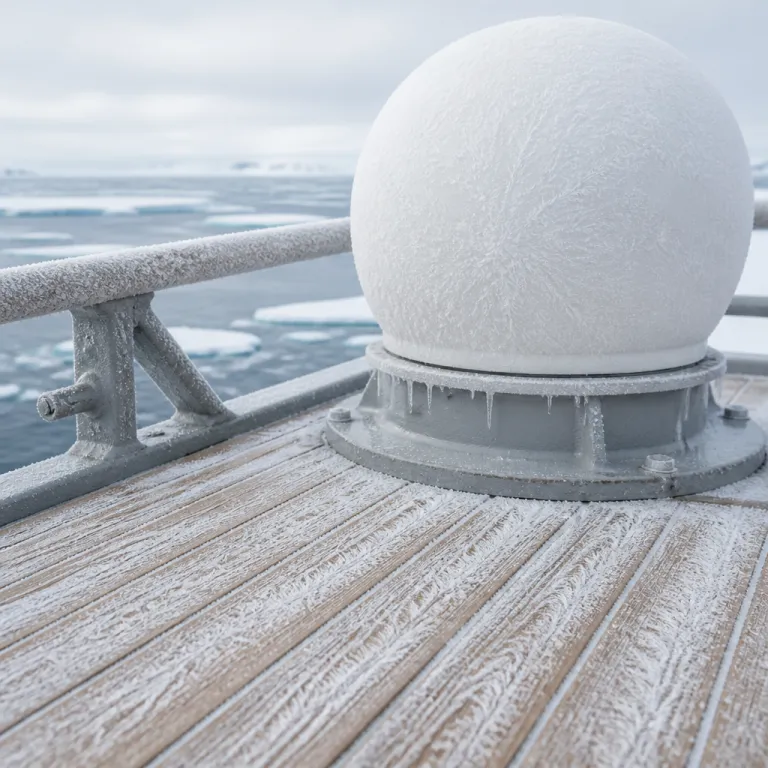
The reality of expedition cruise wifi internet satellite connectivity in polar regions
Satellite Wi-Fi on a polar expedition cruise is not the same as on mainstream cruise ships in warmer seas. The entire model of expedition cruise wifi internet satellite connectivity in polar regions is constrained by physics, ship design, and the remoteness of the routes. If you arrive expecting the seamless internet access of large caribbean cruises or alaska cruises, the first day at sea will feel like a hard reset.
Most polar expeditions rely on VSAT, a Very Small Aperture Terminal satellite system mounted high on the ship to maintain a moving connection. That VSAT dome is constantly negotiating bandwidth with satellites that sit low on the horizon at polar latitudes, which means connectivity drops as the expedition ship pushes deeper towards antarctic waters or the islands south of south georgia. Even when the technology works, the available internet is shared between all guests and crew, so every video call or large upload from one cabin affects the experience for the entire ship.
Newer ships are layering Starlink maritime terminals on top of traditional VSAT to improve expedition cruise wifi internet satellite connectivity in more temperate segments of ocean voyages. Starlink can feel almost like home broadband when the ship is in mid ocean or near subantarctic islands south of the convergence, but performance still tapers as you reach the highest polar latitudes. The result is a patchwork of internet access where email and messaging usually work, while anything more ambitious will require patience, timing, and a realistic sense of what polar travel can support.
What works reliably at sea and what fails near the ice
On a well run expedition, the ship’s internet is calibrated for essentials rather than entertainment. Text based email, messaging apps, and low bandwidth browsing usually survive the harsh realities of expedition cruise wifi internet satellite connectivity in polar waters. If you plan your time carefully, you can send documents, coordinate with a shore based équipe, and keep a business trip quietly productive without dominating the shared connection.
What consistently fails is anything that treats the ship like a city office. High definition video calls, large file transfers, and streaming services quickly saturate the limited bandwidth that cruise lines allocate to each expedition, especially when the ship is threading ice near antarctic channels or the remote islands south of south georgia. Social media uploads of high resolution images often stall, which is why many guests batch their content and post only once they leave the polar region and rejoin more forgiving satellite footprints used by mainstream cruise ships and caribbean cruises.
Operators take different positions on how much connectivity they want to offer, and that philosophy shapes your experience as much as the hardware. Some luxury cruise lines and newer expedition ships, inspired by the connectivity standards of royal caribbean or premium river cruises, push for stronger internet access and even experiment with Starlink to keep guests online. Others, including traditional players such as Quark Expeditions, frame limited connectivity as part of the expedition itself, arguing that a polar trip should feel more like research focused ocean voyages than like caribbean cruises with icebergs.
For a deeper sense of how serious operators think about ships, science, and technology, look at the way purpose built vessels are profiled in specialist coverage of research style expeditions, such as analyses of how a research vessel reshaped Great Lakes polar style expeditions on dedicated expedition ship reviews. That kind of detail reveals whether a company treats connectivity as a marketing line or as an integrated part of its polar operations. When you read closely, you will see that the best expeditions balance internet access with the need to keep bandwidth free for navigation, weather routing, and safety critical communications.
Operator philosophies: from always on to deliberate disconnection
Not every expedition cruise approaches wifi, internet, and satellite connectivity in the same way, even when they sail similar polar routes. Some cruise lines position connectivity as a core part of the guest experience, promising that guests will be able to work to a limited degree while they travel. Others, especially heritage expedition brands, argue that the value of polar expeditions lies precisely in the absence of constant online noise.
On one end of the spectrum sit operators whose new ships feel like scaled down versions of premium cruise ships, with strong emphasis on connectivity, wellness, and private space. These companies often benchmark themselves against royal caribbean or high end caribbean cruises, even if their itineraries run from south georgia to the antarctic peninsula rather than between tropical islands south of Florida. They invest heavily in VSAT and Starlink, and they structure their cruise deals to highlight that guests will enjoy better than average internet access for such remote polar latitudes.
On the other end are purist expedition companies such as Quark Expeditions, Aurora Expeditions, and other adventure cruise specialists that prioritize time on deck, zodiac operations, and citizen science over screen time. A quark branded ship may offer basic email and messaging, but the company is clear that an expedition is not designed as a floating office, and that policy shapes the rhythm of each trip. When you book with these operators, you sign up for a style of travel that feels closer to Iditarod tour packages or remote Alaska winter race experiences than to standard time at a resort, and you accept that monday friday, friday saturday, and saturday sunday will be measured in landings and lectures rather than in video calls.
For business leisure travelers who extend work trips into polar adventures, the choice between these philosophies matters more than any single technology. If you know that you must be reachable during a specific window, ask the operator to specify typical connectivity patterns by day of the week and by region, and do not hesitate to call monday through the reservations office to clarify what the ship can realistically support. Treat the conversation the way you would treat due diligence on complex Alaska winter race logistics ; the more precise your questions, the more accurate the answers you will receive.
The business traveler’s playbook for working from a polar ship
For executives who blend business and leisure, the key to using expedition cruise wifi internet satellite connectivity in polar regions is ruthless preparation. Treat the ship as a low bandwidth outpost rather than a remote office, and plan your work accordingly. That mindset shift will determine whether your trip feels like a productive retreat or a frustrating battle with unstable internet.
Start by mapping your critical tasks against the realities of polar travel and shipboard life. Anything that requires high bandwidth, such as video conferences, large file transfers, or cloud based design tools, should be completed before embarkation or scheduled for ports with reliable 4G or 5G coverage. Pre download all essential documents, presentations, and reference données to your laptop and phone, and set clear expectations with colleagues about response times, ideally aligned with your ship’s daily schedule and the region’s standard time.
Next, design a communication protocol that respects both the ship’s connectivity limits and your fellow guests. Use email and text based messaging as your primary channels, and reserve any rare periods of stronger internet access for essential uploads or brief voice calls. If the ship offers Starlink, ask the expedition leader when the system typically performs best during ocean voyages between landings, and cluster your work into those windows rather than dipping in and out throughout the day.
Finally, build slack into your calendar, especially across monday friday, friday saturday, and saturday sunday, because polar weather and ice can change the ship’s route and connectivity profile without warning. When you plan a high stakes trip, imagine that you are preparing for a remote field assignment rather than for a city based conference, and adjust your commitments to match. The more you respect the constraints of polar expeditions, the more freedom you will have to enjoy the ship, the wildlife, and the rare quiet that comes when your phone finally stops buzzing.
The unexpected luxury of being offline at the ends of the Earth
Once you accept the limits of expedition cruise wifi internet satellite connectivity in polar regions, a different kind of luxury emerges. The absence of constant internet access creates space for a deeper connection with the ship, the sea, and the polar landscapes outside your cabin window. Many guests report that the most memorable part of their trip was not a specific landing, but the long, quiet hours on deck when the only notifications came from distant whales or shifting ice.
On a well run expedition, the daily rhythm is set by light, wildlife, and weather rather than by email. You wake to announcements about leopard seals on the ice or a spontaneous citizen science session on seabirds, not to a calendar alert for a monday friday status call. Even business travelers who board with the intention of working often find that, by the time the ship reaches south georgia or the antarctic peninsula, their priorities have shifted from connectivity to experience.
This enforced digital detox also sharpens your sense of place, especially when you contrast it with more connected forms of travel such as caribbean cruises, river cruises, or even carefully curated overland journeys in Alaska. A day spent tracing the coastline of remote islands south of the polar front, with no signal and no distractions, feels radically different from a day spent half watching the sea and half watching a screen. If you want a gentler introduction to this kind of recalibrated time, consider pairing your expedition with a slower, land based extension in a place that already understands the value of quiet, such as the elegant, low key experiences around Hope, Alaska, described in depth in this guide to elegant ways to experience Hope, Alaska.
In the end, the most valuable connectivity on a polar expedition may not be the satellite link that lets you send one more email. It is the connection between guests who share a rare experience, between expedition guides and citizen science projects, and between your own attention span and a landscape that predates human ambition. That is the kind of connection no cruise deals, no royal caribbean marketing, and no always on internet can replicate, and it is why many travelers will return to the ice even after they have sailed every warm water itinerary on offer.
FAQ
Can I work remotely during a polar expedition cruise
Working remotely during a polar expedition cruise is possible, but only for tasks that tolerate slow, inconsistent internet. You can usually manage email, messaging, and light document work, especially during calmer segments of ocean voyages. Anything that depends on stable high bandwidth, such as video calls or large file transfers, should be scheduled for before or after the trip.
How reliable is Starlink on polar expedition ships
Starlink has improved connectivity on some newer expedition ships, particularly in mid latitudes and during crossings between continents and subantarctic islands. As the ship moves deeper into high polar latitudes, performance typically declines and can become intermittent. Treat Starlink as a welcome boost rather than as a guarantee of land like speeds throughout the voyage.
Do all operators offer the same level of internet access
Internet access varies significantly between operators, ships, and itineraries. Some companies invest heavily in connectivity and market it as a key part of the guest experience, while others deliberately limit access to preserve an immersive expedition atmosphere. Always ask for ship specific information before booking, rather than assuming that all cruises offer similar connectivity.
Will I be able to stay in touch with family during the trip
Most guests can stay in touch with family through occasional emails or text messages, even on remote antarctic itineraries. You may not be able to send daily photos or hold long conversations, but short updates usually get through when the ship has a clear satellite link. Prepare your family for slower communication and share the ship’s emergency contact details as a backup.
Is limited connectivity a safety concern in polar regions
Limited guest connectivity is not a safety concern, because ships prioritize bandwidth for navigation, weather data, and emergency communications. Expedition vessels operating in polar waters are required to maintain robust links with maritime authorities and other ships. The restrictions you experience as a guest are designed to protect those critical systems, not to compromise them.