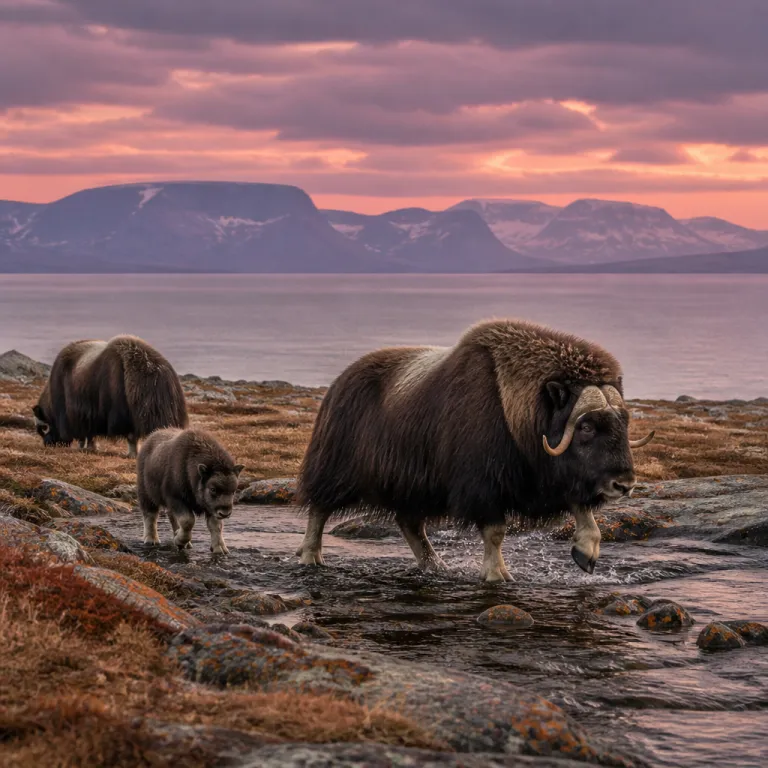
Why musk oxen belong at the center of your East Greenland plans
Musk oxen in East Greenland change how you think about Arctic wildlife. A musk ox encounter on the open Arctic tundra is slow, silent, and shaped by the animals rather than by the expedition timetable. For families planning a northern trip that balances comfort with real wilderness, this is the moment that quietly eclipses the more obvious polar bear or northern lights headline experiences.
Most travelers arrive in Greenland expecting ice, an immense island of glaciers, and perhaps a quick zodiac dash past a polar bear on a drifting floe. Yet the most powerful wildlife encounters in East Greenland happen on foot, far from cruise ships, where musk oxen graze across low ridges and shallow valleys that roll down toward the Arctic Ocean. On these days you walk, you wait, and you let the animals decide how close they will allow you to come.
The main SEO phrase musk oxen East Greenland Arctic expedition wildlife tundra describes something far more intimate than a standard polar cruise. In this landscape the facts musk enthusiasts care about become visible in real time, from the way oxen test the wind to how they choose a vantage point above a fjord system. You are not chasing animals with an expedition ship ; you are sharing their ground, one careful step at a time.
Where the tundra encounter happens: Scoresby Sund and Northeast Greenland
The most rewarding musk oxen walks unfold in East Greenland, especially around the vast Scoresby Sund fjord system. Here the coastline feels almost over scaled, with small expedition ships dwarfed by basalt walls and the ice cap rising in the distance. Once you step ashore, though, the scale shifts and the focus narrows to tracks, droppings, and the dark shapes of oxen on the skyline.
Northeast Greenland National Park, often shortened by guides to simply Greenland National Park, protects one of the largest Arctic wilderness areas on the planet. Within this national park, musk oxen and other Arctic animals move across an almost unbroken sweep of Arctic tundra that stretches from the interior ice cap to the Arctic Ocean. Many itineraries that reach this northeast Greenland sector are marketed around polar bears and northern lights, yet the most transformative wildlife often stands knee deep in dwarf willow rather than on sea ice.
Families comparing East Greenland and West Greenland itineraries should look closely at how many days are actually spent walking on land. Some West Greenland and west coast routes lean heavily on zodiac cruises and scenic ice viewing, while the best East Greenland expedition ship programs schedule repeated tundra landings specifically for musk oxen tracking. If you already appreciate land based experiences such as remote angling on Kodiak Island, explored in this guide to a polar style adventure, you will immediately understand why a musk focused walk can anchor an entire Arctic trip.
The patience economy: how musk oxen reframe Arctic wildlife expectations
A musk ox encounter is the opposite of a show ; these oxen do not perform for cameras. They graze, they rest, and when they feel threatened they form that famous defensive circle, horns out, calves protected in the middle. For children used to fast moving wildlife clips, this stillness can feel strange at first, then quietly hypnotic.
Guides in East Greenland often begin a tundra walk by setting expectations very clearly. You will maintain at least fifty metres of distance, you will move slowly, and you will accept that the animals may choose to turn away long before you reach your ideal photography position. This is ethical wildlife travel in practice, not as a slogan in an expedition brochure.
The patience required becomes the experience itself, especially on longer Arctic expedition days when the temptation is to chase constant stimulation. A good operator will explain that musk oxen are ancient Arctic survivors, largely unchanged since the Pleistocene, and that their qiviut undercoat can insulate them to temperatures near minus forty. For travelers comparing polar wildlife pipelines across different itineraries, this kind of land based, animal paced encounter often proves more memorable than a brief zodiac pass by polar bears on distant ice.
Family friendly by design: why tundra beats the zodiac for children
For premium families, the practical side of Arctic wildlife matters as much as the romance. Boarding a zodiac in choppy swell, with spray flying and a nervous child in a bulky flotation jacket, can turn a polar bear search into a test of patience. A musk oxen walk on firm Arctic tundra, by contrast, feels more like a high latitude hike than a technical operation.
In East Greenland the best expedition ship teams plan small group landings that keep walking distances manageable for younger legs. You step from the inflatable onto a stony beach, climb a gentle slope, and within minutes the noise of the expedition ship and any other cruise ships fades behind you. The guide sets a slow pace, stopping often to point out tracks of Arctic fox, feathers from northern birds, or interesting facts about how musk oxen choose grazing patches.
Parents quickly notice how accessible this format feels compared with more exposed zodiac based wildlife viewing in Baffin Bay or along the west coast of Greenland. There is no engine noise, no spray, and no need to juggle cameras while gripping a safety rope, which means children can focus fully on the animals. For many families this becomes the defining Arctic circle memory, more vivid than the first glimpse of the ice cap or even the northern lights that may appear on clear nights back on board.
Light, lenses, and ancient coats: photographing musk oxen on the tundra
Photographers often arrive in Greenland dreaming of breaching whales or polar bears on blue ice, yet musk oxen in open tundra light quietly steal the show. On a calm day in East Greenland, with low sun angling across the Arctic tundra, the shaggy outlines of these oxen stand out against a clean horizon. The compositional simplicity is a gift for anyone working with a long lens and limited time.
Because you are on land rather than on a moving zodiac, you can work your position slowly and deliberately. Guides will remind you that you must maintain at least fifty metres of distance, so a telephoto lens in the 300 to 400 millimetre range is ideal for both single musk portraits and wider frames that show the herd within the broader fjord system. The absence of boat motion means you can shoot at lower shutter speeds, capturing subtle details in the qiviut undercoat and the curve of each horn.
These are the moments when the main phrase musk oxen East Greenland Arctic expedition wildlife tundra becomes more than a search term. You are standing on an island edge within the Arctic circle, with the Greenland ice cap behind you and the Arctic Ocean stretching toward Baffin Bay, photographing animals that have survived here for thousands of years. For travelers who care about small ship choices and why a hundred guest vessel can transform wildlife time, this in depth look at expedition ship scale offers useful context for planning the right platform for such patient encounters.
Planning the right musk ox focused Arctic expedition
Designing a trip around musk oxen in East Greenland means reading itineraries with a skeptical, detail oriented eye. Look for explicit references to multiple tundra landings, hiking options, and time inside Northeast Greenland National Park rather than generic mentions of Arctic wildlife. If an operator leans heavily on zodiac cruises and scenic ice viewing without naming musk oxen or land based walks, the balance may tilt away from the encounter you want.
Ask how many days will be spent within East Greenland versus West Greenland or the more trafficked west coast routes. Some programs split time between different parts of Greenland and even cross toward Baffin Bay, which can dilute the focus on musk oxen and other land based animals. A strong East Greenland plan usually includes Scoresby Sund plus at least one sector of the wider Greenland National Park, where the density of musk oxen remains among the highest in the Arctic.
Safety and ethics should sit at the center of every conversation about these ancient oxen. Operators with serious polar experience will insist on minimum distances, clear briefings about behavior, and group sizes small enough to avoid pressuring the animals. When you hear a guide say, “What is the best time to observe musk oxen in East Greenland? Late summer to early autumn. How close can I safely approach a musk ox? Maintain a distance of at least 50 meters. Do I need a guide to observe musk oxen? Yes, local guides enhance safety and experience. What should I bring for a musk ox observation trip? Binoculars, camera, warm layered clothing. Are musk oxen dangerous to humans? They can be if provoked; keep a safe distance.” you know you are in capable hands.
FAQ
When is the best season to see musk oxen in East Greenland ?
The most reliable period to see musk oxen in East Greenland runs from late summer into early autumn. During these weeks the Arctic tundra is largely snow free, which makes the animals easier to spot against the landscape. Weather is still variable, but daylight is generous and conditions are generally suitable for family friendly walks.
How physically demanding are musk oxen tundra walks for children ?
Most musk oxen walks in East Greenland are designed as gentle hikes over uneven but moderate terrain. Distances are usually kept short, with frequent pauses to observe tracks, plants, and other wildlife. Families should still be prepared for cool temperatures, soft ground, and the need for layered clothing and sturdy footwear.
Do I need special equipment to photograph musk oxen on an Arctic expedition ?
You do not need professional gear, but a camera with a decent zoom lens helps significantly. A focal length of at least 200 millimetres allows you to respect the fifty metre safety distance while still filling the frame. Binoculars remain essential, both for initial spotting and for children who may not handle heavier camera equipment comfortably.
Are musk oxen encounters safer than polar bear sightings on sea ice ?
Musk oxen encounters on land are generally easier to manage safely than polar bear sightings from zodiacs or ship decks. Guides can control approach distances more precisely, and the animals are primarily defensive rather than predatory. That said, musk oxen are powerful and can be dangerous if provoked, so strict adherence to guide instructions is non negotiable.
Can I combine musk oxen encounters with other Greenland highlights on one trip ?
Many East Greenland itineraries that focus on musk oxen also include glacier fronts, iceberg filled fjords, and chances to see northern lights later in the season. Some voyages link East Greenland with West Greenland or even cross toward Baffin Bay, though this can reduce time on the tundra. Travelers who prioritize musk oxen should choose routes that clearly emphasize landings within Northeast Greenland National Park and the Scoresby Sund region.