Why polar travelers should care about Arcticus vessel specifications and overall length
Most travelers planning Arctic or Antarctic voyages never hear about the research vessel Arcticus, yet its work quietly shapes how we understand cold water ecosystems worldwide. When you look closely at the R/V Arcticus specifications and overall length, you start to see why this compact ship matters for anyone drawn to ice, wildlife, and remote northern horizons. Its design mirrors many principles used in modern polar expedition ships, from hull form to scientific equipment and crew workflow.
The Arcticus is a purpose built research vessel operated by the U.S. Geological Survey, and it spends its working life on the Great Lakes rather than in the high Arctic. Still, the way this vessel navigates Lake Michigan and Lake Huron in harsh shoulder seasons offers a revealing parallel to expedition ships threading through pack ice near Greenland or the Antarctic Peninsula. Understanding how a 77 foot vessel behaves in rough northern lake conditions helps you read between the lines when cruise operators describe stability, speed in knots, and scientific capabilities on their own ships.
For travelers comparing polar itineraries, the Arcticus dimensions provide a concrete benchmark for scale and comfort expectations. A ship of 77 feet in length and 26 feet in beam is far smaller than the expedition vessels you will board in Ushuaia or Tromsø, yet it carries a full scientific lab and specialized equipment for fish surveys. That contrast highlights how efficiently space can be used on a well designed ship, and why you should pay close attention to deck plans, lab spaces, and science centers when choosing your own polar expedition platform.
From Lake Michigan to polar seas: what 77 feet really means on the water
The headline Arcticus vessel specifications and overall length are deceptively simple numbers, but they translate into very real experiences at sea. At 77 feet long with an 8.9 foot draft, the R/V Arcticus can work close to shorelines and over shallower banks, much like smaller expedition ships edging into fjords in Svalbard or along the Antarctic Peninsula. Its cruising speed of about 9.5 knots is modest, yet perfectly tuned for detailed survey work and careful maneuvering in challenging conditions.
On Lake Michigan and Lake Huron, the Arcticus faces steep, short period waves that can feel surprisingly similar to conditions in some northern fjords. When the crew heads out from port Cheboygan in northern Lake Huron, they rely on the hull form and weight distribution implied by those core vessel specifications. Travelers evaluating polar voyages should think in the same way, asking how a ship’s length, beam, and draft will influence motion, comfort, and access to narrow channels or ice fringed bays.
The Great Lakes may lack icebergs, yet their northern stretches can be as unforgiving as many coastal Arctic routes. When you read about midnight sun Zodiac cruises where darkness never arrives, such as those described in this guide to Arctic landings under the midnight sun, remember that the underlying ship must first bring you safely into those waters. The Arcticus specifications and compact hull show how a relatively small platform can still support serious lakes science, and that same balance of size and capability is exactly what you should seek in polar expedition ships.
Inside the scientists’ vessel: equipment, labs, and the people behind the data
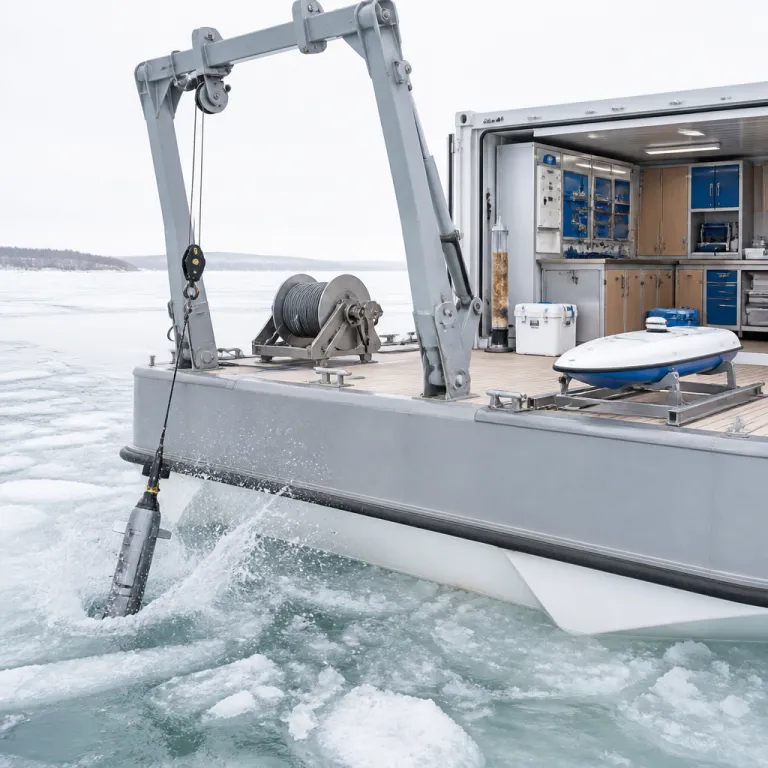
Behind every elegant polar itinerary lies a foundation of hard data, and the Arcticus is a prime example of the scientists’ vessel that quietly builds this knowledge. Operated by the U.S. Geological Survey, the ship carries advanced equipment to study fish populations, water quality, and ecosystem health across the Great Lakes. Its onboard lab spaces are compact yet efficient, proving that even a vessel of 77 feet can host serious research activity when the layout is carefully planned.
The Arcticus vessel specifications and overall length were defined by JMS Naval Architects and realized by Burger Boat Company in Manitowoc, a shipyard often referred to as the boat yard in Manitowoc for research vessels. Launched in 2015 to replace the aging R/V Grayling, the new hull increased working deck area and modernized winches and cranes so crews could deploy and retrieve nets more safely. This collaboration ensured that the ship could handle delicate fish samples and support a multidisciplinary team of scientists and mariners, typically a core crew of mariners working alongside rotating research staff during the field season.
Travelers concerned about environmental impact should also note how research vessels like this inform regulation of polar ship emissions and black carbon. The same U.S. Geological Survey teams that operate the Arcticus contribute to broader discussions on sustainable navigation, which directly affects the new rules explained in this analysis of what black carbon rules mean for your next booking. Understanding the Arcticus size and technical fit out helps you appreciate how much scientific capability can be packed into a relatively small hull, and why that matters when comparing larger polar ships that promise both comfort and credible research programs.
Cheboygan, northern lakes, and the quiet polar training ground
Home port matters for any working ship, and the Arcticus is based in Cheboygan, Michigan, on the northern shore of Lake Huron. From this compact harbor, often called port Cheboygan in operational documents, the vessel can reach both Lake Michigan and Lake Huron within a single cruise. These northern lakes form a natural laboratory where crews refine techniques that later inform polar operations, from net deployment to emergency drills.
The Great Lakes Science Center in Ann Arbor coordinates much of the Arcticus schedule, ensuring that each period of several months on the water yields robust datasets. When the vessel is deployed to conduct surveys, the crew and scientists work long days handling nets, processing fish samples, and logging environmental parameters. In a typical year, the ship helps sample thousands of individual fish across dozens of stations, building time series that reveal how native and invasive species respond to changing conditions.
For travelers, the key lesson lies in how the Arcticus vessel specifications and overall length support this demanding workflow without excess size or luxury. A 77 foot ship with a 26 foot beam offers just enough room for lab benches, equipment storage, and safe working decks, yet remains nimble in tight harbors and along complex shorelines. When you evaluate polar itineraries that promise close approaches to glaciers or remote landing sites, remember that many of the techniques were refined first on northern lake platforms like this one, far from the spotlight of mainstream travel marketing.
From Burger Boat to Joe Bergan: people and places behind the hull
Ships are never anonymous objects, and the Arcticus carries the fingerprints of many individuals and places. The hull was constructed by Burger Boat Company in the city often described as the boat yard at Manitowoc, a Wisconsin community with a long tradition of building working vessels. Naval architects at JMS translated the U.S. Geological Survey requirements into the precise Arcticus vessel specifications and overall length, balancing stability, deck space, and scientific capability.
Within the U.S. Geological Survey Great Lakes program, operational leadership figures such as Joe Bergan have become closely associated with the vessel Arcticus. Their decisions about equipment, crew training, and survey design directly influence the quality of data that later informs conservation policy. As one project summary from the Great Lakes Science Center notes, the ship’s primary role is “conducting research on Lakes Huron and Michigan,” a concise mission statement that guides every departure from Cheboygan, Michigan.
Travelers planning polar voyages rarely meet the designers or captains who shaped their ships, yet the same chain of expertise exists behind every expedition vessel. Understanding the Arcticus layout and performance gives you a template for asking sharper questions about your own ship’s design pedigree, from the yard that built it to the science center that may coordinate onboard research. That awareness turns you from a passive passenger into an informed participant in the wider story of northern and southern ocean exploration.
How Great Lakes research informs your next Arctic or Antarctic itinerary
At first glance, a research cruise on Lake Superior or Lake Michigan seems far removed from a voyage along the Antarctic Peninsula. Yet the data gathered by the Arcticus on fish populations, water chemistry, and ecosystem change feeds into global models that also describe polar seas. The Great Lakes function as a vast freshwater mirror where scientists can test methods, refine equipment, and train crews before applying similar approaches in the Arctic or Antarctic.
Every time the Arcticus is deployed to conduct a survey in a northern lake, the crew rehearses procedures that echo those used on polar expeditions. Nets are launched and recovered in rough weather, lab teams process samples in tight spaces, and navigation officers work with precise charts to avoid hazards. Over a period of several months each field season, this repetition builds a culture of safety and accuracy that later benefits travelers stepping aboard larger expedition ships.
For travelers tracking celestial events such as the total solar eclipse that turned Greenland into a coveted expedition ticket, the same scientific mindset applies. Detailed planning, careful route selection, and respect for environmental limits all draw on the kind of operational discipline honed on vessels like the Arcticus, as explored in this feature on Greenland eclipse expeditions. When you next compare polar itineraries, let the Arcticus vessel specifications and overall length remind you that behind every dramatic iceberg photograph lies a carefully engineered ship and a team shaped by years of methodical lakes science.
Key figures behind the Arcticus and comparable polar research vessels
- The Arcticus overall length is 77 feet, with a beam of 26 feet and a draft of 8.9 feet, dimensions that place it in the small research vessel category yet allow full scale fisheries and ecosystem surveys on the Great Lakes (U.S. Geological Survey data).
- The vessel’s typical cruising speed is about 9.5 knots, which is slower than many polar expedition ships that often cruise between 12 and 15 knots, but this lower speed optimizes fuel use and sampling precision during scientific operations.
- The U.S. Geological Survey Great Lakes Science Center coordinates multiple research vessels, and the Arcticus specifically focuses on Lakes Huron and Michigan, covering thousands of square kilometres each field season to monitor fish communities and habitat conditions.
- Construction of the Arcticus by Burger Boat Company in Manitowoc marked a modernization step in the U.S. Geological Survey fleet, replacing aging ships and significantly improving onboard lab capacity and safety systems for crews working in harsh northern lake conditions.
FAQ about the research vessel Arcticus and polar style expeditions
What is the primary function of the research vessel Arcticus ?
The Arcticus is dedicated to fisheries and ecosystem research on Lake Huron and Lake Michigan, where it supports long term monitoring programs run by the U.S. Geological Survey Great Lakes Science Center. Its lab spaces, nets, and sampling equipment are optimized for studying fish populations, invasive species, and habitat changes. These data sets help managers make decisions that can also inform broader freshwater and polar conservation strategies.
Who operates and owns the Arcticus, and where is it based ?
The vessel is owned and operated by the U.S. Geological Survey, specifically through the Great Lakes Science Center headquartered in Ann Arbor, Michigan. Operationally, the ship is home ported in Cheboygan, Michigan, on the northern shore of Lake Huron, which offers quick access to both Lake Huron and Lake Michigan. Travelers interested in technical details or professional contact information should refer directly to official U.S. Geological Survey channels.
How do the Arcticus vessel specifications and overall length compare with polar expedition ships ?
At 77 feet in length, the Arcticus is significantly smaller than most Arctic or Antarctic expedition vessels, which often range from about 90 to more than 150 metres. Its 26 foot beam and 8.9 foot draft are tailored to nearshore Great Lakes work rather than heavy ice navigation, yet the design principles overlap with those used in polar capable ships. For travelers, this comparison highlights how even compact vessels can host serious science programs, a useful benchmark when assessing the credibility of research offerings on larger expedition ships.
Is the Arcticus available for public travel or tourism cruises ?
The Arcticus is not a passenger ship and does not operate public cruises, tourism itineraries, or charter voyages. It is a dedicated research platform used by U.S. Geological Survey scientists and technical crews to conduct structured surveys on the Great Lakes. Travelers interested in similar experiences should instead look for polar expedition operators that partner with scientific institutions and offer guest participation in onboard research projects.
Why should polar travelers pay attention to Great Lakes research vessels ?
Great Lakes research vessels such as the Arcticus serve as test beds for methods, equipment, and operational practices that later appear on polar expedition ships. The same attention to hull design, stability, and lab integration that defines the Arcticus vessel specifications and overall length also shapes the ships that carry travelers to Greenland, Svalbard, or the Antarctic Peninsula. By understanding how these working vessels function, travelers can make more informed choices about safety, environmental impact, and the scientific value of their own polar journeys.
