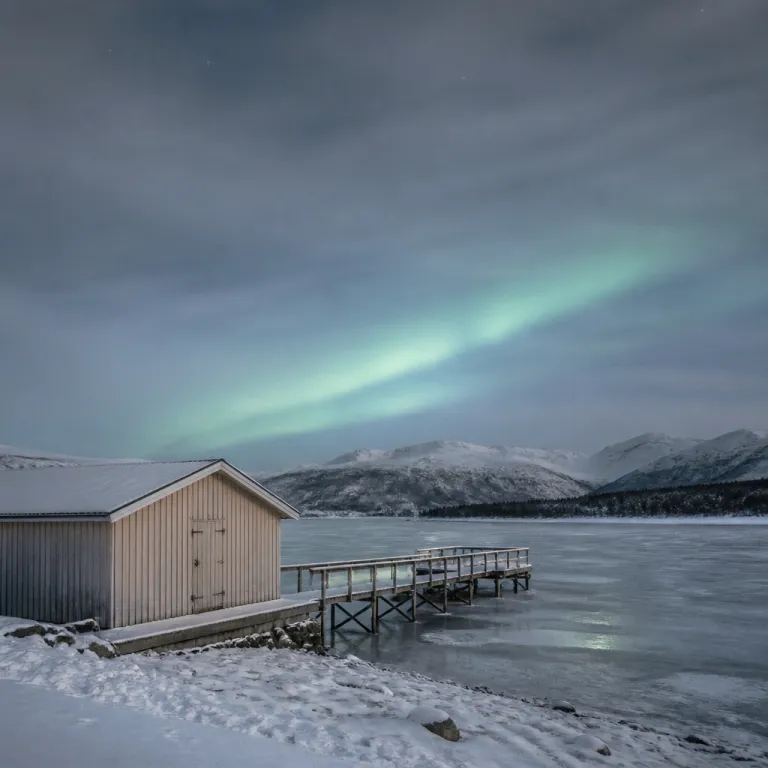
How Long Do Northern Lights Last in the Polar Night?
Understanding how long northern lights last in the polar night
Travellers often ask how long do northern lights last during a single Arctic night. Typical aurora borealis displays over the northern sky endure for about 15 to 30 minutes, yet under favourable solar activity they can pulse and reform for several hours. On dedicated aurora viewing journeys, you may watch the lights brighten, fade, and return many times in one long winter night.
The physical engine behind these lights is the solar wind, a stream of charged particles flowing from the sun toward Earth. These particles are guided by our planet’s magnetic field into the auroral oval, where they collide with atmospheric gases and create shimmering auroras that paint the sky with green, pink, and occasional violet light. Because solar activity fluctuates constantly, the duration and intensity of each northern lights experience also changes from night to night.
Scientists classify aurora activity using geomagnetic indices that respond to variations in the solar cycle. During a solar maximum phase, when the sun’s surface is more restless, the probability of longer and brighter northern lights displays increases significantly. Even then, local weather conditions, cloud cover, and the length of darkness at your latitude still decide how long your lights viewing window will remain open.
Key factors that control aurora duration on northern lights tours
Two celestial actors shape how long northern lights last above Arctic landscapes. The first is the solar wind, described in space weather glossaries as “streams of charged particles from the sun.” The second is Earth’s magnetosphere, often defined as “Earth's magnetic field interacting with solar wind.”
When solar wind pressure rises, aurora activity intensifies and the aurora borealis can flare suddenly, creating fast moving curtains of light that may peak for only 10 minutes before softening again. During quieter solar activity, the same auroral oval can host slower, more diffuse auroras that glow gently for an hour or more, offering a calmer spectacle for photography focused travellers. Local guides in Fairbanks, Tromsø, and northern Iceland monitor every aurora forecast closely, timing departures to coincide with expected surges in aurora viewing potential.
Geomagnetic storms, triggered by strong bursts in the solar wind, often extend the total northern lights viewing period across several nights. Space weather centres such as NOAA’s Space Weather Prediction Center and ESA’s space weather services use indices like the planetary Kp index (ranging from 0 to 9) to describe storm strength; values of Kp 4–5 typically bring auroras into central Alaska and northern Scandinavia, while Kp 6–7 can push visible displays farther south into lower latitudes. On an immersive northern lights Arctic tour, operators use real time aurora forecast tools and solar cycle data to adjust routes hour by hour. This flexible strategy helps guests experience both short, explosive light shows and longer, undulating auroras that drift slowly across the night sky.
Best time, month, and winter season patterns for longer aurora shows
To maximise how long northern lights last during your trip, you need darkness, clear skies, and active space weather conditions. The best time of night for aurora viewing usually falls between 21:00 and 02:00, when the sky is darkest and the auroral oval often aligns overhead at high latitudes. Many Arctic operators schedule lights viewing sessions in several blocks across these hours, allowing for breaks to warm up between bursts of aurora activity.
Across the winter season, the best month for extended northern lights experiences varies slightly between destinations. In northern Norway and aurora rich regions of Iceland, long nights from late autumn to early spring provide the longest continuous darkness, which increases the total time available for lights viewing even when individual auroras last only 20 minutes. In Fairbanks and other interior locations, colder and drier weather conditions often mean reduced cloud cover, so more of the winter season offers usable night sky windows.
For travellers planning a focused December journey, this period combines festive Arctic atmospheres with deep polar nights that stretch aurora viewing opportunities. A carefully planned itinerary, such as an unforgettable journey to the northern lights in December, balances the probability of strong solar activity with practical considerations like daylight excursions and safe winter travel. Across the whole season, the best time for longer shows is whenever solar activity, local weather conditions, and your own patience align.
How weather conditions and local climate shape your lights viewing window
Even during a solar maximum, poor weather conditions can shorten how long northern lights last from your perspective on the ground. Thick cloud cover blocks the sky entirely, turning a potentially spectacular aurora borealis into an invisible event above the clouds. Partial cloud cover can still allow dramatic northern scenes, as fast moving gaps reveal curtains of light that appear and vanish within seconds.
Regions with stable high pressure systems, such as interior Alaska in mid winter, often enjoy more clear skies and therefore longer nightly windows for aurora viewing. Coastal areas in Iceland and northern Norway can experience more variable weather, yet shifting winds sometimes clear the sky quickly and reveal auroras that then persist for an hour or more. Local guides constantly check each updated aurora forecast alongside satellite cloud imagery, driving guests toward clearer sectors of the auroral oval whenever possible.
Temperature itself does not affect aurora activity, but extreme cold can influence how long travellers comfortably remain outside watching the lights. On a well organised northern lights experience, heated shelters, hot drinks, and warm vehicles extend your personal viewing time even when the night air drops below minus 20 degrees Celsius. One guide in Tromsø summed it up simply to a shivering group of visitors: “The aurora will last as long as the solar wind allows—but you’ll only see it for as long as you can stay warm enough to look up.” By combining flexible transport with expert reading of weather conditions, operators can transform a marginal night into a memorable encounter.
Solar cycle, magnetic field dynamics, and the science of aurora duration
The question how long do northern lights last cannot be separated from the broader solar cycle. Over roughly eleven years, the sun moves between quieter and more active phases, with solar maximum periods delivering more frequent and intense solar wind streams. During these peaks, the probability of repeated aurora activity in a single night increases, often turning one outing into several distinct light shows.
When charged particles from the solar wind reach Earth, they are steered by the magnetic field toward the polar regions. The interaction zone forms the auroral oval, a doughnut shaped band encircling each geomagnetic pole where auroras most often appear. Variations in solar activity cause this oval to expand and contract, which explains why some nights bring long lasting northern lights across a wide area while other nights confine brief auroras to a narrow slice of the sky.
Space weather monitoring centres track solar activity, solar wind speed, and the orientation of the interplanetary magnetic field to estimate upcoming aurora viewing conditions. Real time alerts, now widely used by Arctic tour operators, help them decide when to keep guests outside longer and when to pause during quieter intervals. Over time, these data driven strategies, supported by NOAA, ESA, and university research programmes, have significantly improved the reliability and quality of each northern lights experience for serious travellers and photographers.
Designing your Arctic itinerary around realistic aurora timelines
Planning an Arctic journey around how long northern lights last requires both scientific awareness and practical flexibility. A single aurora borealis display may glow for only 15 minutes, yet if you schedule several nights in prime locations your cumulative lights viewing time can reach many hours. This multi night strategy is especially important in places like aurora rich regions of Iceland, where rapid shifts in weather conditions can erase one night yet reveal a crystal clear sky the next.
Experienced operators recommend dedicating at least three to four nights to aurora viewing, with each night offering several separate outings into the dark. During quiet periods in solar activity, they may focus on cultural visits or daytime excursions, then pivot quickly when an aurora forecast signals rising aurora activity. On some expeditions, guests rest early in the evening and then head out again after midnight, when the night sky often hosts renewed northern lights arcs.
Photography focused travellers should consider a specialised polar photography voyage, where the entire schedule is built around light and weather. A dedicated polar photography expedition typically offers extended time on deck under clear skies, with expert guidance on capturing both short, intense bursts and longer, flowing auroras. By aligning your itinerary with the rhythms of the solar cycle and the realities of Arctic nights, you give yourself the best time window to witness the full range of aurora behaviour.
Practical tips to make every minute of aurora viewing count
Once you understand how long northern lights last on average, the next step is maximising every minute you spend under the sky. Dress in multiple insulating layers, including windproof outerwear and insulated boots, so cold does not force you indoors just as aurora activity intensifies. Many travellers underestimate how quickly body heat drains during long, motionless nights, especially when standing on snow or ship decks.
Keep your camera and tripod ready, but remember that the experience itself matters more than any single photograph. Use manual settings that suit both fast moving auroras and slower, diffuse light, then adjust as the solar wind and magnetic field interactions change the pace of the show. On some nights, short exposures capture rapid, flickering structures, while on others longer exposures reveal subtle colour gradients across the auroral oval.
Follow three simple preparation steps shared by many Arctic guides: “Check aurora forecasts. Dress warmly. Choose dark, clear locations.” These habits, combined with patience and realistic expectations, transform the unpredictable nature of solar activity into part of the adventure. When the night finally rewards you with a sustained northern lights experience, every second of waiting under the cold, silent sky feels justified.
Key figures and frequently asked questions about northern lights duration and viewing
- Typical aurora borealis displays last around 15 minutes, according to observational data compiled by specialist aurora travel and research platforms, which means travellers should expect several short shows rather than one continuous event.
- Extended northern lights events can continue, with varying intensity, for up to three hours during periods of heightened solar activity, so multi hour outings significantly increase the chance of witnessing multiple auroras in one night.
- The most active aurora viewing window generally falls between 21:00 and 02:00 local time in high latitude regions, concentrating the best time for lights viewing into roughly five hours of the night.
- Fairbanks in Alaska, located at about 64.8 degrees north, sits close to the centre of the auroral oval, giving visitors statistically higher probabilities of seeing auroras on three or more nights during a week long winter stay.
- Advances in real time aurora forecast tools and space weather monitoring, including Kp index nowcasting and solar wind measurements from satellites such as DSCOVR, have improved short term prediction accuracy, helping Arctic tour operators reduce wasted viewing hours and focus on the most promising nights.
What causes the northern lights and their changing duration?
According to expert datasets and space weather summaries, “What causes the Northern Lights? Interaction between solar wind and Earth's magnetosphere.” The strength and variability of this interaction determine whether auroras appear as brief bursts or longer, slowly shifting arcs. When solar wind streams are stable, the resulting aurora borealis can persist for extended periods, while more turbulent flows often create shorter, more dynamic shows.
How long do northern lights usually last during one sighting?
Most individual northern lights displays visible from one location last between 15 and 30 minutes before fading or shifting position. On active nights, new auroras can form repeatedly, so your total viewing time across the night may reach several hours. This pattern is why guides emphasise patience and encourage guests to stay out for multiple hours rather than expecting a single continuous light show.
When is the best time of year to see longer aurora displays?
Expert guidance states, “When is the best time to see the Northern Lights? Between September and April, during dark, clear nights.” During these months, long hours of darkness at high latitudes give auroras more time to appear and develop. Within this season, local climate and cloud patterns determine which specific month offers the most consistent clear skies for extended viewing.
Can northern lights be visible all night long?
On rare nights with strong and sustained solar activity, auroras can remain visible in some part of the sky for much of the night. However, intensity usually rises and falls, so the lights may brighten dramatically for 20 minutes, then fade to a faint glow before strengthening again. Travellers should expect a sequence of peaks rather than an uninterrupted curtain of light from dusk to dawn.
Do location and latitude affect how long auroras are visible?
Yes, location within or near the auroral oval strongly influences how long northern lights remain in view. Destinations such as Fairbanks, Tromsø, and northern Iceland sit close to the typical centre of aurora activity, so auroras often pass directly overhead and linger longer. Areas farther from the oval may see shorter, lower auroras near the horizon, and displays there depend more on strong geomagnetic storms.
