From polar tourist to polar citizen: why phytoplankton belongs on your itinerary
You board expecting glaciers, penguins and perhaps a polar plunge, not an evening of hands-on polar citizen science in a quiet lab. Yet the most intimate moments on an Antarctic voyage often happen far from the rail, when travelers lean over microscopes and watch invisible marine life fill the screen. That shift from spectator to contributor is where polar tourism starts to feel like a responsibility rather than a reward.
On modern expedition ships, citizen science has moved beyond casual whale ID and seabird counts into structured research projects that generate usable data for scientists on shore. Programs developed with organizations such as National Geographic, Lindblad Expeditions and university partners invite guests to collect water samples, classify phytoplankton communities and log sea ice observations along the Antarctic Peninsula. This is not a themed cruise; it is a working scientific project embedded inside your polar expedition, with clear protocols and long-term goals.
The main SEO keyword citizen science expedition cruise phytoplankton sampling polar describes a very specific experience that now sits at the heart of serious polar regions travel. Couples who once chose itineraries only for South Georgia or the western Antarctic now ask which tour operators support real science projects and share their data with institutions such as NASA or the Columbia Climate School. When you read the daily program and see an evening session on fjord phytoplankton sampling or snow algae microscopy, you realise the ship has become a moving science collective as much as a comfortable basecamp.
How phytoplankton sampling actually works on an expedition ship
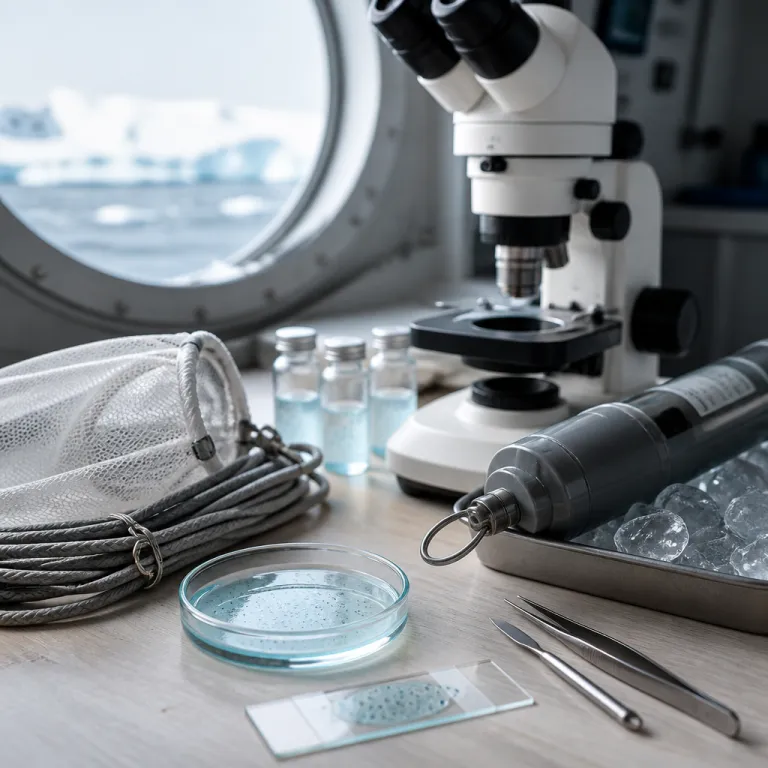
The citizen science expedition cruise phytoplankton sampling polar routine begins long before anyone touches a microscope. On a calm stretch of Antarctic or sub-Antarctic water, the expedition team lowers a simple sampling bottle and a Secchi disk, that white plate used to measure water clarity and light penetration. Those two tools, combined with precise GPS data and sea surface temperature readings, anchor your samples in a scientific context that researchers can trust.
Back on board, the science team turns a lounge or small lab into a compact marine station where travelers work side by side with researchers. Under guidance from an experienced polar oceanographer, who studies climate change through phytoplankton analysis, couples learn to gently filter water, prepare slides and bring phytoplankton communities into focus. A typical sample might involve collecting one to two litres of surface water, filtering it through fine membranes and preserving a subset with Lugol’s iodine solution for later counts under standardized microscopy protocols.
Once the samples are ready, you move from collection to classification, which is where the citizen in citizen science really matters. Expedition staff explain how different phytoplankton species respond to sea ice retreat, warming surface layers and changing light conditions along the Antarctic Peninsula and in the western Antarctic gyres. For some couples, this quiet, shared concentration becomes as memorable as the adrenaline of a carefully supervised polar plunge, because you are finally seeing the climate story at the scale that drives it.
Why the smallest marine life changes how the ice feels
Phytoplankton sit at the base of the marine food web, yet most travelers on a citizen science expedition cruise focused on phytoplankton sampling arrive knowing more about whales than about microscopic algae. When you learn that these organisms produce roughly half of the oxygen you breathe, the blue-green smear under the lens suddenly feels as consequential as any iceberg. The Southern Ocean’s phytoplankton communities are particularly sensitive to shifts in sea ice cover, water temperature and nutrient mixing, which makes every sample from Antarctica a climate data point.
Recent research from institutions such as the Columbia Climate School and journals like Nature Geoscience has linked Antarctic ice retreat to reduced carbon uptake via disrupted phytoplankton dynamics, reinforcing what expedition scientists explain in the lounge. One widely cited study, for example, shows that changes in sea ice seasonality around the Antarctic Peninsula alter the timing and intensity of phytoplankton blooms, with measurable impacts on how much carbon sinks into the deep ocean each year. Climate change in the polar regions is not an abstract graph; it is a change in which phytoplankton species bloom, how snow algae colours the edge of a glacier and how long-term carbon is stored in the deep ocean. When you read about western Antarctic ice loss or a new NASA satellite mission, you can now connect those headlines to the tiny cells you helped sample between the Peninsula and South Georgia.
This is where the emotional shift happens for many polar citizen couples who value context as much as comfort. You start to see that polar tourism can either be extractive, taking only photographs, or it can feed into science projects that track climate change with precision. Choosing a ship that supports programs such as FjordPhyto, a citizen science initiative co-led by Scripps Institution of Oceanography and the Argentine Antarctic Institute, and that shares data with a broader science collective, becomes as important as choosing the right cabin on a polar expedition ship for quiet nights and steady sleep.
Doing science together: the most unexpected couple’s ritual on board
For a couple used to city weekends and vineyard tastings, the idea of a citizen science expedition cruise phytoplankton sampling polar evening might sound suspiciously like homework. In practice, it becomes a shared ritual that anchors the voyage, a calm counterpoint to zodiac landings and wildlife encounters. One night you are both hunched over microscopes, debating whether a particular cell belongs to a diatom chain or a dinoflagellate, the next you are on deck under the aurora, talking about how climate change will shape the trips you take in ten years.
Expedition leaders who take E‑E‑A‑T principles seriously design these sessions as experiences, not lectures, with clear roles for citizen scientists at every level of comfort. One partner might prefer logging data and metadata into tablets while the other handles the samples, yet both contribute to the same scientific project that tracks conditions along the Antarctic Peninsula and beyond. The atmosphere is closer to a small graduate seminar than to a cruise activity, especially on purpose-built expedition vessels such as the Greg Mortimer or SYLVIA EARLE, where the science centre sits at the heart of the deck plan.
Compared with whale ID programs or casual ice observation, phytoplankton and snow algae work demands more focus but rewards you with a deeper sense of agency. You are not just watching marine mammals breach; you are helping to explain why their feeding grounds may shift as sea ice retreats and climate patterns change. Couples who already plan trips around phenomena such as the northern lights often tell us that this kind of structured citizen science, combined with thoughtful planning resources such as our guide to a journey to the northern lights in December, is what keeps them returning to the polar regions rather than ticking them off a list.
Choosing the right ship and program for serious polar citizen science
Not every polar itinerary that mentions citizen science delivers a robust citizen science expedition cruise phytoplankton sampling polar program. When you evaluate options, start by asking which science projects are formally partnered with institutions such as National Geographic, NASA or established universities, and whether the data you help collect is archived for long-term climate research. Operators such as Lindblad Expeditions and Polar Latitudes have built reputations on integrating scientific work into daily life on board, rather than treating it as a marketing flourish.
Look for clear descriptions of methods, including water sampling protocols, Secchi disk measurements, microscopic analysis and how samples are processed once you leave Antarctica. A serious science collective will explain how your data feeds into broader climate change models, how often scientists review the datasets and whether projects extend beyond the Antarctic Peninsula to regions such as South Georgia or the western Antarctic. Many expedition citizen-science programs now contribute to open repositories and long-term monitoring efforts, so asking where phytoplankton records are stored and how they are quality-checked is a reasonable part of choosing your ship.
Finally, consider how the ship’s design and schedule support quiet, concentrated work alongside the more kinetic elements of polar tourism. A well-planned expedition will balance landings, marine wildlife watching and lab time, so that travelers never feel rushed when they sit down to read microscope images or log data from multiple samples. When that balance is right, the science, the scenery and the ship’s hospitality align, and you step off Antarctica not only with photographs but with the knowledge that your role as a polar citizen has generated results that matter beyond your own brief read of the daily program.
FAQ
How can travelers contribute meaningfully to polar science on an expedition cruise?
Travelers contribute by joining structured citizen science programs that collect and analyse data under professional supervision. On a typical voyage in Antarctica, you might help gather water samples, measure water clarity with a Secchi disk and classify phytoplankton communities under a microscope. These activities feed into ongoing science projects that monitor climate change impacts on marine ecosystems in the polar regions.
What is the role of phytoplankton in climate change and the marine food web?
Phytoplankton are microscopic algae that form the base of the marine food chain and play a central role in global carbon cycling. They absorb CO₂ from the atmosphere, convert it into organic matter and, when they die and sink, help transport carbon to deeper ocean layers. Changes in sea ice, temperature and light conditions in Antarctica and the western Antarctic can alter phytoplankton communities, with cascading effects on marine life and climate feedbacks.
How is passenger collected data used by scientists after the voyage?
Once a cruise ends, expedition teams clean, archive and share the collected data and samples with partner institutions such as universities, National Geographic or NASA-affiliated projects. Scientists then integrate these datasets into long-term monitoring of the Antarctic Peninsula, South Georgia and other key regions, comparing them with satellite observations and historical records. This combination of ship-based and remote sensing information strengthens models of climate change and ecosystem health.
Do I need a scientific background to join a citizen science program at sea?
No formal scientific training is required to participate as a citizen scientist on a polar expedition. Expedition staff and onboard scientists provide clear explanations, demonstrations and one-to-one guidance for tasks such as slide preparation, microscope use and basic classification. The goal is to make rigorous science accessible, so that both first-time polar travelers and returning experts can contribute confidently.
How does phytoplankton sampling compare with other citizen science activities like whale ID?
Whale ID, seabird counts and ice observations are valuable because they track visible wildlife and surface conditions over large areas. Phytoplankton and snow algae sampling, by contrast, reveals the microscopic processes that underpin oxygen production, marine productivity and carbon storage in Antarctica. Together, these complementary activities give a more complete picture of how climate change is reshaping the polar regions and why your citizen science expedition cruise phytoplankton sampling polar experience matters.