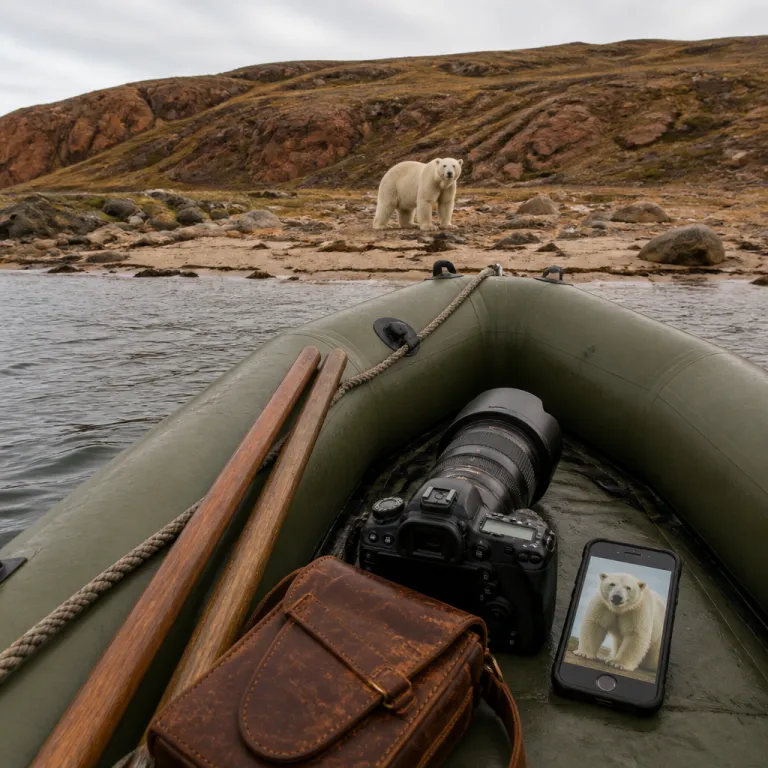
Why photographing polar bears from a zodiac is different from the brochure
Photographing polar bears in Svalbard from a zodiac during an expedition cruise feels intimate, yet the regulations keep you reassuringly far away. The reality of photographing polar bears Svalbard camera lens expedition cruise style is that every frame is shaped by distance rules, moving ice, and the rhythm of the expedition ship. If you plan this kind of Arctic trip as a couple, you need to understand how polar wildlife, sea ice, and camera gear interact long before you pack your lenses.
AECO guidelines require that zodiacs keep a significant buffer from any polar bear on pack ice or shore, and your captain will often extend that distance if the bear looks unsettled. This means that a person arriving with only a 200 millimetre zoom lens will usually come home with tiny bears in vast Arctic landscapes, not the tight bear photography portraits seen in brochures. The ethical frame matters ; photographing polar bears must never push a zodiac closer than the bear’s behaviour allows, and good guides will turn away even if the light conditions are perfect.
On a typical trip Svalbard operators launch zodiacs when a polar bear or several bears are spotted from the expedition ship, then hold position in drifting sea ice while guests raise cameras. The boat moves, the bear moves, and the ice moves, so you photograph polar bears in a constantly shifting scene that challenges both your shutter speed and your balance. Understanding this choreography helps you choose the right camera, the right lens, and the right expectations for your Arctic travel photographs.
Distance rules, focal length, and why 200 millimetres is rarely enough
From a zodiac, the closest you may be allowed to a polar bear is often hundreds of metres, especially if the bear is hunting on sea ice or resting on a floe. At those distances, photographing polar bears Svalbard camera lens expedition cruise style demands serious reach, and a modest telephoto lens quickly feels short. A 70–200 millimetre zoom lens can work for environmental bear photography, but it will not fill the frame with bears Svalbard in most regulated encounters.
For tight portraits of a polar bear on ice, a 100–400 millimetre zoom lens on a full frame camera is the current workhorse of Arctic wildlife photography. Many experienced photographers prefer a 400 millimetre or 500 millimetre telephoto lens, sometimes with a 1.4x teleconverter, to photograph polar bears at safe distances while still respecting expedition protocols. If you shoot on an APS C camera, that crop factor effectively extends your lenses, which can help when the expedition ship must hold zodiacs further back than you hoped.
Distance rules also affect composition choices during zodiac cruises, because you will often frame the bear small against dramatic pack ice or a brooding Arctic sky. Couples sharing cameras should agree who handles the long lens and who works with a wide angle lens for atmospheric scenes of the zodiac, the polar landscape, and the expedition ship in the background. When planning any polar bear trip, including an Alaska polar bear tour or a Churchill based itinerary, the same logic applies, and you can read more about those distance realities in this guide to polar bear tours in Alaska.
Lens choices by scenario: from 100–400 versatility to wide angle drama
On a serious Arctic expedition, you will usually bring two main lenses for bear photography from a zodiac, plus a backup if your camera gear allows. The first is a flexible 100–400 millimetre zoom lens or similar, which lets you react as polar bears move across sea ice, climb pressure ridges, or approach then veer away. The second is a fast wide angle lens, which sounds counterintuitive until a bear walks along the ice edge near your zodiac and the entire scene becomes about scale, light, and the human presence.
There are rare moments when a 600 millimetre prime telephoto lens earns every gram of its weight, especially when a polar bear remains distant but active, sparring with other bears or crossing broken pack ice. In those situations, photographing polar bears Svalbard camera lens expedition cruise style becomes a test of technique, because long lenses magnify every ripple of the zodiac and every movement of the person behind the camera. Couples often split roles ; one partner handles the heavy telephoto lens on a beanbag, while the other works with a smaller camera and wide angle lens to capture the zodiac, the expedition ship, and the Arctic light conditions.
Do not neglect mid range lenses either, because shore landings sometimes allow you to photograph polar wildlife at more moderate distances, always under guide control. A 24–105 millimetre lens can frame a polar bear far away on a glacier slope, then pivot to capture fellow travellers boarding zodiacs or walking across wind carved ice. For a deeper sense of how different focal lengths shape polar bear tours across the Arctic, including Churchill and Svalbard, this overview of immersive polar bear adventures offers useful context.
Smartphone reality check: what your phone can and cannot handle
Modern smartphones have transformed casual travel photography, but they remain brutally honest tools when you photograph polar bears from a moving zodiac. At regulated distances on sea ice, even the best phone cameras rely on digital zoom that degrades detail, leaving polar bears as soft shapes rather than sharp wildlife portraits. Computational tricks cannot replace the reach of a real telephoto lens, especially when the zodiac bobs, the wind bites, and your fingers stiffen in Arctic air.
Where phones excel is in capturing the wider story of your expedition cruise, from the midnight sun over Svalbard to the quiet moments as zodiacs idle among blue ice. Use your smartphone for wide angle video of the expedition ship cutting through pack ice, for portraits of your partner wrapped in polar gear, and for quick clips when a person with a larger camera is busy changing lenses. In good light conditions, phones can also handle atmospheric shots of bears Svalbard as small figures on distant floes, which still convey the scale of the Arctic environment.
Accept that photographing polar bears Svalbard camera lens expedition cruise style with only a phone will limit your results to environmental scenes, not frame filling bear photography. If you want more, rent or borrow a dedicated camera and lens before your trip, and practice using burst mode, exposure compensation, and fast shutter speed settings at home. Think of the phone as your storytelling companion rather than your primary wildlife tool, and you will enjoy the travel experience instead of fighting against the limits of digital zoom.
Zodiac shooting technique, camera protection, and staying steady on moving water
Shooting from a zodiac is part balance exercise, part choreography with the sea, and part trust in your expedition guides. The inflatable hull flexes, the outboard engine vibrates, and the person next to you shifts weight just as a polar bear lifts its head on the ice. To photograph polar bears sharply in these conditions, you need both technique and a realistic approach to camera protection.
Start with stability ; brace your feet wide, tuck your elbows in, and rest your camera or telephoto lens on the zodiac gunwale using a small beanbag or rolled jacket. Use a fast shutter speed, often 1/1000 second or faster, because photographing polar wildlife from a moving platform magnifies every tremor, especially at long focal lengths. Burst mode helps you capture a sequence where at least one frame is tack sharp, while the others absorb the motion of the zodiac and the shifting pack ice.
Spray management is another quiet art of Arctic photography, because saltwater on lenses can ruin a moment faster than any technical mistake. Instead of bulky waterproof camera bags that slow you down, use a simple dry bag for transit and keep a microfiber cloth in an accessible pocket while you travel between shore landings and zodiac cruises. On longer itineraries that may also visit Greenland, where katabatic winds can whip up waves quickly, your expedition leader will brief you on when to stow cameras and when to shoot, always with safety and potential medical evacuation logistics in mind.
Light, ethics, and planning a couple’s polar bear photography voyage
Arctic light is both generous and unforgiving, especially around the midnight sun when golden hours stretch and shadows never fully settle. On a trip Svalbard in early season, low angled light can backlight a polar bear’s breath against blue ice, while later in the season flat grey skies demand careful exposure and subtle post processing. The best bear photography often happens in weather that tourists curse, when snow flurries, mist, or low cloud add texture to the scene.
Ethics sit at the heart of photographing polar wildlife, and responsible operators will always prioritise the bear over the shot. Guides read behaviour constantly ; if a polar bear changes direction, lifts its head repeatedly, or shows signs of stress, zodiacs will back off or leave, no matter how good the light conditions or how many cameras are raised. As a guest, you share that responsibility, keeping noise low, following instructions on where to stand in the zodiac, and accepting that some encounters end early for the animal’s sake.
Planning a couple’s Arctic expedition means aligning your expectations with this ethical frame, your camera gear, and the realities of polar travel logistics. Consider itineraries that combine Svalbard with Greenland or other Arctic regions if you want a broader wildlife portfolio, and read specialist resources such as the Svalbard birding and Arctic avifauna guide to understand how different species interact with sea ice and pack ice. When you finally photograph polar bears from a zodiac, you will know that every frame respects both the regulations and the ancient quiet of the polar environment.
Key figures for polar bear photography from zodiacs
- Typical minimum approach distances to polar bears in Svalbard are often several hundred metres, as enforced by AECO aligned operators, which directly drives the need for 300–400 millimetre focal lengths or longer for detailed images.
- A 400 millimetre lens on an APS C camera body delivers an effective field of view similar to a 600 millimetre lens on full frame, which can make the difference between a small subject and a frame filling bear at regulated distances.
- Fast shutter speeds of 1/1000 to 1/2000 second are commonly recommended by expedition photo guides for zodiac based wildlife photography, to counteract boat movement and subject motion.
- Many expedition ships in the high Arctic carry between 10 and 20 zodiacs, allowing staggered wildlife viewing while still keeping overall disturbance to polar bears and other wildlife low.
- Modern flagship smartphones typically offer optical zoom equivalents up to around 3x to 5x, beyond which digital zoom significantly reduces image quality, making them best suited to wide angle environmental shots rather than tight polar bear portraits.
FAQ about photographing polar bears from a zodiac
What is the best lens for photographing polar bears from a zodiac
The most versatile lens for photographing polar bears from a zodiac is usually a 100–400 millimetre zoom on a full frame camera. It offers enough reach for regulated distances while remaining handholdable in a moving boat. If you already own a 70–200 millimetre lens, it can work for environmental shots, but you will likely want more focal length for close portraits.
Can I rely on a smartphone for a polar bear photography trip
You can rely on a smartphone for wide angle scenes, video clips, and atmospheric images of the expedition ship, zodiacs, and Arctic landscapes. However, at the distances required for safe polar bear viewing, phone zoom will not deliver sharp, detailed wildlife portraits. For serious bear photography, bring at least one dedicated camera with a telephoto lens and use your phone as a secondary storytelling tool.
How many cameras should a couple bring on an Arctic expedition cruise
For a couple focused on wildlife photography, two cameras are ideal, so each person can work with a different focal length without constant lens changes in cold, salty air. One camera can carry a long telephoto lens for polar bears and other wildlife, while the second holds a mid range or wide angle lens for landscapes and life on board. A small backup body is useful if one camera fails, especially on remote itineraries where repair or replacement is impossible.
Do I need image stabilisation for shooting from a zodiac
Image stabilisation is extremely helpful when shooting from a moving zodiac, because it reduces the impact of small hand and boat movements at longer focal lengths. Combined with a fast shutter speed and good bracing technique, stabilisation increases your chances of sharp images in challenging light conditions. If you must choose between two lenses, prioritise the one with effective stabilisation for zodiac based wildlife work.
What clothing and accessories help with polar bear photography on water
Warm, layered clothing, windproof outer shells, and thin liner gloves under thicker mitts help you operate cameras without freezing your hands. A simple beanie, neck gaiter, and non slip boots make it easier to stay steady in the zodiac while you photograph polar bears or other wildlife. Add a small dry bag, microfiber cloths, and a compact beanbag for lens support, and you will be well prepared for long sessions among the ice.