The guide’s toolkit: framing glacier retreat in real time
On a clear Antarctic morning, your zodiac idles beneath a fractured glacier face. The guide lifts a tablet, aligns a faded historical image with the present view, and the gap between then and now feels wider than any icy bay. In that instant, a simple set of before-and-after glacier photographs turns polar climate change from an abstract phrase into a personal reckoning.
Experienced guides now treat these images as essential safety gear, alongside radios and spare dry gloves. They scroll through sequences where a single glacier once filled the entire area of a fjord, its ice pressing low under its own weight, then show how the front has thinned and pulled back to a higher elevation. The contrast between the old image and the current ice line quietly explains mass loss, shifting glacier mass balance, and the long-term changes that satellite graphs only hint at.
On many ships, the polar science briefing has moved from lecture hall to open deck. A guide might reference work from the Norwegian Polar Institute or a Greenpeace campaign, then hold up a laminated photograph taken by photographer Christian Åslund near an Arctic ice cap and invite you to match the ridgeline. This is where climate storytelling through repeat glacier photography becomes a shared investigation, not a sermon, and families see how rising average temperatures reshape the ice sheet in front of their children’s eyes.
Specific glacier stories: when the fjord no longer matches the map
Step into a Svalbard fjord such as Kongsfjorden and the first surprise is often silence. Where expedition leaders remember the crack and roar of glaciers calving into the sea, families now drift past open water, the retreating ice having left behind new glacial lakes and bare rock. The guide raises a top historical photograph, and the missing ice becomes the main character of the story.
In one bay, a single glacier that once met the sea in a vertical ice wall now sits several kilometres inland, its front slumped and dirty. Guides explain that the glacier mass has not simply shifted but shrunk, with mass loss recorded in Norwegian Polar Institute field notes and in the mass balance data that underpin global sea level projections. Without quoting unverified numbers, they describe how the average temperature in Svalbard has risen several degrees Celsius over recent decades, faster than the global climate average, tilting the delicate balance between snowfall and melt that sustains glaciers.
On the Antarctic Peninsula, the pattern repeats with seasonal sea ice that once locked bays in place now breaking earlier in the year. A guide may reference an image Norwegian researchers used in a polar briefing, then show how the current ice cap edge no longer matches that photograph captured from the same elevation. For travelers who have read about photographic evidence of glacier retreat on polar expeditions, this is the moment when climate shifts stop being distant headlines and start to feel like a historical turning point they can see, frame by frame.
For a deeper look at how operators frame responsibility, read this analysis of polar expedition sustainability claims, then compare the marketing language with what you witness at the ice edge.
The pedagogical shift: from climate lecture to lived evidence
Old-style expedition evenings meant a dark lounge, a projector, and a graph of rising sea level. Today, many teams start the climate conversation on deck, where the story of glacier retreat can be traced with a gloved finger along a rock face. The pedagogy has moved from theory to fieldwork, and passengers feel less lectured and more enlisted.
Guides now weave glacial science into the rhythm of the day, using the language of mass balance and glacier dynamics while you watch ice crumble from a distant cliff. They might explain how a glacier’s mass balance reflects the difference between snow accumulation and melt, then point to a newly formed glacial lake as physical proof of sustained mass loss. When you see that lake sitting where the historical image showed solid ice, the concept of long-term climate change becomes anchored to a specific area and elevation you can map in your own memory.
Some ships invite guests to informal science sessions that extend this visual learning. A naturalist might reference work by a polar institute or a Greenpeace collaboration, then connect it to hands-on projects such as phytoplankton sampling or sea ice thickness measurements. If you are interested in how these programs reframe the purpose of travel, explore our feature on the expedition science program built around phytoplankton, which pairs microscopic images with the same climate narrative that repeat glacier photographs now carry on deck.
The photographer’s opportunity: recreating historical images with your family
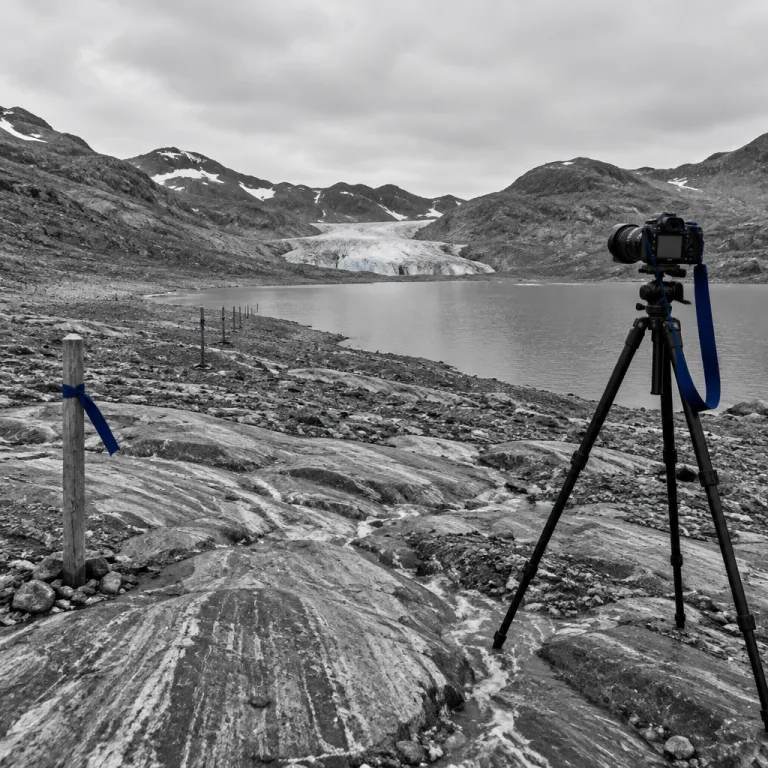
For many families, the most powerful souvenir is not a penguin portrait but a matched pair of glacier photographs. Guides encourage guests to stand where photographer Christian Åslund once stood, aligning peaks and shorelines so that a new frame echoes a top historical shot. This simple act turns each traveler into a quiet witness to change.
Some expeditions reference the work of Christian Åslund, whose collaborations with Greenpeace and the Norwegian Polar Institute used repeat photography to show how glaciers have retreated from their former positions. When a guide shares an August Christian Åslund image, then helps you compose the same scene with your own camera, the difference in ice coverage becomes a personal data point. You start to see how long-term shifts in average temperature have altered the balance of snow and melt, carving new glacial lakes and exposing rock that lay hidden under ice for centuries.
Parents often turn this into a family project, assigning children the role of informal image archivists for the trip. One child might track where the ice sheet once reached the sea, another might note where Antarctic ice has thinned along a ridge, and together they build a small catalogue of before-and-after glacier photos that document their polar expedition. Back home, those images become prompts for conversations about sea level, climate trends, and what it means to travel responsibly to fragile polar areas.
If you want to extend this visual storytelling beyond the polar regions, consider pairing your voyage with rail journeys such as the McKinley Explorer, which we review in detail in our guide to an elegant rail gateway to Arctic camping adventures, where mountain glaciers and ice caps offer their own quiet lessons in elevation and retreat.
The emotional weight: last chance travel with children on deck
There is a particular silence that falls when a child realises the glacier in the guide’s photograph no longer reaches the sea. On family-focused voyages, that silence often arrives during the first session of side-by-side glacier images, when the difference between past and present ice becomes impossible to ignore. Parents glance at their children, children glance at the shrinking glacier, and the conversation about responsibility begins without anyone raising their voice.
Guides who work regularly in both the Arctic and the Antarctic speak of a new emotional balance in their briefings. They still celebrate wildlife and light, but they also acknowledge that the glaciers and ice caps shaping these landscapes are in long-term retreat. When they explain that glacier mass loss contributes to global sea level rise, they do so while pointing to a specific area where the ice sheet has thinned, or to a bay where retreating glaciers have left behind stranded icebergs and fresh glacial lakes.
For premium families, this is not about guilt but about clarity. Children see how changes in average temperature alter the climate, how the mass balance of glaciers shifts, and how Antarctic ice and Arctic ice respond differently at various elevations. Many leave with a quiet determination to treat these journeys as more than holidays, carrying home not just images but a lived understanding of polar climate change that will shape how they read every future headline about Norwegian Polar Institute reports, Greenpeace campaigns, or new National Snow and Ice Data Center findings on mass loss.
FAQ
How do guides choose which glaciers to show in before and after photos ?
Guides usually select glaciers that are easily visible from the ship or zodiac and have reliable historical image records from scientific teams or photographers such as Christian Åslund. They prioritise locations where the retreat is clear at human scale, so families can match rock features and ice lines without specialised equipment. Many of these sites are also monitored by organisations like the Norwegian Polar Institute, which provides context on glacier mass balance and long-term climate trends.
Can passengers contribute their own glacier photos to science projects ?
On some voyages, expedition teams partner with research programmes that accept repeat photographs from consistent vantage points. Passengers are briefed on how to frame the glacier, note the date, time, and approximate elevation, then upload the images after the trip. These contributions can help scientists refine models of mass loss, sea level impact, and local climate changes, especially in remote areas where formal monitoring is limited.
Are children usually comfortable with the emotional side of seeing glacier retreat ?
Most children handle the experience well when guides and parents frame it as an invitation to care rather than a reason to panic. Expedition staff often balance difficult images with time spent watching wildlife, learning about ice, and celebrating what still thrives in the polar climate. Families who talk openly about stewardship and practical actions at home tend to find that the voyage becomes a starting point for long-term engagement rather than a source of anxiety.
Does choosing a polar expedition make my climate impact worse ?
Any long-distance travel carries a carbon footprint, and polar expeditions are no exception. Some operators work with independent auditors, polar institutes, or environmental organisations to measure emissions, improve fuel efficiency, and support verified mitigation projects. As a traveler, you can compare policies carefully, favour smaller ships with strong science programmes, and treat the glacier images you see on board as a reminder to reduce emissions in your daily life as well.
What should I look for in an operator if I care about climate education ?
Seek companies that employ experienced polar guides with scientific training or close ties to research institutes, and that clearly explain how they use before-and-after images in their programmes. Look for evidence of collaboration with organisations such as the Norwegian Polar Institute or Greenpeace, transparent reporting on emissions, and meaningful citizen science opportunities. When operators treat visual evidence of glacier retreat as central to the voyage rather than a marketing add-on, you are more likely to leave with both insight and inspiration.
Sources
Norwegian Polar Institute ; Greenpeace International ; National Snow and Ice Data Center.