Section 1. Why polar flora matters to your Arctic and Antarctic journey
Polar landscapes look bare at first glance, yet plant life quietly structures every experience. When you understand how this subtle flora fits into the wider chain of climate, wildlife, and human activity, your Arctic and Antarctic travel choices become far more intentional. These living systems frame wildlife encounters, guide safe route planning, and even influence when you should sail.
Across both poles, hardy mosses, lichens, algae, and a few flowering plants anchor fragile soils. Their presence signals where seabirds nest, where reindeer or caribou graze, and where penguin colonies enrich the ground with nutrients over decades. Thinking of your voyage as one link in an ongoing ecological story helps you see each landing as a chapter in a long narrative, not just a single dramatic moment.
In the Arctic, tundra vegetation stretches from coastal Svalbard to inland Greenland plateaus. In the Antarctic region, ice free pockets such as the Antarctic Peninsula, South Georgia, and the Falkland Islands host moss banks and cushion plants that have adapted to fierce winds. When operators design itineraries across a full season of voyages, they time landings to minimise trampling during sensitive growth periods and to align with peak wildlife activity.
Section 2. Microscopic forests: mosses, lichens, and algae under polar light
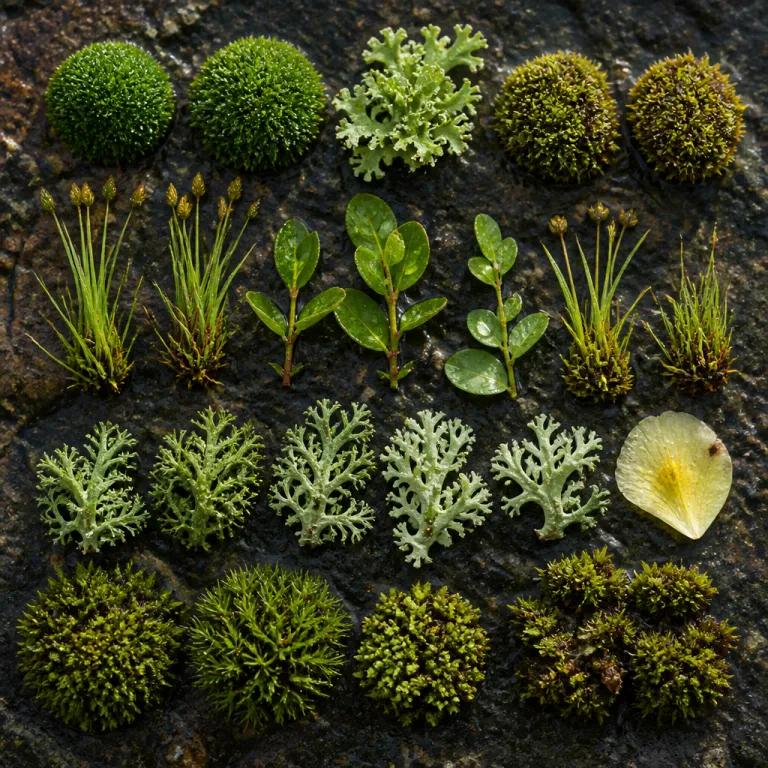
What looks like bare rock from the ship often hides dense miniature forests. Close up, you will see lichens painting granite in orange, black, and pale green, all functioning as a living archive of air quality and climate. These communities quietly connect atmosphere, ice, and wildlife, acting as bioindicators that respond to even subtle environmental change.
Moss banks in places such as South Orkney Islands or Svalbard can be more than a metre deep, built layer by layer over centuries. They store water, trap windblown nutrients, and create microclimates where invertebrates and microbes thrive. When expedition teams brief guests on long term scientific monitoring, they often explain how moss cores from Signy Island and similar sites reveal shifts in temperature and precipitation patterns over decades.
Algae and microscopic plants in sea ice and surface waters form the base of the Southern Ocean and Arctic marine food webs. Many voyages now include hands on science programs that examine these organisms, and a dedicated example is described in the article on phytoplankton under the microscope. Participating in such work places you directly inside the process of observation, sampling, and long term data collection that underpins conservation decisions.
Section 3. Flowering plants at the edge of the world
Only a handful of true flowering plants survive in the high Antarctic, yet each one tells a precise story about climate and geography. Antarctic hair grass and Antarctic pearlwort grow mainly on the northern Antarctic Peninsula and nearby islands, where milder conditions and bird enriched soils allow roots to take hold. Their gradual spread is closely tracked within research programs on warming trends and shifting ice cover, including studies coordinated by the Scientific Committee on Antarctic Research.
The Arctic offers a richer palette of tundra flowers, from purple saxifrage in Svalbard to Arctic poppies in Iceland and Greenland. These plants bloom during a short, intense summer, synchronised with pollinating insects and migratory birds that rely on the same brief window. When you walk with guides who understand seasonal change, you learn to read each blossom as a timestamp in the polar calendar; as one Svalbard guide puts it, “When the saxifrage opens, we know the summer clock has truly started.”
On South Georgia, vast tussac grass stands dominate coastal slopes, creating sheltered pockets where fur seals and penguins breed. The roots stabilise soil, reduce erosion, and shape how landing sites can be used safely by visitors. Responsible operators factor these plant communities into a rotating schedule of landing sites, allowing heavily used beaches to rest while others temporarily absorb visitor pressure.
Section 4. Planning landings around fragile vegetation
Every step ashore in polar regions carries weight, literally and ecologically. Thin soils, slow growing mosses, and delicate lichens can take decades to recover from a single misplaced boot. This is why serious operators embed strict landing protocols within their environmental management plans.
Guides usually mark safe walking zones that avoid moss beds, cushion plants, and erosion prone slopes. They brief guests on how even a narrow shortcut can widen into a scar that channels meltwater and strips away soil. When you follow these paths, you become an active participant in the shared effort that keeps high traffic sites viable for both wildlife and future travellers.
International guidelines from bodies such as the International Association of Antarctica Tour Operators and national park authorities in Svalbard or Greenland set minimum standards. Leading companies often go further, using vegetation surveys, GPS mapping, and satellite imagery to refine where and when they land. Choosing an operator that explains its site selection criteria and monitoring methods is one of the most effective ways to reduce your personal footprint.
Section 5. Wildlife, birdlife, and the plants that sustain them
Polar wildlife viewing is rarely framed as a plant story, yet flora underpins almost every encounter. Reindeer and musk oxen graze on Arctic tundra plants, while geese and ducks rely on sedges and grasses in summer wetlands. Understanding this connection helps you see how the cycle of plant growth, grazing, and migration shapes what you witness from the ship rail.
In the Antarctic region, penguin colonies transform surrounding soils with guano, fertilising mosses and algae that in turn stabilise ground and retain moisture. On sub Antarctic islands, tussac grass provides both nesting cover and wind shelter for albatrosses and petrels. When you read about a journey through the birds of Patagonia, you will notice similar plant bird relationships that extend along the Southern Ocean flyways and into the broader web of global migration.
Even marine giants such as whales depend indirectly on polar flora. Sea ice algae and phytoplankton feed krill, which then support humpbacks, minkes, and blue whales across vast distances. By joining voyages that support long term monitoring of these food webs, you help maintain data streams that inform fishing limits, marine protected areas, and climate policy.
Section 6. Choosing expeditions that support polar plant research
Travelers now have real power to support frontline polar science. Many small ship expeditions host researchers who study vegetation change, invasive species, and soil microbiology, often inviting guests to assist with simple field tasks. When you select voyages that clearly describe their research partnerships, your ticket directly funds this work.
Look for itineraries that mention repeat visits to fixed monitoring plots, long term photo points, or collaborations with universities and polar institutes. These projects track flowering dates, moss health, and lichen growth, building records that stretch across many seasons. By asking how your operator contributes to shared datasets, such as those coordinated through the Arctic Council’s working groups or national Antarctic programs, you signal that rigorous science matters to travellers.
Responsible companies also invest in staff training so that every guide can interpret plant communities, not just charismatic wildlife. They integrate flora into daily briefings, explaining how climate trends, tourism, and local regulations intersect at each landing site. When you hear this level of detail, you are hearing knowledge passed from researchers to guides and then to guests, turning a scenic cruise into an informed, low impact journey.
Key figures on polar flora and travel
- Scientists have identified only two native flowering plant species on the Antarctic Peninsula, compared with more than 1 700 vascular plant species across the Arctic, highlighting the extreme constraints on plant colonisation in Antarctica (data summarised by the Scientific Committee on Antarctic Research and the Arctic Biodiversity Assessment of the Arctic Council).
- Long term moss bank studies on Signy Island show growth rate increases of up to 50 percent in recent decades, correlating with regional warming and demonstrating how sensitive polar flora is to small temperature shifts (British Antarctic Survey research led by Amesbury et al., Nature Climate Change, 2017).
- Sea ice algae and phytoplankton can contribute more than half of total primary production in some polar marine ecosystems, forming the base of food webs that support krill, fish, seabirds, and whales (findings from the Alfred Wegener Institute and related Southern Ocean and Arctic oceanographic programs).
- Visitor numbers to Antarctica have risen above 70 000 passengers per season, which has driven stricter landing guidelines to protect vegetation and soils at frequently visited sites (statistics reported by the International Association of Antarctica Tour Operators for recent pre pandemic seasons).
- In Svalbard, approximately two thirds of the archipelago is protected as national parks or nature reserves, providing large scale safeguards for tundra vegetation and associated wildlife habitats (figures from the Governor of Svalbard and Norwegian environmental authorities).
FAQ about polar flora and Arctic and Antarctic travel
Is it safe to walk on moss and lichens during landings ?
Walking directly on moss and lichens in polar regions is strongly discouraged because these plants grow extremely slowly and damage can last for decades. Guides usually mark paths on more resilient gravel or snow to protect vegetation. Following their instructions is one of the simplest ways to minimise your impact.
When is the best time to see Arctic tundra flowers in bloom ?
Arctic tundra flowers typically bloom from late June through August, depending on latitude and local weather. Svalbard, Greenland, and Arctic Norway often show peak colour in mid summer. Choosing voyages in this window maximises your chances of seeing diverse flowering species.
Are there any flowering plants in mainland Antarctica ?
Mainland Antarctica hosts almost no flowering plants, but the northern Antarctic Peninsula and nearby islands support Antarctic hair grass and Antarctic pearlwort. These species grow in small, scattered patches on ice free ground. Most of the continent is dominated instead by mosses, lichens, and algae.
How can I support polar plant research as a traveller ?
You can support polar plant research by choosing expeditions that host scientists and describe active projects in their materials. Some voyages invite guests to help with simple tasks such as repeat photography or vegetation notes. Asking operators about their scientific partnerships encourages more investment in long term monitoring.
Do Arctic and Antarctic plants face the same climate threats ?
Arctic and Antarctic plants both face warming temperatures, changing precipitation, and shifting snow cover, but the details differ between regions. Arctic flora is also affected by expanding shrubs and human development, while Antarctic flora is more isolated but vulnerable to invasive species at popular landing sites. In both cases, careful tourism management and robust science programs are essential for protection.
